
Material Nesting Software for Length of Material: Complete Guide
August 11, 2026
Preventive Maintenance Software: The Complete Guide
August 12, 2026
Embrilliance software is a popular embroidery digitizing and editing program used by hobbyists, small business owners, and professional digitizers around the world. It allows users to import, edit, resize, combine, and personalize embroidery designs without needing years of technical training.
Built to run on both Windows and Mac computers, Embrilliance software has earned a reputation for being affordable, beginner-friendly, and powerful enough to handle advanced editing tasks. This guide walks through every major aspect of the software so you can decide whether it fits your embroidery projects.
Understanding Embroidery Digitizing Software
Embroidery digitizing software converts artwork or designs into stitch files that embroidery machines can read and sew. Without this type of software, machines would have no instructions on stitch direction, density, or color changes.
What Is Embroidery Digitizing
Digitizing is the process of turning a flat image into a series of stitch commands, including stitch type, path direction, and density settings. This process determines how a finished design will look on fabric, which is why quality digitizing software matters so much for the final result.
Why Embrilliance Stands Out in the Market
Many embroidery programs try to do everything at once, which often makes them confusing for new users. Embrilliance software takes a different route by breaking functions into separate, focused titles.
This keeps each program lightweight and easier to learn, while still allowing advanced users to combine multiple titles for a more complete toolkit.
Compatibility with Embroidery Machines and File Formats
Embrilliance software works with most major embroidery machine brands because it supports a wide range of stitch file formats. This means users are not locked into a single machine manufacturer and can freely work with designs purchased from different sellers or created in other programs.
Embrilliance Product Line Overview
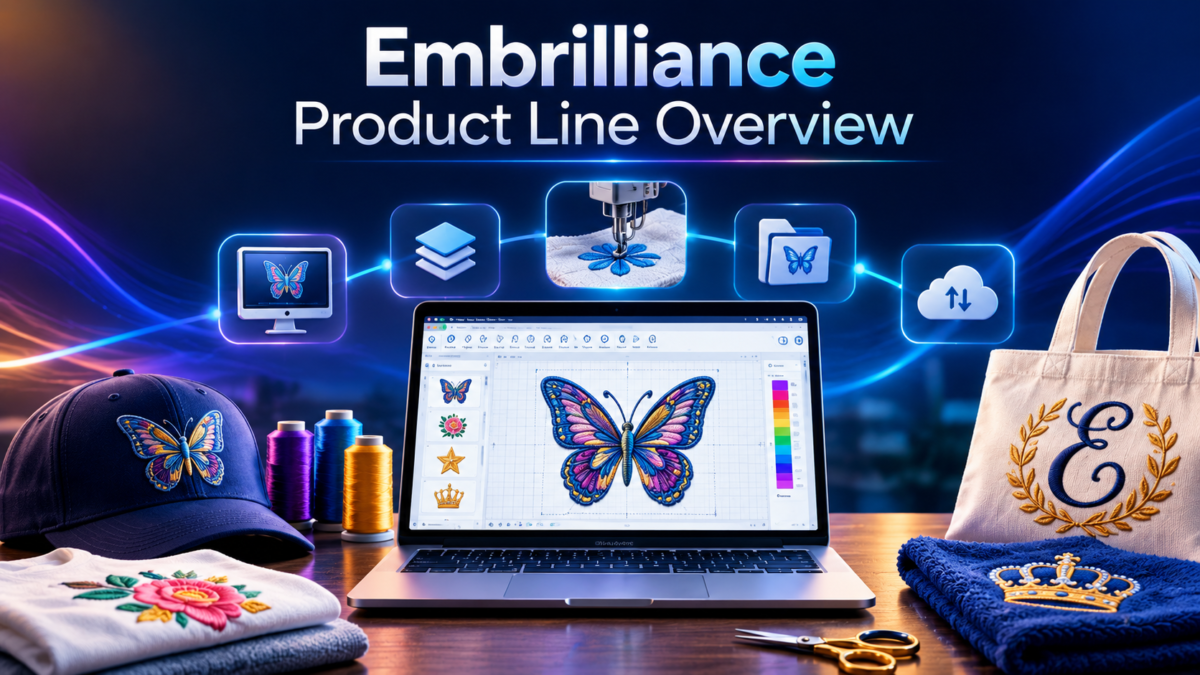
The Embrilliance product line includes several titles, each aimed at a different part of the embroidery process. Understanding what each program does helps users pick the right combination for their needs.
Embrilliance Essentials
Essentials is the entry point into the Embrilliance platform and is often recommended as the first purchase for new users.
<cite index=”6-1″>With Essentials installed, users can merge embroidery designs in almost any format, even while they are inside ZIP files, resize designs with automatic stitch recalculation, and colorize designs while converting between thread brands.</cite> It also supports adding lettering, printing templates, and cleaning up overlapping stitches, making it a strong all-purpose starting tool.
Embrilliance StitchArtist (Levels 1, 2, and 3)
StitchArtist is the digitizing arm of the platform, built for users who want to create original designs rather than only edit existing ones. <cite index=”5-1″>StitchArtist offers instant, automatic stitch generation with no need to switch modes for selecting, editing, coloring, moving, sizing, or rotating objects.
</cite> <cite index=”9-1″>Level 2 adds production and training tools for more sophisticated designs and logos, while Level 3 is built for advanced shape manipulation and is aimed at those digitizing commercially.</cite>
Embrilliance Enthusiast
Enthusiast is aimed at users who have outgrown the basics and want deeper control over stitch files. <cite index=”1-1″>It includes advanced stitch-file editing and composition, automated Knockdown stitching, custom hoops and thread palettes, and advanced manual density and pull compensation adjustment tools.
</cite> <cite index=”9-1″>This program adds precise positioning, stitch-level editing, and the well-known automatic Knockdown stitching that flattens the pile of terry cloth or other napped fabric so a design stands out clearly.</cite>
Embrilliance Alterations Add-On
The Alterations add-on gives users more control over reshaping and adjusting existing embroidery files without starting from scratch. This is especially useful for correcting or customizing purchased designs so they fit a project perfectly.
Embrilliance Monogramming Add-On
For users focused on personalized gifts and apparel, the monogramming add-on streamlines the process of adding names and initials to designs. It works alongside lettering tools already present in the platform to speed up repetitive personalization tasks.
Comparison Chart of Features Across Products
| Product | Main Purpose | Best For |
| Essentials | Merge, resize, colorize designs | Beginners and everyday editing |
| StitchArtist | Create original digitized designs | Digitizers and design creators |
| Enthusiast | Advanced stitch editing and Knockdown stitching | Experienced users needing precision |
| Alterations Add-On | Reshape and adjust existing designs | Customizing purchased files |
| Monogramming Add-On | Personalized lettering and initials | Gift and apparel businesses |
Key Features of Embrilliance
Embrilliance software brings together a set of practical tools that cover most of what an embroiderer needs on a daily basis. These features are spread across the different titles but work together smoothly when combined.
User Interface and Ease of Use
The interface is built to avoid unnecessary clutter, showing tools that are relevant to the task at hand. New users often comment that they can start editing designs within their first session, without needing to watch hours of training videos first.
Design Editing Tools
Editing tools allow users to move, resize, recolor, and rearrange elements of a design with straightforward controls. <cite index=”7-1″>Users can combine several designs to make something unique, and if anything overlaps, the program can remove hidden stitches to prevent bulk and possible broken needles.</cite>
Lettering and Monogramming Capabilities
Lettering tools let users add names, initials, or short text directly onto a design using built-in fonts. <cite index=”9-1″>Separate lettering systems let users map sets of lettering designs into a keyboard font, so text can be typed, resized, colorized, and placed into templates or subway art layouts.</cite>
Auto-Digitizing Features
StitchArtist automates much of the technical stitch-generation process, removing the need to manually calculate stitch paths for every shape. This makes it realistic for non-professional users to create clean, usable designs without formal digitizing training.
Multi-Format File Support
Because embroidery files come in many different formats depending on the machine brand, Embrilliance software is built to open and convert between them smoothly. This flexibility means designs from different sources can be brought into one workspace without compatibility headaches.
Combining and Merging Designs
One of the most-used features is the ability to merge multiple designs into a single project, such as placing a monogram beside a decorative motif. This saves time compared to sewing separate files one after another on a machine.
Resizing Without Quality Loss
Unlike simple image resizing, embroidery resizing must recalculate stitch density to avoid gaps or overly tight stitching. <cite index=”6-1″>Embrilliance recalculates stitches automatically when a design is resized, helping maintain stitch quality at the new dimensions.</cite>
System Requirements and Installation
Before installing Embrilliance software, it helps to know what kind of computer setup it needs and how the installation process works.
Compatible Operating Systems
<cite index=”6-1″>Embrilliance software is built to work on the computer users already prefer, whether that is a Mac or a PC running Windows.</cite> This cross-platform support is fairly rare in the embroidery software space and gives users more freedom when choosing hardware.
Hardware Requirements
The software does not demand high-end hardware, running comfortably on standard consumer laptops and desktops. A stable internet connection is mainly needed during download and activation rather than for daily use.
Step-by-Step Installation Guide
Installation typically involves downloading the installer file from the official Embrilliance store, running it, and following on-screen prompts. Most users complete the process in a few minutes without needing technical assistance.
Licensing and Activation Process
After installation, the software requires activation using a license tied to the user’s purchase. This license structure also supports moving the software between computers when needed, as long as it is deactivated on the old machine first.
Getting Started: Basic Workflow
Once installed, learning the basic workflow makes it much easier to complete real embroidery projects with confidence.
Setting Up Your Workspace
The first step usually involves setting the correct hoop size and machine format so the workspace matches the actual embroidery equipment being used. This prevents sizing mistakes before any editing begins.
Importing Designs
Designs can be dragged directly into the program or opened through a standard file browser. <cite index=”7-1″>Users often start by opening a purchased design, selecting the hoop size they plan to use, and positioning it before making further edits.</cite>
Basic Editing Tools Walkthrough
From there, users can recolor threads, resize elements, add lettering, or merge in additional designs. Each action updates in real time, so the effect on the final stitch-out is easy to preview before sending it to a machine.
Saving and Exporting Files
Once a design is finalized, it can be saved in the native project format or exported directly into the stitch format required by a specific embroidery machine. This dual-save approach keeps the original editable project safe while still producing a machine-ready file.
Connecting to Embroidery Machines
Most machines read files from a USB drive, so the typical workflow involves exporting the finished design and transferring it that way. Some newer machines also support direct wireless transfer, depending on the manufacturer.
Advanced Features and Techniques
Beyond the basics, Embrilliance software includes tools aimed at users who want finer control over their designs and production process.
Working with StitchArtist for Custom Digitizing
<cite index=”9-1″>StitchArtist Level 2 enables production and skills training for those who want to create sophisticated embroidery designs and logos, offering a more complete set of digitizing tools than the base level.</cite> This makes it a natural next step for users who have outgrown simple design editing.
Advanced Lettering Techniques
Advanced lettering tools allow custom spacing, curved text paths, and font management across large collections. This is especially valuable for businesses that produce a high volume of personalized items.
Color Management and Thread Charts
The software includes thread chart conversion, letting users switch a design’s colors between different thread brands without manually matching shades. This keeps color accuracy consistent even when suppliers change.
Using Alterations Tools for Resizing and Reshaping
The Alterations add-on goes beyond simple resizing by allowing users to reshape parts of a design, which is useful when a purchased file does not perfectly fit the intended fabric or hoop.
Creating Multi-Design Layouts
Combining several designs into one cohesive layout, such as a themed set of shapes with matching lettering, is straightforward thanks to the merge and positioning tools built into the platform.
File Format Support
File compatibility is a major factor for embroiderers who work with designs from multiple sources or own more than one machine brand.
Supported Input Formats
Embrilliance software accepts most common embroidery stitch file formats, along with vector and image formats used for reference artwork. This wide input support reduces the need for separate conversion tools.
Supported Output Formats
Exported files can be saved in the specific stitch format required by different embroidery machine brands. This ensures a design created or edited in Embrilliance can still be sewn out correctly regardless of machine manufacturer.
Machine-Specific Format Considerations
Some machines have particular quirks around color change commands or hoop size limits, so it is worth confirming the exact format your machine expects before final export. Checking this once at setup avoids repeated errors later.
Pricing and Licensing
Understanding the cost structure helps new users decide which combination of titles fits their budget and goals.
Cost Breakdown of Each Product
<cite index=”3-1″>Embrilliance Essentials is priced at $139.00 on sale, down from a regular price of $159.00.</cite> <cite index=”1-1″>Embrilliance Enthusiast is priced at $169.00 on sale, down from $179.00.</cite> <cite index=”2-1″>StitchArtist Level 1 is priced at $169.00 on sale, while StitchArtist Level 2 is priced at $369.00 on sale.</cite> Bundles are also available that combine multiple titles at a reduced overall price.
Free Trial Availability
Trial versions are commonly offered so users can test the interface and core tools before committing to a purchase. This is a useful way to confirm the software fits your workflow before spending money.
Upgrade Paths
<cite index=”8-1″>Users can start on a lower StitchArtist level and upgrade later without ever paying more in total than they would have paid buying the higher level directly, since upgrade pricing accounts for the initial purchase.</cite> This makes it low-risk to start small and grow into more advanced tools over time.
License Transfer Policies
Licenses are generally tied to the purchasing account rather than permanently locked to one device, allowing transfers between computers when needed. This flexibility matters for users who upgrade hardware or work across multiple machines.
Pros and Cons
Like any software, Embrilliance software has clear strengths as well as a few limitations worth knowing about in advance.
Advantages of Using Embrilliance
The modular pricing structure means users only pay for the tools they actually need rather than one expensive all-in-one package. <cite index=”7-1″>Many long-time users specifically recommend Essentials as the program that covers everything a typical embroiderer needs for putting together designs, adding names, resizing, and basic editing.</cite>
Limitations and Common Criticisms
Because the platform is modular, users who want the full feature set eventually need to purchase multiple titles, which can add up in cost. The separation between programs, while helpful for simplicity, can also feel slightly fragmented to users expecting one single unified application.
Comparison with Competitors
Compared to programs like Wilcom or Hatch, Embrilliance software is generally more affordable and easier to learn, though it may offer fewer advanced professional-grade digitizing features than the highest tiers of those competitors.
Brother PE-Design tends to be more tightly tied to Brother-branded machines, whereas Embrilliance maintains broader cross-brand compatibility. For most hobbyists and small businesses, this trade-off favors Embrilliance, while very large commercial digitizing operations may lean toward higher-end competitor tools.
Tips and Best Practices
A few practical habits can help users get more consistent results from Embrilliance software.
Tips for Beginners
Starting with Essentials before jumping into StitchArtist helps build a solid understanding of how designs behave before attempting to create original artwork. Taking time to learn hoop sizing early on prevents many common placement mistakes later.
Common Mistakes to Avoid
A frequent mistake is resizing a design by a large percentage without checking stitch density afterward, which can lead to gaps or overly dense stitching. Skipping the step of removing overlapping stitches after merging designs is another common cause of thread breaks during sewing.
Optimizing Designs for Different Fabrics
<cite index=”7-1″>Knockdown stitching is particularly useful when working on plush fabrics like blankets or towels, since it prevents stitches from sinking too far into the pile.
</cite> Adjusting density settings for stretchy fabrics versus stable fabrics also helps maintain design quality across different materials.
Customer Support and Resources
Good support resources make it easier to solve problems quickly and get more value from the software over time.
Official Tutorials and Documentation
Embrilliance provides documentation and guides covering setup, basic editing, and more advanced digitizing techniques. These resources are aimed at helping users become self-sufficient rather than relying solely on customer service for routine questions.
Community Forums and User Groups
Active user communities exist where embroiderers share tips, troubleshoot problems, and showcase finished projects. These groups are often just as valuable as official documentation for solving real-world, project-specific issues.
YouTube Channels and Video Resources
Several embroidery hobbyists and educators post video walkthroughs covering everything from basic navigation to advanced techniques like custom lettering and stitch editing.
Watching a project completed start to finish is often faster to learn from than reading text instructions alone.
Frequently Asked Questions
Is Embrilliance software good for complete beginners?
Yes, Essentials is specifically designed as an entry-level program, and many first-time users are able to complete basic projects within their first sitting.
Does Embrilliance work on both Mac and Windows?
Yes, the software runs natively on both operating systems, giving users flexibility in hardware choice.
Can I upgrade from Essentials to more advanced tools later?
Yes, users can add programs like Enthusiast or StitchArtist at any time, and StitchArtist specifically offers upgrade pricing between levels.
Is a subscription required to use Embrilliance software?
No, Embrilliance titles are generally sold as one-time purchases per program rather than ongoing subscriptions.
Conclusion
Embrilliance software offers a practical, modular approach to embroidery digitizing that suits everyone from first-time hobbyists to small business owners producing custom orders regularly.
Its combination of affordable entry pricing, cross-platform support, and a clear upgrade path makes it a low-risk choice for anyone starting their embroidery software journey.
Related Articles
Custom Enterprise Software Development: The Complete Guide
Old 3D CGI Rendering Software: A Complete History and Guide
Intranet Software: The Complete Guide to Features, Benefits, and Best Practices


