
WorkflowMax Software: The Complete Guide
August 17, 2026
Interactive Advisory Software: The Complete Guide
August 17, 2026
Choosing the right financial tool starts when you compare accounting software across price, features, and ease of use rather than picking the first name you recognize. Every business, whether a solo freelancer or a growing company, handles invoices, expenses, and taxes differently, so no single platform works best for everyone.
This guide breaks down the leading options side by side, explains what actually matters when you compare accounting software, and helps you match a tool to your real workflow instead of marketing claims. By the end, you will know exactly which platform fits your budget, your team size, and your long-term growth plans.
Why Comparing Accounting Software Matters
Skipping this step often leads business owners to sign up for tools that look attractive but fail to support daily operations. Taking time to compare accounting software properly saves money, prevents data migration headaches later, and keeps your books accurate from day one.
Common Mistakes When Choosing Software
Many business owners pick software based on price alone, ignoring whether it supports payroll, inventory, or tax filing they will need within a year. Others choose a tool because a friend recommended it, without checking if it fits their industry or business size. These shortcuts usually mean switching platforms later, which costs time and disrupts financial records.
The Cost of Choosing the Wrong Tool
Switching accounting software mid-year is expensive and disruptive, since historical data does not always transfer cleanly between platforms.
Businesses often lose reporting continuity, face duplicate data entry, and pay for two subscriptions during the transition period. This is precisely why spending extra time upfront to compare accounting software prevents far bigger costs down the road.
Key Business Goals Software Should Support
Good accounting software should support accurate bookkeeping, timely tax filing, clear cash flow visibility, and simple collaboration with accountants.
It should grow alongside your business rather than forcing a switch once you add employees or expand into new markets. Keeping these goals in mind narrows the field considerably before you even start testing tools.
Key Factors to Consider Before You Compare
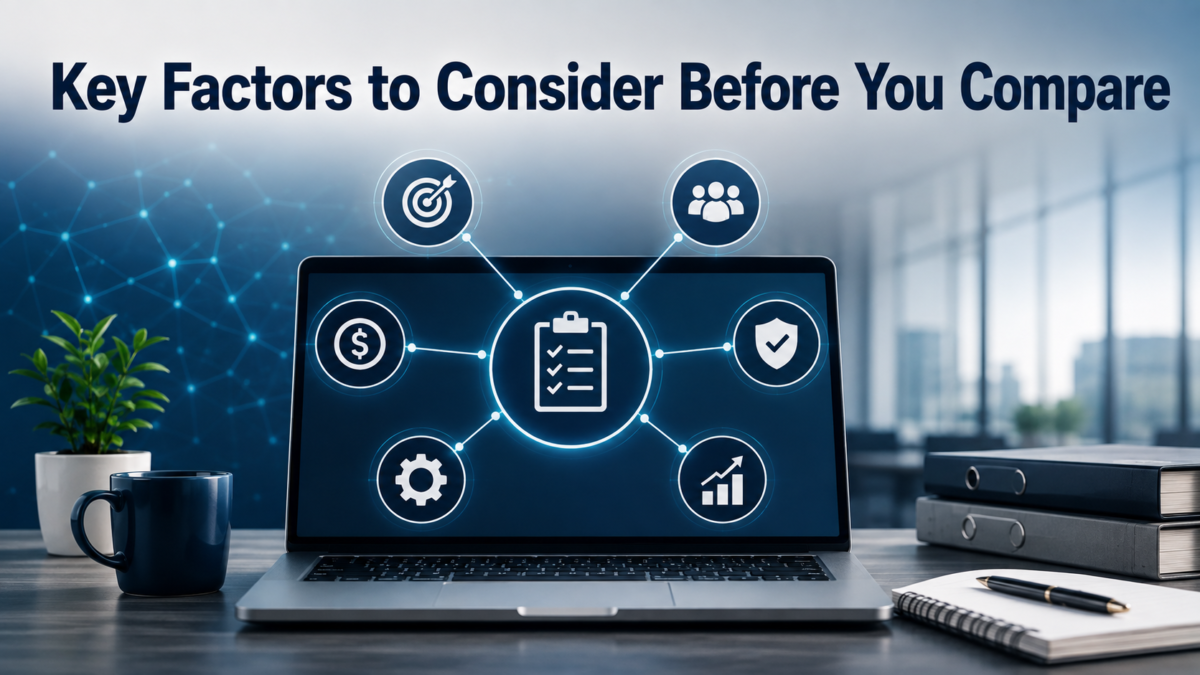
Before diving into specific platforms, it helps to define the criteria that matter most to your business. These factors form the foundation for any fair comparison and keep the decision objective.
Business Size and Industry
A freelancer needs simple invoicing and expense tracking, while a retail business needs inventory management and point-of-sale integration.
Service-based companies often prioritize time tracking and client billing, whereas manufacturers need cost tracking across production. Matching software to your industry avoids paying for features you will never use.
Budget and Pricing Model
Most accounting platforms charge monthly subscriptions that scale with the number of users or features unlocked, though some offer free tiers for very small businesses.
It is worth checking whether pricing increases sharply after an introductory period, since promotional rates can be misleading. Annual billing usually saves money compared to paying month to month.
Features You Actually Need
List the tasks your business performs weekly, such as sending invoices, reconciling bank accounts, or running payroll, and match them against each platform’s feature set.
Avoid being swayed by advanced features like multi-currency support or advanced inventory tools if your business does not currently need them. Focusing on real requirements keeps the comparison practical rather than theoretical.
Ease of Use and Learning Curve
Software that looks powerful on paper is not useful if your team struggles to navigate it daily. Look for clean dashboards, straightforward setup wizards, and mobile apps if you or your staff need to manage finances on the go. A shorter learning curve means faster adoption and fewer costly data entry errors.
Integrations and Support
Check whether the software connects smoothly with your bank, payment processor, e-commerce platform, and any CRM tools you already use. Reliable customer support, whether through live chat, phone, or a detailed knowledge base, becomes essential when you run into issues during tax season or month-end closing.
Popular Accounting Software Compared
The market offers several well-established platforms, each with a distinct strength. Understanding what each one does best makes it easier to compare accounting software without getting overwhelmed by options.
QuickBooks Online
QuickBooks Online remains one of the most widely used platforms, known for strong reporting, payroll add-ons, and a large network of certified accountants familiar with the software. It suits small to mid-sized businesses that want a proven, feature-rich system with room to grow.
Xero
Xero appeals to businesses that value clean design and unlimited users on most plans, making it a strong choice for growing teams. It offers solid inventory tracking, multi-currency support, and a large app marketplace for integrations.
FreshBooks
FreshBooks focuses heavily on invoicing and time tracking, making it especially popular with freelancers, consultants, and service-based businesses. Its simple interface and strong client communication tools make billing feel effortless compared to more complex platforms.
Wave
Wave offers free accounting and invoicing tools, funded through paid add-ons like payroll and payment processing. It works well for very small businesses or startups with tight budgets that need basic bookkeeping without a monthly subscription fee.
Zoho Books
Zoho Books fits businesses already using other Zoho products, since it integrates tightly within that ecosystem while offering solid automation and workflow features. It is competitively priced and includes strong client portal and project billing tools.
Sage
Sage Business Cloud Accounting is often chosen by businesses with more complex accounting needs, including detailed inventory and multi-entity management. It has a longer history in traditional accounting circles, appealing to businesses that want established, enterprise-grade reliability.
Feature and Pricing Comparison Table
The table below summarizes how these platforms compare across the factors that matter most when evaluating accounting software.
| Software | Best For | Starting Price | Payroll Support | Free Plan |
| QuickBooks Online | Small to mid-sized businesses | Paid plans, tiered | Yes (add-on) | No |
| Xero | Growing teams, unlimited users | Paid plans, tiered | Yes (add-on) | No |
| FreshBooks | Freelancers and service businesses | Paid plans, tiered | Limited | No |
| Wave | Startups and very small businesses | Free core features | Yes (add-on) | Yes |
| Zoho Books | Businesses using Zoho apps | Paid plans, tiered | Limited | Yes (very small businesses) |
| Sage | Complex or multi-entity businesses | Paid plans, tiered | Yes (add-on) | No |
This side-by-side view makes it easier to compare accounting software at a glance before testing any platform with a free trial.
Best Accounting Software by Business Type
Different business models benefit from different strengths, so matching your type to a platform speeds up the decision process considerably.
Freelancers and solopreneurs generally do best with FreshBooks or Wave, since both prioritize simple invoicing without unnecessary complexity. Small businesses with a handful of employees often prefer QuickBooks Online or Xero for their balance of features and scalability.
E-commerce businesses benefit from platforms with strong inventory tracking and payment gateway integrations, making Xero or Zoho Books good candidates. Service-based businesses that bill by the hour tend to favor FreshBooks for its time-tracking tools, while larger or multi-location businesses often lean toward Sage for its depth in complex accounting scenarios.
How to Choose the Right Accounting Software
Start by listing your must-have features, then eliminate any platform that fails to meet them regardless of price or popularity. Next, test your top two or three choices using free trials, entering real transactions to see how the workflow actually feels day to day.
Ask about data export options before committing, so you are never locked into a platform that becomes unsuitable later. Finally, involve your accountant or bookkeeper in the decision, since they will be using the software regularly and can flag issues you might overlook.
Frequently Asked Questions
Is free accounting software reliable for a growing business?
Free plans work well for very early-stage businesses but often lack payroll, advanced reporting, or multi-user access, so most businesses eventually upgrade to a paid tier.
Can I switch accounting software later without losing data?
Most platforms allow data export in standard formats, but migrating cleanly still takes planning, so it is best to choose carefully the first time.
Do I still need an accountant if I use accounting software?
Software handles day-to-day bookkeeping, but an accountant remains valuable for tax strategy, compliance, and reviewing financial statements for accuracy.
Which software works best during tax season?
QuickBooks Online and Xero are widely supported by accountants and offer strong reporting features that simplify tax preparation.
Conclusion
Taking the time to compare accounting software properly, rather than choosing based on brand recognition alone, leads to fewer headaches and better financial visibility long term.
QuickBooks and Xero suit growing businesses, FreshBooks fits freelancers, Wave works for tight budgets, Zoho Books benefits existing Zoho users, and Sage handles complex accounting needs. Matching your business size, budget, and required features to the right platform ensures your bookkeeping stays accurate and your team stays productive as you scale.
Related Articles
Enea Network Security Software for Filtering HTTP Traffic
Senior Software Engineer: Complete Career Guide
Focus School Software: Complete Guide to Its Features, Portals, and Everyday Use
What is Software Migration? A Complete Guide
UBCD536 Software Download: Complete Guide to Programming Your Scanner


