
UBCD536 Software Download: Complete Guide to Programming Your Scanner
August 12, 2026
Focus School Software: Complete Guide to Its Features, Portals, and Everyday Use
August 13, 2026
Software migration is the process of moving an application, its data, or its entire operating environment from one system, platform, or infrastructure to another. This shift can involve changing operating systems, upgrading databases, moving to cloud servers, or replacing outdated tools with modern alternatives. Businesses usually migrate software to improve performance, cut costs, strengthen security, or keep pace with growing technical demands.
Understanding what is software migration helps organizations plan smoother transitions and avoid unnecessary downtime. In simple words, it is like relocating your digital house from an old building to a new, better-equipped one while making sure nothing valuable gets lost along the way. This guide breaks down every important aspect of software migration in a simple and practical manner.
Understanding Software Migration in Depth
Before diving into technical details, it is important to understand what software migration really means at its core. This section explains the basic idea and clears up common confusion around the topic.
The Core Concept Explained Simply
At its heart, software migration means shifting a system’s data, code, or functionality from an old setup to a new one. The goal is always to preserve the original purpose of the software while improving how it runs.
This process can be small, like moving a single database, or massive, like relocating an entire company’s IT infrastructure to the cloud.
How It Differs from Software Upgrade or Update
Many people confuse migration with a simple software update, but the two are quite different in scope and impact. An update usually improves the existing version without changing its environment, whereas migration moves the software to a completely new platform or system. Migration often requires more planning, testing, and coordination compared to a routine update.
Key Terminology You Should Know
Before starting any migration project, it helps to understand a few common terms used throughout the process. Words like “legacy system,” “downtime,” “rollback,” and “data mapping” appear frequently in migration discussions.
Knowing these terms in advance makes it easier to follow migration plans and communicate with technical teams.
Why Do Organizations Migrate Software?
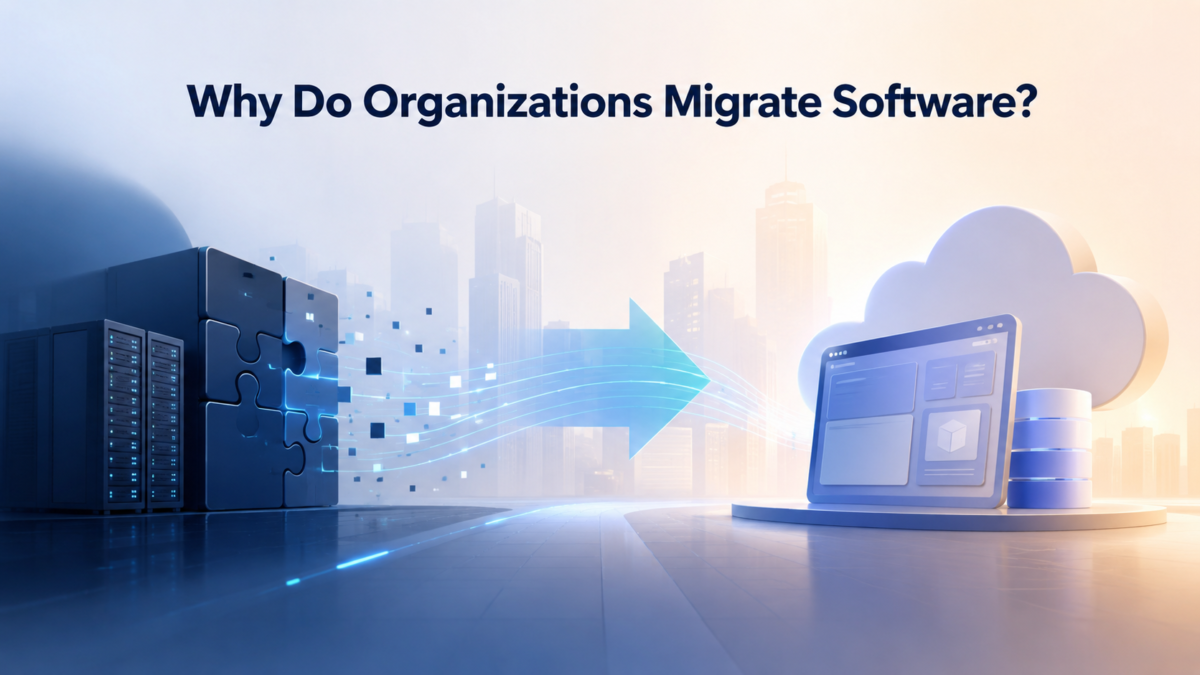
Companies rarely migrate software just for the sake of change; there are always practical reasons behind such a big decision. This section explains the most common motivations that push businesses toward migration projects.
Outdated Technology and Legacy Systems
Old systems often lack support for modern features, security patches, or integrations with newer tools.
As technology evolves, legacy software becomes harder to maintain and more expensive to keep running smoothly. Migrating away from outdated systems allows businesses to stay competitive and technically relevant.
Cost Reduction
Maintaining old infrastructure, especially physical servers, can be far more expensive than modern cloud-based alternatives.
Migration to newer platforms often reduces hardware costs, maintenance expenses, and staffing needs. Over time, this cost efficiency becomes one of the strongest reasons companies choose to migrate.
Scalability Needs
As a business grows, its software must be able to handle more users, more data, and more complex operations. Older systems often struggle to scale efficiently, leading to slowdowns or crashes during high demand. Migrating to scalable platforms ensures the software can grow alongside the business.
Security and Compliance Requirements
Older systems may not meet current security standards or industry compliance regulations. Migrating to updated platforms helps organizations meet legal requirements and protect sensitive data more effectively. This is especially important for industries like finance, healthcare, and government services.
Better Performance and Speed
Newer systems are generally built with improved architecture, faster processing, and better resource management. Migration often results in noticeably faster load times, smoother operations, and improved overall user experience. This performance boost directly impacts productivity and customer satisfaction.
Business Growth and Expansion
When companies expand into new markets or add new services, their existing software may not support these changes. Migration allows businesses to adopt systems that align with new operational needs and future expansion plans. This flexibility becomes essential for long-term business strategy.
Types of Software Migration
Software migration is not a single fixed process; it comes in several different forms depending on what exactly is being moved. Each type serves a specific purpose and involves its own set of challenges.
Data Migration
Data migration involves transferring information from one storage system to another, such as moving files from an old server to a new database. This type focuses heavily on maintaining data accuracy and preventing loss during the transfer. It is often the most sensitive part of any larger migration project.
Application Migration
Application migration means moving a software application from one environment to another, such as from a local server to a cloud platform. This type requires careful testing to ensure the application performs correctly in its new environment. Compatibility issues are the most common challenge during application migration.
Cloud Migration
Cloud migration refers to moving software, data, or entire IT operations from on-premises servers to cloud-based platforms. This has become one of the most popular migration types due to its cost savings and flexibility. Businesses often choose cloud migration to reduce hardware dependency and improve remote accessibility.
Database Migration
Database migration involves shifting from one database management system to another, such as moving from MySQL to PostgreSQL. This process requires precise mapping of data structures to avoid errors or mismatched information. Testing is critical here since even small mistakes can affect entire applications relying on that data.
Platform Migration
Platform migration means changing the underlying operating system or hardware that software runs on. This type is common when businesses switch from outdated hardware to more modern, efficient systems. It often requires significant testing since software behavior can vary across different platforms.
Storage Migration
Storage migration focuses specifically on moving data between different storage technologies, such as from traditional hard drives to solid-state or cloud storage. The main goal is improving speed, reliability, and storage capacity. This type is often part of larger data or cloud migration projects.
Business Process Migration
Business process migration involves shifting entire workflows, tools, or systems used to manage daily operations. This can include moving customer relationship management tools, accounting systems, or communication platforms. It usually requires employee training alongside the technical migration itself.
The Software Migration Process Step-by-Step
A successful software migration always follows a structured process rather than happening randomly. This section walks through each major step involved in a typical migration project.
Step 1: Planning and Assessment
Every migration begins with a detailed assessment of the current system, including its strengths, weaknesses, and dependencies. Teams identify what data and features need to move and what risks might arise during the transition. This step lays the foundation for the entire migration strategy.
Step 2: Choosing the Right Migration Strategy
Based on the assessment, teams decide which migration approach best suits their needs and resources. Factors like budget, timeline, and system complexity influence this decision heavily. Choosing the wrong strategy at this stage can lead to costly delays later.
Step 3: Designing the Migration Plan
A detailed migration plan outlines timelines, responsibilities, tools, and backup procedures before any actual transfer begins. This plan acts as a roadmap that keeps the entire team aligned throughout the project. Clear documentation at this stage reduces confusion during execution.
Step 4: Testing Before Migration
Before moving anything permanently, teams run tests in a controlled environment to identify potential issues. This helps catch compatibility problems, data errors, or performance concerns early on. Skipping this step often leads to major disruptions during the actual migration.
Step 5: Execution or Data Transfer
This is the actual process of moving data, applications, or systems to their new environment. Depending on the chosen strategy, this step may happen all at once or gradually over time. Careful monitoring during execution helps catch and fix issues immediately.
Step 6: Post-Migration Testing
Once migration is complete, thorough testing ensures everything functions as expected in the new environment. Teams check data accuracy, application performance, and user access to confirm a successful transition. Any errors found here are corrected before the system goes fully live.
Step 7: Monitoring and Optimization
Even after successful migration, ongoing monitoring helps identify performance issues or unexpected behavior over time. Teams fine-tune settings and configurations to optimize the new system for long-term stability. This step ensures the migration delivers lasting value rather than short-term results.
Common Software Migration Strategies
Different projects call for different migration approaches depending on risk tolerance and business needs. This section explains the most widely used migration strategies.
Big Bang Migration
In this approach, the entire migration happens at once, usually during a scheduled downtime window. It is faster to complete but carries higher risk since any errors affect the whole system immediately. This strategy works best for smaller, less complex systems.
Phased or Incremental Migration
This method breaks the migration into smaller stages, moving one part of the system at a time. It reduces risk significantly since issues can be identified and fixed before affecting the entire system. However, it typically takes longer to complete than a big bang approach.
Parallel Migration
In parallel migration, both the old and new systems run simultaneously for a period of time. This allows teams to compare results and catch discrepancies before fully switching over. It offers strong safety but requires more resources to maintain two systems at once.
Pilot Migration
Pilot migration involves testing the migration process on a small, limited scale before rolling it out fully. This helps identify potential problems in a low-risk environment before committing to a full-scale migration. It is especially useful for large or highly complex systems.
Benefits of Software Migration
Migration projects require significant effort, but the long-term advantages usually outweigh the initial challenges. This section highlights the key benefits organizations gain from successful migration.
Improved Efficiency
Modern systems are generally faster and more streamlined, reducing the time needed to complete daily tasks. Employees spend less time dealing with technical glitches and more time focusing on productive work. This efficiency boost often leads to measurable business improvements.
Enhanced Security
Newer platforms typically include stronger security features that better protect sensitive data from threats. Migration helps close security gaps that existed in outdated systems. This is particularly important as cyber threats continue to grow more sophisticated.
Cost Savings
While migration involves upfront investment, it often leads to significant savings over time through reduced maintenance and hardware costs. Cloud-based systems, in particular, offer flexible pricing based on actual usage. These savings can be redirected toward other business priorities.
Better User Experience
Faster, more reliable systems create a smoother experience for both employees and customers. Improved interfaces and functionality often lead to higher satisfaction and productivity. A better user experience can directly influence customer retention and business reputation.
Future-Proofing the Business
Migrating to modern, scalable systems prepares businesses for future growth and technological changes. It reduces the risk of falling behind competitors who adopt newer technologies faster. This forward-thinking approach helps ensure long-term business sustainability.
Challenges and Risks in Software Migration
Despite its benefits, software migration comes with real risks that organizations must prepare for carefully. This section outlines the most common challenges faced during migration projects.
Data Loss Risks
Improper handling during migration can lead to partial or complete data loss, which can be extremely costly. This risk makes backups and careful planning absolutely essential throughout the process. Even small oversights can result in significant data recovery efforts.
Downtime Issues
Many migrations require some system downtime, which can disrupt business operations if not managed properly. Extended downtime can affect customer service, revenue, and overall business reputation. Careful scheduling helps minimize this impact as much as possible.
Compatibility Problems
Software that worked perfectly in the old environment may face compatibility issues in the new one. This often requires additional coding, testing, or third-party tools to resolve. Compatibility problems are among the most time-consuming challenges in migration projects.
Employee Training Needs
New systems often come with different interfaces and workflows that employees must learn to use effectively. Without proper training, productivity can temporarily decline after migration. Investing in training helps teams adapt more quickly and confidently.
Budget Overruns
Migration projects can sometimes exceed their planned budgets due to unexpected technical challenges or delays. Poor initial planning is often the root cause of these overruns. Setting realistic budgets with contingency funds helps manage this risk effectively.
Best Practices for a Successful Migration
Following proven best practices significantly increases the chances of a smooth and successful migration. This section covers the most important guidelines to follow.
Backup Everything First
Before starting any migration, creating a complete backup of all data and systems is absolutely essential. This ensures that even if something goes wrong, the original system can be restored quickly. Skipping this step is one of the most common and costly mistakes.
Involve Stakeholders Early
Getting input from all relevant teams and stakeholders early in the process helps identify potential issues sooner. Their insights often reveal practical concerns that technical teams might overlook. Early involvement also improves overall buy-in and cooperation throughout the project.
Test in Small Batches
Rather than migrating everything at once, testing with smaller batches of data or features reduces overall risk. This approach makes it easier to identify and fix problems before they affect the entire system. Small-batch testing is especially useful for large, complex migrations.
Have a Rollback Plan
A solid rollback plan allows teams to quickly revert to the original system if serious issues arise during migration. This safety net reduces panic and confusion during unexpected problems. Every migration plan should include clear rollback procedures from the start.
Monitor Performance After Migration
Continuous monitoring after migration helps catch performance issues that may not appear immediately. Regular check-ins allow teams to fine-tune the new system for optimal results. This ongoing attention ensures the migration delivers its intended long-term benefits.
Tools Commonly Used in Software Migration
Various tools support different stages of the migration process, making transitions smoother and more reliable. The table below highlights common categories of migration tools and their general purpose.
| Tool Category | Purpose |
| Data Migration Tools | Transfer and map data between different storage systems |
| Database Migration Tools | Convert and move database structures between platforms |
| Cloud Migration Tools | Assist in moving applications and data to cloud environments |
| Testing and Validation Tools | Verify data accuracy and system functionality after migration |
| Monitoring Tools | Track system performance and detect issues post-migration |
Choosing the right combination of tools depends on the specific type and scale of the migration project.
Real-Life Examples of Software Migration
Understanding real-world scenarios helps clarify how migration works in practical business situations. This section presents two common examples to illustrate the concept further.
Example 1: Cloud Migration
A mid-sized retail company running its systems on physical servers decided to move its operations to a cloud platform. This shift allowed the business to reduce hardware costs while improving system accessibility for remote teams. The migration also enabled better scalability during high-demand shopping seasons.
Example 2: Database Migration
A financial services firm needed to move from an older database system to a more secure, modern platform. The migration process involved careful data mapping to ensure account records remained accurate and complete. As a result, the firm achieved stronger security compliance and faster transaction processing.
Future of Software Migration
Software migration continues to evolve alongside advancements in technology and business needs. This section briefly explores where migration practices are heading in the coming years.
Role of AI and Automation
Artificial intelligence is increasingly being used to automate parts of the migration process, such as data mapping and error detection. This reduces manual effort and speeds up overall project timelines. As AI tools mature, migrations are expected to become faster and more accurate.
Trends to Watch
Growing reliance on cloud infrastructure, hybrid systems, and automated testing tools are shaping the future of migration practices. Businesses are also placing greater emphasis on security-first migration strategies. Staying updated on these trends helps organizations plan more effective future migrations.
Conclusion
Software migration plays a vital role in helping businesses stay efficient, secure, and competitive in a constantly changing technological landscape. Understanding what is software migration, along with its types, processes, and best practices, allows organizations to plan smoother transitions with fewer risks.
While challenges like downtime and data loss are real concerns, careful planning and the right strategy can minimize these issues significantly. As technology continues to advance, migration will remain an essential part of long-term business growth and digital transformation.
FAQs
What is software migration in simple words?
Software migration means moving software, data, or systems from one environment to another for better performance or efficiency.
Is software migration the same as an upgrade?
No, an upgrade improves an existing system, while migration moves it entirely to a new platform or environment.
How long does software migration usually take?
The timeline varies widely depending on system size and complexity, ranging from a few days to several months.
What is the biggest risk in software migration?
Data loss is generally considered the most significant risk if migration is not planned and backed up properly.
Related Articles
Cloud Based Workforce Management Software: Complete Guide 2026
Clipping Software Guide 2026: Features, Tools, Benefits & How to Use
Custom Manufacturing Software: A Complete Guide for Modern Manufacturers
Seisa Mouse Software: Complete Guide to Installation, Features & Customization
Export List of Software Installed : on Your Computer (Complete Guide)


