
Clipping Software Guide 2026: Features, Tools, Benefits & How to Use
July 29, 2026
Real Estate Transaction Management Software: Complete Guide 2026
July 29, 2026
Introduction
Cloud based workforce management software has become an essential tool for businesses that want to manage employees efficiently without heavy IT setup. It allows companies to handle scheduling, attendance, payroll, and performance tracking from anywhere using the internet.
This guide explains every important aspect of this software in simple words. Small businesses and large enterprises both benefit from this technology equally. By the end of this article, you will clearly understand why this software is becoming a business necessity.
What is Workforce Management?
Workforce management is a set of practices that help businesses plan employee schedules, monitor attendance, and ensure productivity stays high.
It focuses on making sure the right number of employees are working at the right time. Without proper workforce management, businesses often face understaffing or overstaffing issues, leading to financial losses.
What is Cloud Based Workforce Management Software?
Cloud based workforce management software is an online platform that automates employee-related tasks such as scheduling, time tracking, and payroll.
Instead of installing software on local computers, businesses access it through a web browser or mobile app. This makes the system flexible and easy to use for teams working from multiple locations.
Why Businesses Are Shifting to Cloud Solutions
Many businesses are moving away from traditional on-premise systems because cloud solutions are cheaper and easier to maintain. Companies no longer need to invest in expensive servers or dedicated IT staff.
Cloud based workforce management software also updates automatically, so businesses always use the latest version without extra effort.
Who Needs This Software?
This software is useful for small businesses, large enterprises, remote teams, and field-based workforces. Retail stores use it for shift scheduling, while logistics companies use it to track field employees. Any business that manages multiple employees can benefit from adopting this system.
Understanding the Basics
Before choosing a system, it is important to understand how workforce management software differs from other HR tools. This section explains the technical foundation behind cloud based workforce management software.
Difference Between HRMS, HRIS, and WFM Software
HRMS and HRIS mainly focus on storing employee records, benefits, and payroll history. Workforce management software, on the other hand, focuses on daily operational tasks like scheduling and attendance.
Some platforms combine both functions, offering a complete solution for HR and workforce operations together.
How Cloud Technology Powers Workforce Management
Cloud technology stores data on remote servers instead of local computers. This means employees and managers can access schedules or attendance records from any device with internet access.
Cloud based workforce management software uses this technology to provide real-time updates across all locations instantly.
Key Terminologies to Know
Understanding basic terms helps businesses choose the right software confidently. Shift scheduling refers to assigning work hours to employees.
Geofencing allows attendance tracking based on location. Compliance management ensures the business follows labor laws correctly at all times.
Core Features of Cloud Based Workforce Management Software
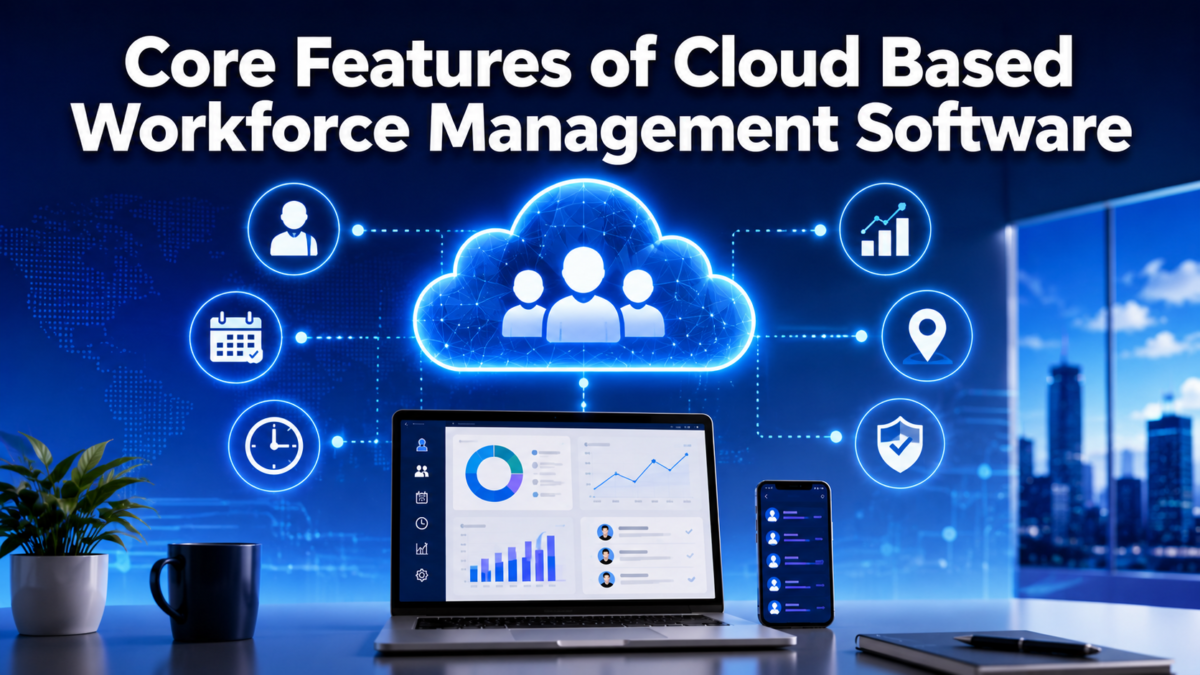
Every good workforce management platform offers a set of essential features that simplify daily operations. Below is a table summarizing the most common features found in these systems.
| Feature | Purpose |
| Employee Scheduling | Assigns shifts and manages availability |
| Time & Attendance | Tracks clock-in and clock-out times |
| Leave Management | Handles employee leave requests |
| Payroll Integration | Connects attendance data with salary processing |
| Task Management | Assigns and monitors daily tasks |
| Performance Analytics | Measures employee productivity |
| Compliance Tools | Ensures labor law adherence |
| Mobile Access | Allows usage through smartphones |
Employee Scheduling & Shift Planning
Scheduling tools allow managers to create shift plans within minutes instead of hours. Employees can view their schedules online and request changes if needed. This reduces confusion and last-minute scheduling conflicts significantly.
Time & Attendance Tracking
Attendance tracking records employee working hours accurately using digital clock-in systems. Many platforms use biometric or geofencing technology to prevent time fraud. This ensures payroll calculations remain fair and accurate.
Leave & Absence Management
Employees can apply for leave directly through the software, and managers can approve requests instantly. This removes the need for paper-based leave forms. Automated tracking also helps businesses monitor leave balances easily.
Payroll Integration
Payroll integration connects attendance and leave data directly to salary calculations. This reduces manual errors and saves significant administrative time. Businesses can generate accurate payslips without cross-checking multiple systems.
Task & Project Management
Some platforms allow managers to assign daily tasks alongside scheduling. Employees can update task progress in real time. This feature is especially useful for teams working on multiple ongoing projects.
Performance Tracking & Analytics
Performance analytics help managers identify top-performing employees and areas needing improvement. Reports are generated automatically based on attendance and task completion data. This supports better decision-making during appraisals.
Compliance & Labor Law Management
Compliance features ensure businesses follow local labor regulations regarding working hours and overtime. Automated alerts notify managers of potential violations before they occur. This reduces legal risks for the organization.
Reporting & Real-Time Dashboards
Dashboards provide a visual summary of workforce data, including attendance trends and productivity levels. Managers can access these reports instantly without manual calculations. This helps in making quick, informed business decisions.
Mobile App Accessibility
Mobile accessibility allows employees to clock in, apply for leave, or check schedules from their smartphones. This is especially helpful for remote and field-based workers. It increases convenience and reduces dependency on office computers.
Biometric & Geofencing Integration
Biometric systems use fingerprints or facial recognition to verify employee identity during attendance marking. Geofencing ensures employees can only clock in within a specific work location radius. Together, these features prevent buddy punching and time theft.
Benefits of Cloud Based Workforce Management Software
Adopting this software brings measurable improvements in efficiency and cost savings. The following points highlight the major advantages businesses experience.
- Reduces manual paperwork and administrative workload significantly
- Provides real-time visibility into employee attendance and performance
- Improves payroll accuracy by minimizing calculation errors
- Supports remote and hybrid work environments effectively
- Enhances employee satisfaction through self-service features
- Ensures data security through encrypted cloud storage
Challenges & Limitations
While beneficial, cloud based workforce management software also comes with certain challenges businesses should consider carefully.
Data Security & Privacy Concerns
Storing employee data on cloud servers raises concerns about unauthorized access. Businesses must choose vendors with strong encryption and security certifications. Regular audits help ensure data remains protected at all times.
Internet Dependency
Cloud based systems require stable internet connectivity to function properly. Areas with poor connectivity may experience delays in accessing real-time data. Businesses should evaluate their internet infrastructure before adopting cloud solutions.
Integration Issues with Legacy Systems
Some older payroll or HR systems may not integrate smoothly with new cloud platforms. This can create data synchronization problems during the transition period. Proper planning and vendor support can help minimize these issues.
Learning Curve for Employees
Employees unfamiliar with digital tools may need time to adapt to new systems. Proper training sessions help reduce resistance and confusion. Most vendors provide onboarding support to ease this transition.
Subscription Costs Over Time
Although cloud solutions reduce upfront costs, long-term subscription fees can add up. Businesses should calculate total cost of ownership before finalizing a vendor. Comparing pricing plans helps avoid unexpected expenses later.
Key Industries That Use This Software
Different industries rely on workforce management software based on their specific operational needs.
| Industry | Common Use Case |
| Retail | Shift scheduling and attendance tracking |
| Healthcare | Staff rostering and compliance management |
| Manufacturing | Shift-based labor tracking |
| IT & Remote Teams | Remote attendance and task monitoring |
| Hospitality | Flexible scheduling for seasonal staff |
| Logistics | Field employee tracking via geofencing |
How to Choose the Right Software
Choosing the right platform requires careful evaluation of business needs and vendor offerings.
Identifying Business Needs
Businesses should first identify specific pain points, such as scheduling conflicts or payroll errors. This helps narrow down software options that address those exact problems. A clear needs assessment prevents unnecessary feature overload.
Must-Have Features Checklist
A checklist should include scheduling, attendance tracking, payroll integration, and mobile access. Businesses should avoid platforms lacking these core functionalities. This ensures the chosen software covers essential daily operations.
Pricing Models
Most vendors offer per-user monthly pricing or tiered subscription plans. Businesses should compare costs based on their team size and required features. Free trials often help evaluate value before committing financially.
Integration Capabilities
The software should integrate smoothly with existing payroll, HR, or CRM systems. Poor integration can lead to duplicate data entry and errors. Checking integration compatibility beforehand saves future technical headaches.
Security & Compliance Standards
Vendors should follow recognized security standards like data encryption and regular backups. Compliance certifications indicate a trustworthy provider. Businesses handling sensitive employee data must prioritize this factor.
Customer Support & Vendor Reliability
Reliable customer support ensures quick resolution of technical issues. Businesses should check vendor reviews and support response times beforehand. A dependable vendor reduces downtime and operational disruptions.
Free Trial & Demo Considerations
Testing software through a free trial helps businesses understand its real-world usability. Demos allow teams to explore features before making a purchase decision. This reduces the risk of choosing an unsuitable platform.
Popular Cloud Based Workforce Management Software
Several established platforms dominate the market, each offering unique strengths for different business sizes.
| Software | Best For |
| UKG (Kronos) | Large enterprises with complex scheduling needs |
| ADP Workforce Now | Payroll-heavy businesses |
| Deputy | Small to medium retail and hospitality teams |
| When I Work | Simple shift scheduling for small teams |
| BambooHR | Combined HR and workforce tracking |
| Zoho People | Affordable option for growing businesses |
| Workday | Enterprise-level HR and workforce integration |
Comparing competitors shows that UKG and Workday suit large enterprises, while Deputy and When I Work work better for smaller teams needing simple scheduling tools.
Implementation Guide
Successful implementation requires careful planning to avoid disruption during the transition period.
Steps to Implement Software
Implementation begins with selecting the right vendor followed by data migration and configuration. Businesses should set up user roles and permissions early. Testing the system before full rollout prevents operational errors.
Employee Onboarding & Training
Training sessions help employees understand how to use scheduling and attendance features correctly. Video tutorials and vendor support materials speed up the learning process. Proper onboarding increases adoption rates across teams.
Data Migration from Old Systems
Migrating historical employee data requires careful mapping to avoid loss or duplication. Businesses should back up existing records before transferring them. Vendor support teams often assist with this technical process.
Common Implementation Mistakes
Rushing implementation without proper testing often leads to errors post-launch. Skipping employee training creates resistance and confusion later. Businesses should follow a structured rollout plan to avoid these mistakes.
Future Trends in Workforce Management Software
The future of cloud based workforce management software is shaped by emerging technologies and changing work patterns.
AI & Machine Learning in Scheduling
Artificial intelligence is increasingly used to predict staffing needs based on historical data. This reduces manual scheduling errors and improves efficiency. AI-driven scheduling adapts quickly to sudden demand changes.
Predictive Analytics for Workforce Planning
Predictive analytics helps businesses forecast future staffing requirements accurately. This allows proactive hiring and resource allocation decisions. Companies using this feature experience fewer staffing shortages.
Integration with IoT Devices
IoT devices are being integrated with workforce systems for real-time location and productivity tracking. This is particularly useful in manufacturing and logistics sectors. Such integration improves overall operational visibility.
Growing Demand for Remote Tools
As remote and hybrid work models grow, demand for flexible workforce tools continues rising. Businesses need systems that support distributed teams effectively. Cloud based platforms are naturally suited for this shift.
Automation & Self-Service HR
Automation reduces manual HR tasks like leave approvals and shift swaps. Self-service portals empower employees to manage their own requests. This reduces administrative burden on HR teams significantly.
Case Studies
Small Business Success Story
A small retail business struggling with manual scheduling adopted cloud based workforce management software and reduced scheduling errors by half within three months.
Employee satisfaction improved due to easier shift swap requests. Payroll processing time also decreased significantly.
Enterprise-Level Implementation Example
A large manufacturing company implemented cloud workforce software across multiple locations to standardize attendance tracking.
This improved compliance with labor regulations across different regions. Centralized reporting also helped management make faster staffing decisions.
Frequently Asked Questions
Is cloud based workforce management software suitable for small businesses?
Yes, many platforms offer affordable plans specifically designed for small teams and growing businesses.
Does this software work without internet access?
Most features require internet connectivity, though some platforms offer limited offline functionality.
Can this software integrate with existing payroll systems?
Yes, most modern platforms support integration with popular payroll and HR software solutions.
Is employee data safe on cloud platforms?
Reputable vendors use encryption and security certifications to protect sensitive employee information.
Conclusion
Cloud based workforce management software has transformed how businesses handle scheduling, attendance, and payroll processes. It offers flexibility, cost savings, and improved accuracy compared to traditional systems.
Businesses of all sizes can benefit from adopting this technology to streamline daily operations. Choosing the right platform requires careful evaluation of features, pricing, and vendor reliability.
As technology continues evolving, cloud based workforce management software will remain essential for efficient business operations.
Related Articles
Software TM1 : A Complete Guide to IBM Planning Analytics
Fleet Software Management: The Complete Guide
Software Configuration Management Jobs: A Complete Career Guide


