

Cloud Based Workforce Management Software: Complete Guide 2026
July 29, 2026
Cabinet Design Software: Complete Guide for Beginners & Professionals
July 29, 2026
Introduction
Real estate transactions used to depend heavily on paper files, fax machines, and manual follow-ups between agents, lenders, and clients. As deal volumes grew, this manual approach became slow and error-prone, often causing missed deadlines or compliance issues.
Real estate transaction management software was created to bring structure and automation into this process. It gives every party involved a shared digital space to upload, sign, and track documents. Today, brokerages of every size use these platforms to stay organized and compliant while closing deals faster.
What is Real Estate Transaction Management Software?
This software is a digital platform built specifically to manage the paperwork and workflow of property transactions. It stores contracts, disclosures, and addenda in one secure location instead of scattered folders or inboxes.
Brokers can review and approve files before they reach compliance deadlines, reducing legal risk. Agents get a clear view of what stage each transaction is in at any given moment.
Why the Real Estate Industry Needs It
Real estate deals involve multiple parties working under strict timelines, which makes coordination difficult without a central system. A single missed signature or expired deadline can delay or even cancel a sale.
This software keeps everyone accountable by sending automated reminders and tracking task completion. It reduces the administrative burden that agents would otherwise carry manually.
Who Uses This Software
Solo agents, real estate teams, brokerages, and title companies are the primary users of this technology. Brokers use it to oversee compliance across dozens or hundreds of active listings.
Title and escrow companies rely on similar tools to coordinate closing documents with lenders and buyers. Even property management firms use adapted versions for lease and renewal paperwork.
Understanding the Real Estate Transaction Process
A typical real estate deal moves through several stages, each with its own documents and deadlines. Manual handling of these stages often causes delays, miscommunication, and compliance gaps. Transaction management software organizes this entire journey into a single trackable workflow.
Key Stages: Listing to Closing
Every transaction generally begins with a listing agreement, followed by an offer, a signed purchase contract, and various contingency periods. Inspection, appraisal, and financing approvals happen in the middle stages, each requiring specific paperwork.
The final stage involves closing disclosures, fund transfers, and the transfer of ownership documents. Software platforms map these stages into checklists so nothing gets missed.
Common Pain Points in Manual Transaction Management
Without software, agents often rely on email threads and printed folders that are easy to lose or misplace. Deadlines get missed because there is no automated reminder system tracking contingency periods.
Broker oversight becomes difficult when files are not centralized, increasing legal exposure. These pain points directly reduce productivity and client satisfaction.
Compliance and Legal Risks Without Proper Systems
Real estate transactions are governed by strict state and federal regulations regarding disclosures and record-keeping. Manual systems make it hard to prove that required documents were signed and submitted on time.
Brokers can face audits, fines, or lawsuits if paperwork is incomplete or improperly stored. Transaction management software creates a digital audit trail that protects both agents and brokerages.
Core Features of Transaction Management Software
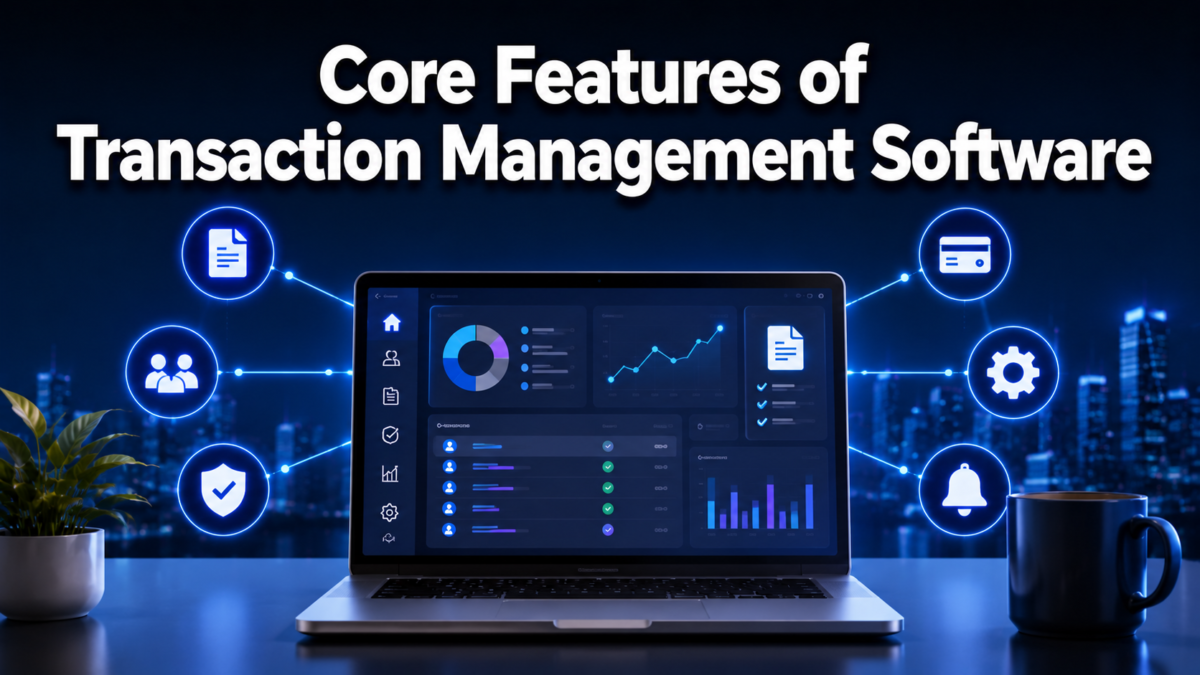
Most platforms in this category share a common set of features designed to simplify document handling and communication. These features work together to reduce manual work and improve accuracy throughout the deal lifecycle.
Document Storage and Organization
All contracts, disclosures, and addenda are stored digitally in one searchable location tied to each transaction. This eliminates the need for physical filing cabinets or scattered digital folders.
Agents can quickly locate any document by searching the property address or client name. Version control also ensures everyone is working from the latest signed copy.
E-Signature Integration
Built-in or integrated e-signature tools allow clients to sign documents from any device without printing or scanning.
This speeds up the offer and acceptance process significantly compared to traditional methods. Signature status is tracked automatically, so agents know exactly who still needs to sign. Many platforms also timestamp signatures for legal validity.
Task and Deadline Automation
The software automatically generates checklists based on contract dates like inspection periods or financing contingencies. Reminders are sent to agents and clients before deadlines approach, reducing the chance of missed dates.
This automation removes the mental burden of manually tracking every date on a calendar. It also helps brokers see which transactions are falling behind schedule.
Broker Compliance Review Tools
Brokers can review, comment on, and approve documents directly within the platform before a deal proceeds. This creates a clear approval trail that satisfies regulatory requirements in most states.
Compliance issues can be flagged early rather than discovered after closing. This feature is especially valuable for larger brokerages managing many agents.
Communication and Collaboration Tools
Shared access allows agents, clients, lenders, and title companies to communicate within the same transaction file.
This reduces the need for lengthy email chains that are easy to lose track of. Notifications keep everyone updated when a new document is uploaded or signed. Centralized communication also improves the overall client experience.
Commission and Payout Tracking
Some platforms include tools to calculate commission splits between agents, teams, and brokerages automatically. This reduces disputes and manual calculation errors during payout time.
Reports can be generated showing commission history across multiple transactions. This feature is particularly useful for teams with complex split structures.
Templates and State-Specific Forms
Most platforms provide pre-built templates that match state-specific legal requirements for real estate contracts. This saves agents from having to source or recreate forms manually for every transaction.
Templates are usually updated automatically when state regulations change. This reduces the risk of using outdated or non-compliant documents.
Benefits of Using Transaction Management Software
Adopting this software brings measurable improvements to how agents and brokerages operate daily. The benefits extend beyond time savings into better compliance and stronger client relationships.
Time Savings and Workflow Efficiency
Automated checklists and reminders free up hours that agents would otherwise spend on manual tracking. Faster e-signatures mean deals move through each stage without unnecessary delays.
Agents can handle a higher volume of transactions without feeling overwhelmed. This efficiency directly translates into more closed deals per month.
Reduced Paperwork Errors and Improved Compliance
Digital templates and automated checklists significantly lower the chance of missing required signatures or disclosures. Broker review tools catch mistakes before they become legal problems.
This reduces the risk of fines, audits, or failed transactions due to incomplete paperwork. Overall accuracy improves across the entire brokerage.
Better Communication and Scalability
Centralized communication tools keep clients informed and reduce confusion during the transaction process. As a brokerage grows, the same software scales to handle more agents and transactions without added complexity.
This makes it easier to maintain consistent standards across a growing team. Clients also perceive brokerages using organized systems as more professional.
Popular Real Estate Transaction Management Platforms
Several established platforms dominate this market, each with slightly different strengths. Comparing these options helps agents and brokers choose a tool that fits their specific workflow.
| Platform | Best For | Key Strength |
| Dotloop | Agents and small teams | Simple e-signature and document flow |
| SkySlope | Mid-size to large brokerages | Strong compliance and audit tools |
| DocuSign Rooms for Real Estate | Agents needing trusted e-signatures | Widely recognized signature technology |
| Brokermint | Brokerages needing commission tracking | Detailed commission calculations |
| Paperless Pipeline | Small to mid-size brokerages | Straightforward transaction checklists |
| TransactionDesk (Lone Wolf) | Large brokerages and MLS integration | Deep MLS and forms integration |
| Qualia | Title and escrow companies | Closing and escrow-focused workflow |
Comparing Competitor Strengths
Dotloop and Paperless Pipeline are known for their simplicity, making them ideal for solo agents or small teams. SkySlope and TransactionDesk cater more toward larger brokerages that need advanced compliance and MLS integration.
Brokermint stands out specifically for commission management, which some competitors handle less thoroughly. Qualia serves a different niche entirely, focusing on title and escrow rather than general agent workflows.
How to Choose the Right Software
Selecting the right platform depends on the size of your business, your budget, and the tools you already use. Taking time to evaluate these factors prevents costly switching later.
Assessing Business Needs and Budget
Solo agents typically need simpler, lower-cost tools focused on documents and signatures. Larger brokerages require advanced compliance oversight and multi-agent management features.
Budget should be weighed against the time saved and errors avoided, not just the subscription price. Many platforms offer tiered pricing based on team size.
Integration and Ease of Use
The software should integrate smoothly with existing CRM, MLS, and accounting tools already in use. A steep learning curve can slow adoption, so intuitive design matters for team-wide use. Customer support and training resources help new users get comfortable faster. Strong data security practices should also be confirmed before committing to any platform.
Implementation and Onboarding Process
Switching from manual systems to software requires a clear plan to avoid disruption. A structured rollout ensures agents adopt the new system smoothly.
Migrating and Training Your Team
Start by moving active transaction templates and forms into the new platform before going fully live. Hands-on training sessions help agents understand new workflows without confusion.
Setting up standardized checklists early prevents inconsistent usage across the team. Ongoing support during the first few months helps resolve early challenges quickly.
Compliance and Legal Considerations
Every state has its own real estate regulations, making compliance a central reason brokerages adopt this software.
Regulations and Data Security
State-specific disclosure rules must be reflected accurately in the templates being used. Data privacy laws require secure storage and controlled access to sensitive client information.
Record retention policies vary by state, and the software should support required storage durations. Broker oversight tools help ensure every transaction meets these legal standards consistently.
Future Trends in Real Estate Transaction Management
The technology behind these platforms continues to evolve alongside broader real estate innovation.
AI, Blockchain, and Smart Contracts
Artificial intelligence is increasingly used to review documents automatically and flag missing information. Blockchain technology is being explored to create tamper-proof transaction records for added security.
Smart contracts may eventually automate parts of the closing process based on predefined conditions. These innovations aim to make transactions faster and more secure over time.
FAQs
Is real estate transaction management software expensive?
Pricing varies widely depending on team size, with solo-agent plans being significantly cheaper than brokerage-level packages.
Can it replace a real estate attorney?
No, it organizes and tracks documents but does not provide legal advice or replace professional legal counsel.
Is it secure for sensitive documents?
Most reputable platforms use encryption and secure cloud storage to protect client and transaction data.
Does it work for both residential and commercial real estate?
Yes, many platforms support both property types, though some tools specialize more in one over the other.
Conclusion
Real estate transaction management software has become essential for agents and brokerages aiming to stay organized, compliant, and efficient. It replaces manual paperwork with automated checklists, e-signatures, and centralized communication.
Choosing the right platform depends on business size, budget, and required integrations. As the industry moves toward AI and blockchain-driven innovation, this software will continue playing a central role in how properties are bought and sold.
Related Articles
Fleet Software Management: The Complete Guide
Software Configuration Management Jobs: A Complete Career Guide
Drovenio Software Development Tips: A Complete Guide for Developers
Technolotal Software Updates: Everything You Need to Know
Software Technolotal: The Complete Guide to Understanding Software Technology


