
Material Nesting Software for Length of Material: A Complete Guide
July 31, 2026
Flooring Layout Software: Complete Guide to Features, Benefits & Best Tools (2026)
July 31, 2026
The architecture, engineering, and construction industry moves fast, and the tools professionals rely on move even faster. Following AEC software news today helps firms understand which platforms are evolving, which companies are merging, and which technologies are becoming standard practice.
From BIM upgrades to AI-driven design tools, the software landscape is shifting toward smarter, more connected workflows. This article breaks down the current state of the industry, the major players, and what professionals should watch for in the coming months.
Understanding AEC Software and Its Growing Importance
AEC software refers to the digital tools used to design, plan, manage, and construct buildings and infrastructure projects. These platforms have grown from simple drafting programs into complete ecosystems that connect architects, engineers, and contractors on a single project.
What AEC Software Actually Does
AEC software handles everything from initial concept sketches to final construction documentation. It allows teams to create 3D models, calculate structural loads, estimate costs, and track project timelines within one connected environment. Instead of relying on scattered spreadsheets and paper drawings, teams now work from a shared digital model that updates in real time.
Why Following AEC Software News Today Matters
Firms that keep up with AEC software news today are able to adopt new features before competitors, avoid outdated workflows, and reduce costly errors during construction.
Software updates often bring compliance changes, security patches, and productivity tools that directly affect project delivery. Staying informed is no longer optional for firms that want to remain competitive in a fast-changing market.
Current State of the AEC Software Industry
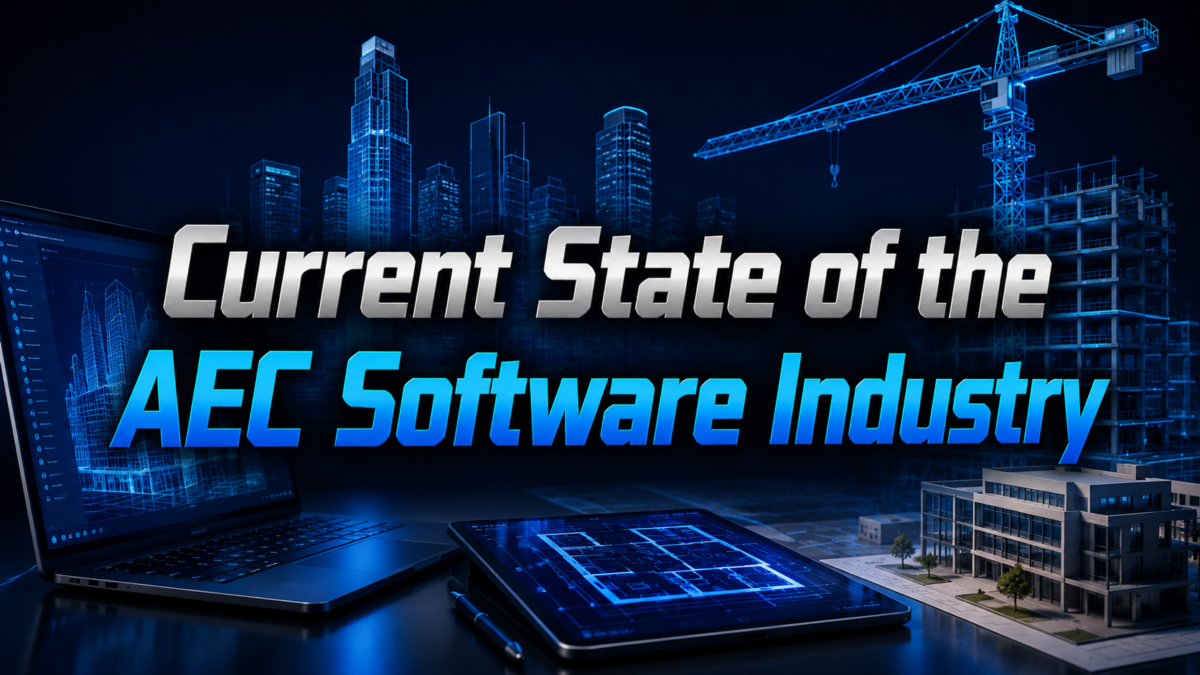
The AEC software market is growing steadily as more firms transition away from legacy desktop tools toward connected, cloud-based platforms. This shift is reshaping how companies budget for technology and train their teams.
Market Growth and Key Players
Major companies such as Autodesk, Nemetschek, Bentley Systems, and ARKANCE continue to dominate the space through acquisitions and product expansion. Nemetschek’s recent agreement to acquire Heavy
Construction Systems Specialists (HCSS) shows how established software groups are expanding into specialized areas like infrastructure and heavy civil construction. These moves signal consolidation, with fewer but more capable platforms serving the entire project lifecycle.
Shift Toward Cloud and Subscription Models
Most AEC vendors have moved away from one-time software purchases toward subscription-based cloud platforms.
This model gives firms continuous access to updates without needing manual installations, while also enabling real-time collaboration between teams working in different locations. The tradeoff is an ongoing cost structure that smaller firms must budget for carefully.
Major Categories of AEC Software
AEC software is not a single product but a collection of specialized tools that serve different stages of a project. Understanding these categories helps firms choose the right combination for their workflow.
Design and Modeling Tools
Building Information Modeling (BIM) and Computer-Aided Design (CAD) tools remain the foundation of the design phase. These platforms allow architects and engineers to create detailed, data-rich 3D models that can be shared across disciplines without losing accuracy.
Project and Cost Management Tools
Scheduling, budgeting, and Common Data Environment (CDE) platforms help teams track progress, manage costs, and store project documentation in one accessible location. These tools reduce miscommunication between office teams and on-site crews.
| Software Category | Primary Function | Example Use Case |
| BIM Platforms | 3D modeling and data-rich design | Coordinating architectural and structural plans |
| CAD Software | 2D and 3D drafting | Technical drawings and detailing |
| Project Management Tools | Scheduling and task tracking | Managing construction timelines |
| CDE Platforms | Centralized document storage | Sharing files across project teams |
| Cost Estimation Software | Budget forecasting | Calculating material and labor costs |
| Reality Capture Tools | 3D scanning and site documentation | Verifying as-built conditions |
Latest Product Releases and Business Moves
Vendors regularly release updates that improve automation, integration, and cross-platform compatibility. At the same time, business deals continue to reshape the competitive landscape.
New Feature Rollouts
Recent updates have focused on automating repetitive tasks such as converting BIM models into construction drawings. Tools like Graebert’s ARES Trinity now support automated documentation from Revit and IFC files, reducing the manual work needed to keep drawings current.
Rendering tools have also expanded into AEC workflows, with companies like Maxon bringing cinematic-quality visualization into architectural design software.
Mergers and Acquisitions Shaping the Market
Acquisitions remain a major driver of change in this industry. Nemetschek’s planned acquisition of HCSS is one of the more significant recent deals, expanding its reach into heavy construction software.
Similarly, ARKANCE has been unifying regional CAD providers under one brand to strengthen its position as a full-service AEC technology partner. These consolidations often mean better integration between tools but can also lead to pricing changes for existing customers.
Artificial Intelligence Transforming AEC Workflows
Artificial intelligence has moved from an experimental feature to a practical part of everyday AEC software. It is now embedded in design suggestions, risk analysis, and predictive maintenance tools.
Practical AI Applications
AI tools within AEC software can now flag design clashes automatically, predict project delays based on historical data, and assist with generating design options based on set parameters.
Water and infrastructure management platforms are also using AI for predictive risk analysis and leak detection, showing how AI applications are expanding beyond just design.
The Vendor vs Practice Debate
There is an ongoing discussion in the industry about who will benefit most from AI in AEC. Some experts argue that as AI tools become more accessible, individual architecture and engineering practices may build their own custom workflows rather than relying entirely on large software vendors. This shift could change how firms budget for technology and staff their teams going forward.
Sustainability and Digital Twin Technology
Environmental performance and digital replication of physical assets have become central features in modern AEC software rather than optional add-ons.
Green Building Software
Energy modeling and environmental impact analysis tools now help firms design buildings that meet strict sustainability regulations. These features calculate energy consumption, material impact, and compliance requirements early in the design process, helping avoid costly redesigns later.
Reality Capture and Digital Twins
Digital twin technology creates a live digital replica of a physical building or site, often built using drone scans or 3D laser capture. Tools such as Twinmotion allow teams to visualize these models in real time, which is especially useful for facility management after construction is complete.
Challenges and Benefits of Staying Updated
Adopting new AEC software brings clear advantages, but it also comes with practical challenges that firms need to manage carefully.
Common Adoption Challenges
High licensing costs, staff training requirements, and data interoperability issues between different software platforms remain persistent obstacles. Smaller firms in particular may struggle to justify the cost of frequent software upgrades, even when the long-term benefits are clear.
Benefits of Following AEC Software News Today
Firms that actively track AEC software news today gain a practical advantage through early access to new features, better budgeting for upcoming changes, and stronger collaboration across project teams. This awareness also helps avoid compliance issues when regulations tied to software standards change.
How Competitors Cover This Space
Several established platforms already publish regular updates on AEC software developments, and understanding their approach helps clarify what makes a resource genuinely useful.
Established Industry Publications
Sites such as AEC Magazine and Autodesk’s own newsroom focus heavily on product announcements and vendor-specific updates. Other blogs aggregate general industry commentary but often repeat press releases without added analysis or context for the reader.
What Sets a Good Resource Apart
A strong AEC software news resource goes beyond repeating announcements by explaining what each update actually means for day-to-day project work. Readers benefit most from content that connects new releases to practical decisions, such as whether an upgrade is worth the cost or how a merger might affect existing licenses.
Future Outlook
The AEC software industry is expected to keep shifting toward more automated and connected workflows in the near future. Firms that anticipate these changes early will be better positioned to adapt without disruption.
Predictions for the Next Few Years
Expect continued consolidation among major vendors, deeper AI integration across design and project management tools, and a stronger push toward sustainability compliance features. Cloud-based collaboration will likely become the standard rather than the exception, even among smaller firms that have been slower to adopt it.
FAQs
What is AEC software?
AEC software refers to digital tools used by architecture, engineering, and construction professionals to design, plan, and manage building projects.
Why is AI important in AEC software today?
AI helps automate design clashes detection, predict project risks, and speed up repetitive documentation tasks across the project lifecycle.
How often does AEC software news change?
Updates, acquisitions, and feature releases happen regularly, often multiple times per month across major vendors.
Conclusion
AEC software continues to evolve through consolidation, AI integration, and sustainability-focused features. Staying informed through reliable AEC software news today helps firms make smarter technology decisions and remain competitive in an increasingly connected industry.
Related Articles
ATEN CC2000 Lite Plus Pack Centralized Management Software
Software TM1 : A Complete Guide to IBM Planning Analytics
Fleet Software Management: The Complete Guide
Clipping Software Guide 2026: Features, Tools, Benefits & How to Use
Custom Manufacturing Software: A Complete Guide for Modern Manufacturers


