
Workforce Housing Management Software Features: Complete 2026 Guide
July 5, 2026
VBox Software: A Complete Guide for Beginners and Professionals
July 6, 2026
Parking has become one of the biggest daily struggles in cities, malls, offices, and hospitals. As vehicles increase every year, manual parking systems are no longer enough to handle the load smoothly. This is where a parking management software steps in to simplify the entire process.
Many businesses are now shifting towards automated systems to save time, money, and effort. However, before investing, it is important to understand the pros and cons of a parking management software so you can make an informed decision.
What is Parking Management Software?
Parking management software is a digital system that helps businesses control, monitor, and manage parking spaces automatically. It replaces manual ticketing and human supervision with smart technology.
How It Functions
This software works with the help of sensors, cameras, and a central dashboard that tracks every vehicle entering or leaving a facility. It records data in real time and shares it with the admin panel instantly. Because of this automation, human error is reduced and operations become faster.
Common Users of This Software
Shopping malls, airports, hospitals, universities, and city municipalities are the most common users of parking management software. These places usually deal with a large number of vehicles daily, so automation becomes necessary. Small businesses with limited parking spots are also adopting it for better organization.
Pros of Parking Management Software
There are many advantages that make this software a smart investment for growing businesses. These benefits mostly focus on efficiency, security, and customer satisfaction.
Improved Operational Efficiency
One of the biggest pros of a parking management software is that it automates space allocation without human involvement. This reduces waiting time and confusion for drivers. Staff also spend less time managing manual records, allowing them to focus on other important tasks.
Real-Time Availability and Data Tracking
With this software, users can check live parking availability through mobile apps or digital boards. This saves time and reduces unnecessary vehicle movement inside the facility. Business owners also get valuable data on peak hours and usage patterns for better planning.
Cost and Payment Benefits
Parking management software supports contactless and online payment methods, which reduces cash handling risks. It also allows dynamic pricing based on demand, helping businesses earn more during peak hours. Over time, this reduces the need for extra staff, cutting labor expenses significantly.
Better Customer Experience
Customers enjoy features like advance booking, mobile reminders, and easy navigation to empty spots. This convenience builds trust and encourages repeat visits. A smooth parking experience often reflects positively on the overall brand image.
Stronger Security and Compliance
Parking management software uses license plate recognition and CCTV integration to improve security. It automatically detects unauthorized parking or violations. This reduces theft, disputes, and safety issues within the parking area.
Cons of Parking Management Software
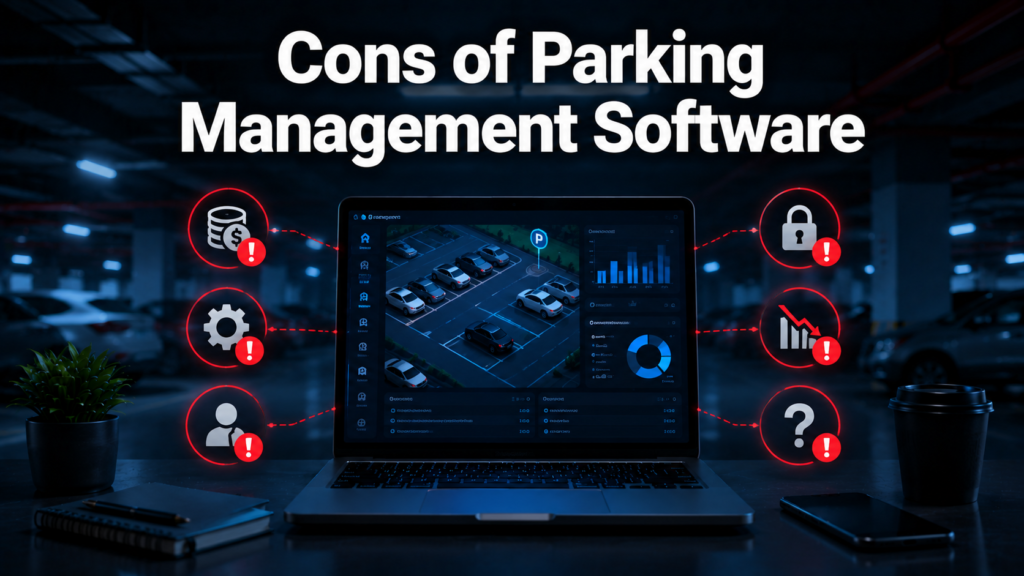
Despite its benefits, this software also comes with certain challenges that businesses must consider carefully before adoption.
High Initial Investment
Setting up parking management software requires spending on hardware such as sensors, cameras, and kiosks. Small businesses may find this cost difficult to manage initially. The return on investment usually takes time to show clear results.
Ongoing Maintenance Expenses
Apart from installation, businesses also need to pay for regular maintenance and software updates. Subscription-based systems may add monthly or yearly charges. This continuous cost can become a burden for smaller setups.
Technical and Connectivity Issues
Since this software depends heavily on internet connectivity, any network failure can disrupt operations. System bugs or server downtime may also cause temporary chaos at entry and exit points. Businesses need reliable IT support to avoid such interruptions.
Learning Curve for Staff and Users
Not everyone is comfortable using digital systems immediately. Staff may require training to operate the software properly, and some customers may struggle with app-based features. This adjustment period can slow down efficiency at the beginning.
Data Privacy Concerns
Parking management software stores sensitive information like license plate numbers and payment details. If not secured properly, this data can become vulnerable to cyberattacks. Businesses must invest in strong cybersecurity measures to protect user information.
Pros vs Cons: Quick Comparison Table
| Aspect | Pros | Cons |
| Cost | Reduces long-term labor cost | High upfront investment |
| Efficiency | Saves time and reduces errors | Requires staff training |
| Technology | Real-time tracking and automation | Dependent on internet connectivity |
| Security | License plate recognition, CCTV support | Data privacy risks |
| User Experience | Easy booking and navigation | Learning curve for non-tech users |
Who Should Use Parking Management Software?
Large businesses with heavy daily traffic, such as airports and shopping malls, benefit the most from this software due to high vehicle turnover. Mid-sized businesses like hospitals and universities also find it useful for organized space management. Small businesses can consider basic versions if their budget allows gradual investment.
Key Factors to Consider Before Choosing a System
Before selecting parking management software, businesses should evaluate their budget, expected scalability, and long-term needs. Vendor reliability and customer support quality also play a major role in smooth operations. Additionally, checking data security standards and integration compatibility with existing systems helps avoid future technical issues.
A Quick Look at Market Competitors
Several companies currently offer parking management solutions with different pricing and features, such as basic sensor-based systems and advanced AI-powered platforms. Some focus purely on payment automation, while others emphasize security and analytics. Comparing a few options based on your business size and traffic volume helps in choosing the most suitable and cost-effective solution.
Future Trends in Parking Management Software
The future of parking management software is moving towards artificial intelligence and predictive analytics for smarter space planning. Internet of Things (IoT) integration is also becoming common, allowing sensors to communicate more efficiently. Additionally, EV charging support and biometric payment options are expected to become standard features soon.
Conclusion
Understanding the pros and cons of a parking management software helps businesses make a balanced decision. While it offers efficiency, security, and better customer experience, it also demands proper investment and technical readiness. Choosing the right system based on business size and future needs can turn parking management into a smooth and profitable process.
FAQs
Is parking management software worth the investment?
Yes, especially for businesses with high vehicle traffic, as it saves time and improves customer satisfaction.
How much does it typically cost?
Costs vary based on features, but expect both installation and ongoing subscription charges.
Is it secure for storing user data?
It can be secure if the provider follows strong cybersecurity practices and data protection standards.
Can small businesses benefit from it too?
Yes, small businesses can start with basic systems and upgrade gradually as their needs grow.
Related Articles
Cloud Computing Essentials Unlock Benefits: Complete Beginner’s Guide
Droven IO Cybersecurity Updates: Latest Threats, Trends, and Security Strategies in 2026
Synaptica Robotics Explained: Complete Informative Guide to Meaning, Technology, and Future
What Is the Easiest 3D Modeling Software for Beginners in 2026?


