
New Software Versions LCFTechMods: Features, Benefits, Performance Improvements, and Installation Guide
July 1, 2026
Droven IO Cybersecurity Updates: Latest Threats, Trends, and Security Strategies in 2026
July 1, 2026
Cloud technology has become one of the most important innovations in the modern digital world. Businesses, educational institutions, healthcare providers, and even individual users rely on cloud services every day. Whether you are storing files online, using a business application, or streaming content, cloud computing is working behind the scenes to deliver those services efficiently.
Understanding how cloud computing works is essential because it helps organizations improve productivity, reduce costs, and stay competitive. When businesses understand the fundamentals, cloud computing essentials unlock benefits that go far beyond simple data storage. From flexibility and scalability to enhanced security and collaboration, cloud technology has transformed the way people work and communicate.
Introduction to Cloud Computing Essentials
Cloud computing refers to the delivery of computing services over the internet instead of relying solely on local computers or physical servers. These services include storage, databases, networking, software, analytics, and processing power.
Today, organizations of all sizes use cloud solutions to improve efficiency and reduce infrastructure expenses. Understanding cloud computing essentials unlock benefits because it allows businesses to make smarter technology decisions while improving performance and customer experiences.
What Is Cloud Computing?
Cloud computing is a technology model that enables users to access computing resources through the internet on demand. Instead of purchasing and maintaining expensive hardware, businesses can rent resources from cloud providers whenever needed.
A simple example is online file storage. Rather than saving files only on a computer, users can store them in the cloud and access them from multiple devices. This approach increases convenience, flexibility, and reliability.
Traditional Computing vs Cloud Computing
| Feature | Traditional Computing | Cloud Computing |
| Infrastructure Cost | High | Lower |
| Scalability | Limited | Highly Flexible |
| Maintenance | User Managed | Provider Managed |
| Accessibility | Location Dependent | Accessible Anywhere |
| Deployment Speed | Slow | Fast |
| Resource Availability | Fixed | On-Demand |
The comparison clearly shows why many organizations are moving toward cloud-based solutions.
Why Understanding Cloud Computing Essentials Matters
The digital economy is evolving rapidly. Companies that fail to adapt to modern technologies often struggle to remain competitive. Understanding cloud computing fundamentals helps businesses increase operational efficiency and improve customer service.
Cloud adoption also supports innovation. Organizations can quickly test new applications, launch products faster, and respond to market changes without making large infrastructure investments. This is one of the major reasons why cloud computing essentials unlock benefits across multiple industries.
Core Components of Cloud Computing
Cloud computing consists of several important components that work together to deliver services efficiently.
- Compute Resources
Compute resources provide processing power for applications and workloads. These virtual machines and computing instances allow businesses to run software without purchasing physical servers.
- Cloud Storage
Cloud storage enables users to save files, databases, and applications on remote servers. It offers flexibility, data protection, and easy accessibility from different locations.
- Networking Services
Networking services connect cloud resources and ensure smooth communication between applications, users, and databases. Reliable networking is essential for performance and security.
- Databases
Cloud databases allow organizations to store and manage large amounts of information efficiently. They support scalability and simplify database administration.
- Security and Identity Management
Security tools protect sensitive data and control user access. Identity management systems help organizations ensure that only authorized individuals can access resources.
- Monitoring and Analytics Tools
These tools provide insights into performance, resource usage, and security activities. Organizations can use analytics to optimize operations and improve decision-making.
Key Characteristics of Cloud Computing
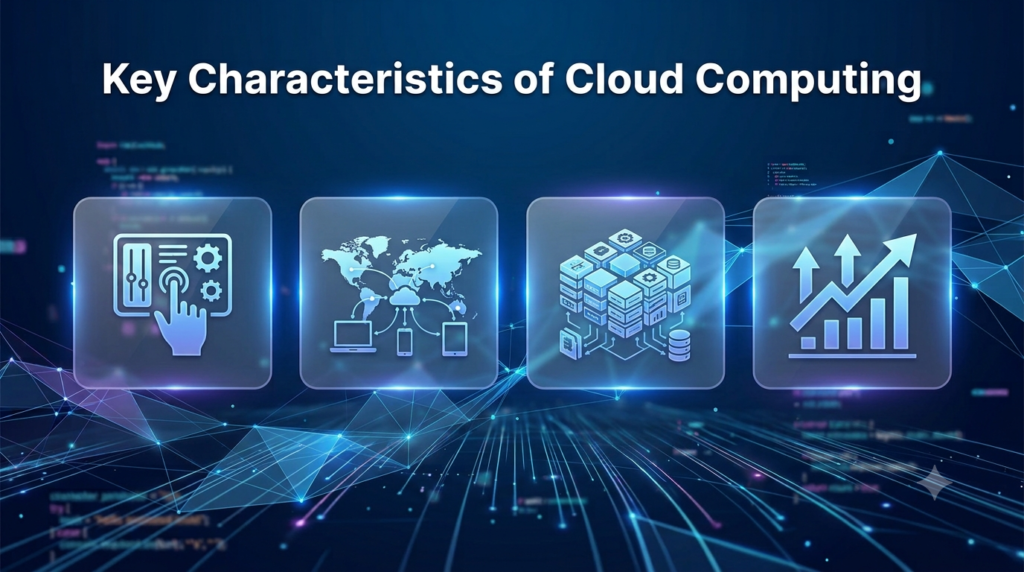
Several characteristics distinguish cloud computing from traditional IT environments.
On-Demand Self-Service
Users can access computing resources whenever needed without requiring direct assistance from service providers. This improves efficiency and reduces delays.
Broad Network Access
Cloud services are available through internet-connected devices, making them accessible from virtually anywhere.
Resource Pooling
Cloud providers share resources among multiple customers while maintaining security and privacy. This improves efficiency and lowers operational costs.
Rapid Elasticity
Resources can expand or shrink based on demand. Businesses only pay for the resources they actually use.
Measured Service
Cloud usage is monitored and billed according to consumption, creating a cost-effective pay-as-you-go model.
Types of Cloud Computing Deployment Models
Organizations can choose different deployment models based on their requirements.
Public Cloud
Public cloud services are offered by third-party providers and shared among multiple customers. They are cost-effective and easy to deploy.
Private Cloud
Private cloud environments are dedicated to a single organization. They provide greater control, customization, and security.
Hybrid Cloud
Hybrid cloud combines public and private cloud environments. This approach allows organizations to balance flexibility, security, and performance.
Multi-Cloud Environment
Multi-cloud strategies involve using services from multiple providers. This reduces dependency on a single vendor and increases resilience.
Cloud Service Models Explained
Cloud services are generally divided into several categories.
Infrastructure as a Service (IaaS)
IaaS provides virtualized computing resources such as servers, storage, and networking. Organizations have significant control over their infrastructure.
Platform as a Service (PaaS)
PaaS provides development platforms and tools that help developers build, test, and deploy applications efficiently.
Software as a Service (SaaS)
SaaS delivers software applications through the internet. Users can access applications through web browsers without installing software locally.
Serverless Computing
Serverless computing allows developers to focus on coding while cloud providers handle infrastructure management automatically.
Major Benefits of Cloud Computing
Businesses and individuals benefit from cloud technology in numerous ways.
Cost Savings
Organizations can reduce capital expenditures by avoiding large investments in physical infrastructure. They pay only for the resources they use.
Scalability and Flexibility
Cloud resources can quickly adapt to changing business demands. This flexibility supports growth without requiring major infrastructure upgrades.
Improved Performance
Modern cloud providers operate advanced data centers that deliver high performance and reliability.
Enhanced Security
Many cloud providers invest heavily in cybersecurity measures, helping organizations protect valuable information.
Faster Innovation
Businesses can deploy new applications and services quickly, enabling them to stay competitive in rapidly changing markets.
Better Collaboration
Employees can access files and applications from different locations, improving teamwork and productivity.
Disaster Recovery and Backup
Cloud-based backup solutions help organizations recover quickly from system failures or unexpected disruptions.
Global Accessibility
Cloud services allow users to access information from almost anywhere with an internet connection.
Cloud Computing Essentials Unlock Benefits for Businesses
Businesses across industries use cloud computing to streamline operations and improve profitability. Cloud solutions support remote work, simplify software deployment, and reduce IT maintenance costs.
When cloud computing essentials unlock benefits for organizations, they gain greater agility and can respond more effectively to customer needs. This flexibility often leads to improved customer satisfaction and stronger business growth.
Cloud Computing Essentials Unlock Benefits for Individuals
Individual users also experience significant advantages from cloud services. Cloud storage makes file management easier while ensuring data remains accessible from multiple devices.
Students, freelancers, and remote workers benefit from cloud-based productivity tools that enable collaboration and communication regardless of location. These capabilities demonstrate how cloud computing essentials unlock benefits for everyday users as well as large enterprises.
Top Cloud Computing Platforms
Several major providers dominate the cloud computing market.
| Platform | Main Strength |
| Amazon Web Services (AWS) | Broad Service Portfolio |
| Microsoft Azure | Enterprise Integration |
| Google Cloud Platform (GCP) | Data Analytics and AI |
| Oracle Cloud | Database Services |
| IBM Cloud | Hybrid Cloud Solutions |
Each provider offers unique capabilities that support different business requirements.
Cloud Computing Use Cases Across Industries
Cloud computing supports innovation in many sectors.
Healthcare organizations use cloud systems to manage patient records and improve collaboration. Educational institutions rely on cloud platforms for online learning and resource sharing. Financial institutions leverage cloud technologies to enhance security and process transactions efficiently.
Retail companies use cloud-based analytics to understand customer behavior, while manufacturers utilize cloud systems for supply chain management and operational monitoring.
Cloud Security Fundamentals
Security remains one of the most important aspects of cloud computing.
Data Encryption
Encryption protects sensitive information by converting data into unreadable formats that can only be accessed by authorized users.
Access Control
Access control systems ensure that users have appropriate permissions based on their responsibilities.
Compliance Standards
Organizations must comply with industry regulations and standards when managing sensitive data in cloud environments.
Security Best Practices
Regular updates, employee training, strong passwords, and continuous monitoring help maintain a secure cloud environment.
Common Challenges of Cloud Computing
Although cloud computing offers numerous advantages, organizations should also understand potential challenges.
Security Concerns
Data protection remains a priority for organizations handling confidential information.
Downtime Risks
Service interruptions can occasionally affect accessibility and business operations.
Vendor Lock-In
Switching providers may become difficult if applications rely heavily on a specific platform.
Cost Management Issues
Poor resource management can result in unexpected expenses.
Compliance Challenges
Organizations operating in regulated industries must carefully manage compliance requirements.
Cloud Computing Best Practices
Successful cloud adoption requires strategic planning and ongoing management.
Organizations should establish clear objectives, monitor resource usage regularly, implement strong security policies, and provide employee training. Regular backups and performance reviews help ensure long-term success.
By following these practices, businesses can maximize value while minimizing risks associated with cloud adoption.
Future Trends in Cloud Computing
Cloud computing continues to evolve as new technologies emerge.
Artificial intelligence is becoming increasingly integrated into cloud services. Edge computing is reducing latency by processing data closer to users. Hybrid cloud environments are growing in popularity because they provide flexibility and control.
Automation, sustainability initiatives, and advanced analytics will continue shaping the future of cloud technology for years to come.
Cloud Computing Skills Worth Learning
As demand for cloud professionals grows, several skills have become particularly valuable.
These include cloud architecture, cybersecurity, DevOps, automation, data analytics, and cloud infrastructure management. Professionals with these skills are highly sought after across multiple industries.
Developing expertise in these areas can open new career opportunities and support long-term professional growth.
Cloud Computing Essentials vs Traditional IT Infrastructure
Organizations often compare cloud computing with traditional infrastructure before making technology decisions.
Cloud environments offer greater scalability, lower upfront costs, and easier maintenance. Traditional systems may provide more direct control, but they often require larger investments and ongoing management efforts.
For most modern organizations, cloud solutions provide the flexibility and efficiency needed to compete in today’s fast-changing digital landscape.
Frequently Asked Questions (FAQs)
What are cloud computing essentials?
Cloud computing essentials include the fundamental concepts, technologies, service models, deployment models, and security practices that support cloud-based operations and services.
How does cloud computing unlock business benefits?
Cloud computing improves flexibility, reduces infrastructure costs, enhances collaboration, and enables faster innovation, helping businesses operate more efficiently.
What are the main types of cloud computing?
The primary deployment models include public cloud, private cloud, hybrid cloud, and multi-cloud environments designed for different organizational needs.
Is cloud computing secure?
Cloud computing can be highly secure when organizations use encryption, access controls, monitoring tools, and industry best practices.
Which cloud platform is best for beginners?
Many beginners start with AWS, Microsoft Azure, or Google Cloud because they offer extensive learning resources and beginner-friendly services.
Conclusion
Cloud computing has transformed how businesses and individuals access technology resources. Its flexibility, scalability, and cost efficiency make it an essential part of modern digital operations. As organizations continue embracing digital transformation, cloud computing essentials unlock benefits that improve productivity, security, and innovation. By understanding the fundamentals and adopting best practices, businesses and individuals can maximize the value of cloud technology and prepare for future opportunities.
Related Articles
GoPerfect AI Hiring Software: Complete Guide to Smarter Recruiting
Why GenBoosterMark Software Is So Popular?
New Software Oxzep7 Python: Features, Benefits, Applications, and Complete Guide
Wolf 3D Software: Complete Guide to the Classic 3D Game Engine
Giglad Software Arranger Premium: Features, Benefits, Setup Guide and Complete Review


