
ADJ myDMX 3 Software Download: Complete Installation and User Guide
August 6, 2026
Kingo Root Software: Complete Guide to Android Rooting
August 6, 2026
Electronic software distribution is the modern method of delivering computer programs to users through the internet instead of physical discs or boxes. It allows publishers to send software directly to a buyer’s device using downloads, digital licenses, or cloud access.
This system has replaced most traditional retail software sales because it is faster, cheaper, and more convenient for both businesses and everyday users. In this guide, every important aspect of electronic software distribution will be explained in simple and easy-to-understand language.
What is Electronic Software Distribution?
Electronic software distribution simply means sending software to customers online rather than shipping a physical product. It covers everything from a single download link to large-scale digital marketplaces used by millions of people daily.
Definition and Meaning of ESD
Electronic software distribution, often shortened to ESD, refers to any process where software is delivered digitally rather than through a physical medium like a CD or DVD.
The buyer usually receives a download link, an activation key, or direct access through an online account. This method removes the need for manufacturing, packaging, and physical shipping.
Brief History: From Physical Media to Digital Delivery
In earlier decades, software was sold almost entirely on floppy disks, CDs, and later DVDs. As internet speeds improved during the early 2000s, publishers began offering downloadable versions alongside physical copies.
Over time, digital downloads became the primary method of distribution because they eliminated storage costs and allowed instant delivery to customers anywhere in the world.
Why ESD Matters in Today’s Digital World
Modern users expect instant access to the tools they purchase, and electronic software distribution fulfills this expectation perfectly. Businesses also rely on it to reduce operational costs, manage licenses efficiently, and reach international customers without dealing with customs or shipping delays. This is why nearly every major software company today depends on digital distribution as its primary sales channel.
How Electronic Software Distribution Works
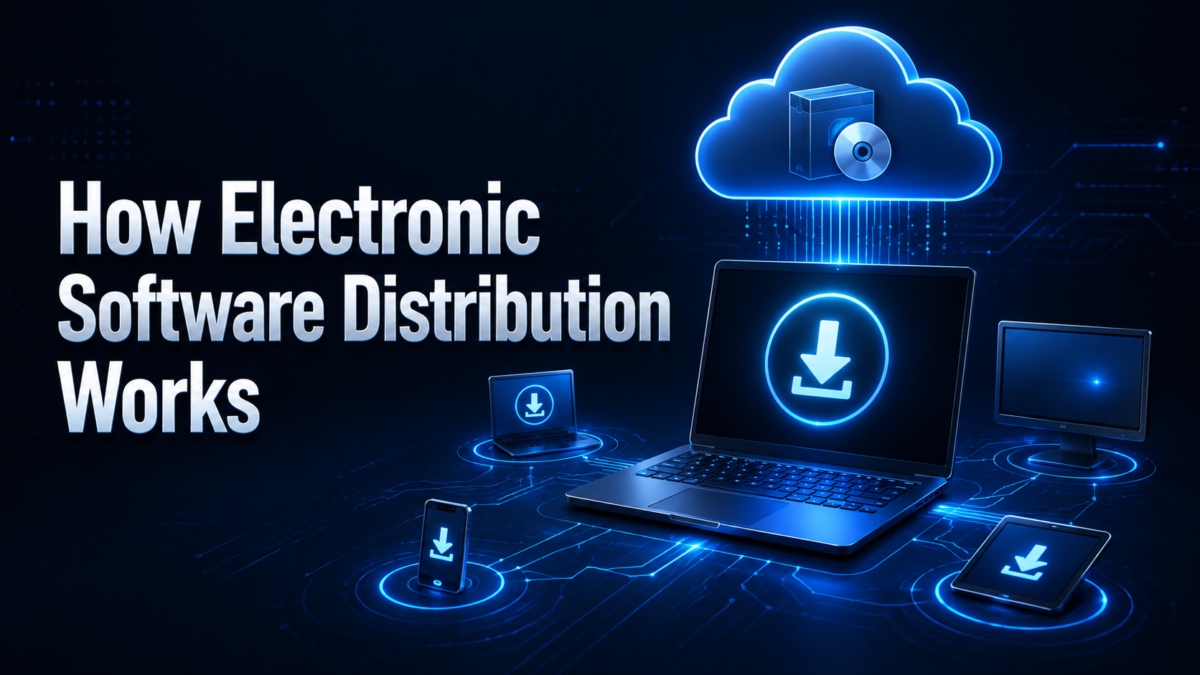
The process behind electronic software distribution involves several technical steps that happen quickly and often invisibly to the end user. Understanding these steps helps explain why digital delivery feels so seamless.
The ESD Process Explained Step-by-Step
When a customer purchases software online, the transaction is processed through a payment gateway, after which the system automatically generates a license key or download link.
The user then downloads the installation file directly from a server or receives cloud-based access. This entire process usually takes only a few minutes, compared to days or weeks required for physical shipping.
Digital Licensing and Activation Keys
Most electronic software distribution systems use a unique license key to verify that the software is genuine and legally purchased. This key is entered during installation or first use, connecting the copy to the buyer’s account. License keys also help publishers track how many devices are using a single purchase.
Download vs. Streaming/Cloud-Based Software
Some software is downloaded fully to a device, while other programs run entirely through cloud servers and are accessed via a browser or lightweight application. Downloaded software works offline once installed, whereas cloud-based software usually requires a constant internet connection but offers automatic updates without user action.
Role of Servers, Platforms, and Content Delivery Networks (CDNs)
Behind every download is a network of servers designed to deliver files quickly and reliably. Content delivery networks store copies of software files in multiple locations worldwide, so users download from the server nearest to them. This reduces waiting time and ensures smooth delivery even during high traffic periods.
Types of Electronic Software Distribution
There are several different models through which electronic software distribution takes place, each suited to different business needs and customer preferences.
Direct Download from Publisher Websites
Many companies sell software directly from their own websites, allowing customers to purchase and download without using a third-party platform.
This method gives publishers full control over pricing, licensing, and customer data, though it requires them to manage their own payment and delivery systems.
Digital Marketplaces and App Stores
Marketplaces and app stores act as centralized platforms where multiple publishers list their software for users to browse and buy. These platforms handle payment processing, security checks, and delivery, making it easier for smaller developers to reach a wide audience without building their own infrastructure.
Subscription-Based Software (SaaS)
Software as a Service, commonly known as SaaS, is a distribution model where users pay a recurring fee to access software rather than owning it permanently. This approach is now extremely common because it provides continuous updates, lower upfront costs, and predictable revenue for publishers.
Cloud-Based Distribution
In cloud-based distribution, the software itself runs on remote servers, and users interact with it through a web browser or thin client application. This eliminates the need for powerful local hardware since most processing happens on the provider’s servers rather than the user’s device.
Peer-to-Peer and Enterprise Distribution Models
Large organizations often use specialized internal systems to distribute software across hundreds or thousands of devices simultaneously. These enterprise tools manage installations, updates, and license compliance centrally, saving significant time compared to manual installation on each machine.
Advantages of Electronic Software Distribution
Electronic software distribution offers numerous benefits that explain why it has become the standard method of software delivery worldwide.
Cost Savings (No Packaging, Shipping, or Physical Storage)
Since there is no need to manufacture discs, print packaging, or pay for shipping, publishers save substantial amounts of money through digital distribution. These savings often translate into lower prices for consumers as well, making software more affordable overall.
Instant Delivery and Accessibility
One of the biggest advantages is that customers receive their software immediately after purchase, with no waiting period. This instant access is especially valuable for businesses that need software urgently or individuals purchasing from remote locations.
Easy Updates and Patches
Digital distribution makes it simple for publishers to push updates, security patches, and new features directly to users without requiring a new physical release. This keeps software current and secure with minimal effort from the end user.
Environmental Benefits (Reduced Waste)
Because there is no physical packaging or plastic disc involved, electronic software distribution significantly reduces manufacturing waste and the environmental impact associated with shipping physical goods. This makes it a more sustainable choice compared to traditional retail methods.
Global Reach and Scalability
Publishers can sell to customers anywhere in the world without worrying about international shipping logistics or customs regulations. This global reach allows even small software companies to scale their business rapidly across multiple countries.
Disadvantages and Challenges of ESD
Despite its many benefits, electronic software distribution also comes with certain challenges that businesses and users need to be aware of.
Piracy and License Misuse Risks
Digital files can be copied and shared illegally more easily than physical products, making piracy a persistent concern for software publishers. Companies must invest in licensing technology to protect their products from unauthorized distribution.
Dependence on Internet Connectivity
Since most electronic software distribution relies on internet access for downloading or activation, users in areas with poor connectivity may face difficulties. Cloud-based software is particularly affected, as it often cannot function properly without a stable connection.
Compatibility and System Requirement Issues
Users sometimes purchase software only to discover it is incompatible with their device’s operating system or hardware specifications. Unlike physical stores where staff might offer guidance, online purchases place more responsibility on the buyer to verify compatibility beforehand.
Customer Trust and Refund Challenges
Because digital products can be used immediately after download, offering refunds becomes more complicated compared to physical goods. Some customers may also hesitate to trust unfamiliar online sellers, especially when dealing with expensive software licenses.
Regional Restrictions and Licensing Complications
Certain software products are restricted to specific countries due to licensing agreements or legal regulations, which can prevent some users from purchasing or accessing them. These restrictions sometimes create confusion for international customers trying to buy software online.
Key Players and Platforms in ESD
Understanding the major platforms and tools involved helps clarify how electronic software distribution actually reaches millions of users daily.
Popular ESD Platforms (Examples: App Stores, Software Marketplaces)
Various digital marketplaces exist across different industries, ranging from general software stores to platforms specialized in gaming, productivity tools, or creative applications. These platforms typically offer secure payment processing, customer reviews, and simplified download management for buyers.
Enterprise Software Distribution Tools
Businesses often use dedicated enterprise tools to manage software deployment across their internal networks. These systems allow IT departments to install, update, and monitor software on many devices from a single centralized dashboard, saving considerable administrative effort.
Comparison of Major Distribution Channels
The table below highlights the key differences between common distribution channels used in electronic software distribution today.
| Distribution Channel | Best For | Delivery Speed | Control Over Pricing |
| Publisher Website | Direct sales, brand control | Instant | Full control |
| App Store/Marketplace | Wide audience reach | Instant | Limited (platform rules apply) |
| SaaS Subscription | Recurring revenue models | Instant access | Flexible tiered pricing |
| Enterprise Tools | Large organizations | Bulk deployment | Internal control |
ESD vs. Traditional Physical Software Distribution
Comparing electronic software distribution with traditional physical methods highlights exactly why the digital model has become so dominant in recent years.
Key Differences
The most obvious difference is that electronic software distribution delivers products digitally, while traditional distribution relies on physical discs and packaging shipped through retail stores. This fundamental difference affects everything from cost structure to delivery speed and customer experience.
Cost Comparison
Physical distribution involves manufacturing, packaging, warehousing, and shipping costs that digital distribution avoids entirely. As a result, electronic software distribution is generally far more cost-effective for publishers, allowing many to offer competitive pricing or frequent discounts.
Consumer Experience Comparison
Digital buyers enjoy instant access and easy re-downloading if their files are lost, while physical buyers must keep track of discs and may need to purchase replacement copies if damaged. However, some users still value having a tangible product, particularly for collector’s editions or gifting purposes.
Which Model is Better and Why?
For most everyday users and businesses, electronic software distribution offers clear advantages in speed, cost, and convenience. Physical distribution still holds some appeal in niche markets, but digital delivery has become the practical standard for the majority of software purchases worldwide.
Security and Licensing in ESD
Security remains one of the most important considerations in electronic software distribution, since protecting both the software and the customer’s data is essential for building trust.
Digital Rights Management (DRM)
Digital Rights Management refers to technology used by publishers to control how their software is copied, shared, or used after purchase. DRM systems help prevent unauthorized duplication while still allowing legitimate users to install and run their purchased software smoothly.
License Key Verification Systems
License verification systems confirm that a software copy is legitimate by checking the entered key against the publisher’s database during installation or activation. This process helps reduce piracy while also allowing publishers to track usage across different devices linked to a single license.
Protecting Against Piracy and Unauthorized Use
Beyond DRM and license keys, publishers use various additional methods such as online activation requirements and periodic license checks to protect their products. These combined measures make it significantly harder for pirated copies to function correctly over time.
Data Privacy and Payment Security
Since electronic software distribution involves online payments and personal account information, publishers must implement strong encryption and secure payment gateways. Protecting customer data during transactions builds trust and encourages repeat purchases from the same platform.
The Role of ESD in Business and Enterprises
Businesses of all sizes depend heavily on electronic software distribution to manage their software needs efficiently across departments and locations.
How Companies Use ESD for Software Rollout
Organizations use electronic software distribution to deploy new applications or updates to employees simultaneously, regardless of their physical location. This is particularly valuable for companies with remote teams or multiple office branches spread across different regions.
Benefits for Software Vendors and Developers
For vendors and independent developers, digital distribution removes many barriers to entering the market, since there is no need for large upfront investment in manufacturing or retail partnerships. This allows smaller development teams to compete alongside established software companies more easily.
Managing Licenses Across Large Organizations
Large enterprises often need to track hundreds or thousands of software licenses simultaneously to ensure compliance with usage agreements. Electronic software distribution systems typically include license management dashboards that simplify this tracking process significantly.
Future Trends in Electronic Software Distribution
The methods and technology behind electronic software distribution continue to evolve, shaping how software will be delivered in the coming years.
Growth of Cloud and SaaS Models
More companies are shifting toward cloud-based and subscription models because they provide steady revenue and easier update management. This trend is expected to continue growing as internet infrastructure improves globally, making cloud access more reliable everywhere.
AI and Automation in Software Delivery
Artificial intelligence is increasingly being used to automate parts of the distribution process, such as personalized recommendations, automated license checks, and predictive customer support. These automated systems help publishers manage large-scale distribution more efficiently than manual methods ever could.
Predictions for the Next Decade
Looking ahead, electronic software distribution is likely to become even more seamless, with faster delivery, smarter security systems, and deeper integration with cloud infrastructure. Physical software distribution will likely continue shrinking, becoming a niche option rather than a mainstream choice.
Frequently Asked Questions
What does electronic software distribution mean in simple terms?
It means delivering software to customers digitally through downloads or online access instead of physical discs.
Is electronic software distribution safer than physical distribution?
It can be safer when proper licensing and encryption are used, though piracy risks still exist without adequate protection.
Does electronic software distribution require internet access?
Yes, an internet connection is typically required for downloading, activation, or accessing cloud-based software.
Can small businesses use electronic software distribution?
Yes, small businesses and independent developers often benefit the most, since digital distribution removes costly manufacturing barriers.
Conclusion
Electronic software distribution has transformed how software reaches customers, offering speed, affordability, and global accessibility that physical methods simply cannot match.
While challenges like piracy and internet dependency remain, ongoing improvements in security and cloud technology continue to strengthen this distribution model. As businesses and consumers increasingly favor digital convenience, electronic software distribution is set to remain the dominant method of software delivery for years to come.
Related Articles
Intranet Software: The Complete Guide to Features, Benefits, and Best Practices
Ham Radio Software For Windows Free: Complete Guide
AKAI MPK Editor Tool Software Download – Complete Guide
What is Business Software? A Complete Guide
Is LightBurn a Good Software for Laser Engraving? Full 2026 Review


