
Sheppard Software Complete Guide 2026: Features, Subjects, Benefits and How It Helps Students Learn Online
June 9, 2026
REsimpli vs FreedomSoft Differences Real Estate Software – Complete 2026 Guide
June 15, 2026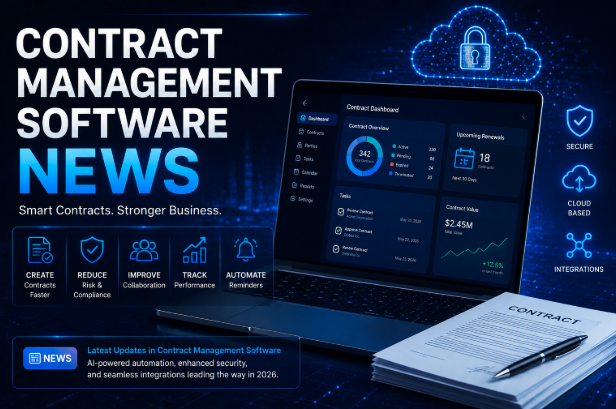
Contract management software news highlights strong market growth, driven by the integration of artificial intelligence and workflow automation that are improving how contracts are created, managed, and monitored. AI helps organizations analyze risks and extract key contract details, while automation speeds up approvals and reduces manual work.
This is making contract processes more efficient, accurate, and compliant. In the following section, we will explore this development in more detail.
What Is Contract Management Software?
A digital tool designed to automate, track, and optimize every stage of an agreement’s lifecycle. In the points below, we will explain it in detail.
Contract Creation and Drafting
Contract management software helps organizations create and draft contracts quickly using pre-built templates and standardized clauses. It reduces manual writing errors and ensures consistency across all agreements. Users can easily customize terms based on business needs without starting from scratch. This makes the contract creation process faster and more efficient.
Contract Storage and Organization
This software provides a centralized digital repository to store all contracts in one secure place. It allows users to easily search, access, and organize documents whenever needed. This reduces the risk of losing important agreements or using outdated versions. Overall, it improves document control and accessibility.
Workflow Automation and Approvals
Contract management systems automate approval workflows by routing documents to the right stakeholders automatically. This speeds up the review process and eliminates unnecessary delays. Notifications and reminders ensure that no step is missed during approval cycles. As a result, organizations save time and improve operational efficiency.
Compliance and Contract Monitoring
The software continuously monitors contracts to ensure compliance with legal and business requirements. It tracks important dates such as renewals, expirations, and obligations. Alerts help businesses avoid penalties and missed deadlines. This ensures better risk management and full contract lifecycle control.
Evolution of Contract Management Technology
The evolution of contract management technology has transformed traditional manual processes into intelligent, AI-driven Contract Lifecycle Management (CLM) systems. In the points below, we will explain it in detail.
Manual Paper-Based Contract Management
In the early stages, contract management was completely manual and relied on physical paperwork stored in filing cabinets. This method made it difficult to track documents and often led to lost or outdated contracts. Searching for specific agreements took a lot of time and effort. Overall, it was inefficient and highly prone to human error.
Digital Document Storage Systems
With the rise of computers, organizations shifted to digital storage systems for managing contracts. Contracts were saved as electronic files, making them easier to store and retrieve. This improved organization and reduced dependency on physical records. However, processes were still mostly manual and lacked automation.
Automated Contract Management Systems
The introduction of automation brought significant improvements to contract workflows and approvals. Systems began handling reminders, notifications, and approval routing automatically. This reduced delays and improved overall efficiency. Despite this, intelligence and predictive capabilities were still limited.
AI-Driven Contract Lifecycle Management (CLM)
Modern CLM systems now use artificial intelligence to analyze contracts, detect risks, and provide smart insights. These systems can automatically extract key terms and predict potential issues before they occur. Workflow automation is now combined with advanced analytics for better decision-making. This represents the most advanced and efficient stage of contract management evolution.
Top Contract Management Software Platforms Making Headlines
Top contract management software platforms are gaining attention by combining AI-assisted drafting, automated workflow approvals, and seamless integrations with CRM systems. In the points below, we will explain it in detail.
AI-Powered Drafting Tools
Modern platforms now use AI-powered drafting tools to help users create contracts faster and with higher accuracy. These tools suggest clauses, detect errors, and ensure legal consistency across documents. This reduces manual effort and improves the quality of agreements. As a result, businesses can generate contracts in minutes instead of hours.
Automated Workflow Approval Systems
Many leading platforms include automated workflow approval systems that route contracts to the right stakeholders instantly. This eliminates delays caused by manual forwarding and follow-ups. Notifications and reminders ensure every approval step is completed on time. This makes the entire contract process smoother and more efficient.
CRM and Third-Party Integrations
Top contract management platforms integrate seamlessly with CRM systems and other business tools. This allows organizations to connect contract data with sales, finance, and customer management systems. It improves visibility and ensures all departments work with updated information. These integrations help streamline overall business operations.
Centralized Contract Analytics and Reporting
Advanced platforms also offer centralized analytics and reporting features for better decision-making. Businesses can track contract performance, risks, and renewal timelines in real time. These insights help identify bottlenecks and improve contract strategies. Overall, it enhances control and visibility across the entire contract lifecycle.
AI and Machine Learning Transforming Contract Management
AI and machine learning are transforming contract management by shifting legal and procurement workflows from static “filing cabinet” storage to dynamic, intelligent systems. In the points below, we will explain it in detail.
- Automated Contract Analysis
AI tools automatically scan and analyze contracts to identify key clauses, risks, and obligations. This reduces manual review time and improves accuracy in legal processes. - Intelligent Data Extraction
Machine learning systems extract important data such as dates, terms, and payment conditions. This helps organizations quickly understand contract details without reading entire documents. - Risk Detection and Compliance
AI continuously monitors contracts to detect potential risks and compliance issues. It helps businesses avoid legal penalties and ensures contracts follow regulations. - Predictive Insights and Decision Making
Machine learning provides predictions about contract outcomes, renewals, and potential disputes. This supports better planning and smarter business decisions. - Workflow Optimization and Automation
AI-driven systems automate approvals, reminders, and contract updates. This improves workflow speed and reduces human error in contract management processes.
Comparison Table of Leading Contract Management Software
Before selecting a solution, compare the most important capabilities, pricing considerations, and ideal use cases of today’s leading contract management platforms.
| Feature | Enterprise CLM | Mid-Market CLM | SMB Contract Software | AI-Powered CLM |
| AI Contract Review | Advanced | Moderate | Basic | Advanced |
| Workflow Automation | Advanced | High | Moderate | Advanced |
| Compliance Management | Enterprise-Level | High | Moderate | High |
| E-Signature Integration | Yes | Yes | Yes | Yes |
| Analytics & Reporting | Advanced | High | Basic | Advanced |
| Scalability | Very High | High | Moderate | High |
| Best For | Large Enterprises | Growing Businesses | Small Businesses | Technology-Driven Companies |
Most Important Trends Shaping Contract Management Software
The most important trends shaping contract management software include the adoption of autonomous “agentic” AI, seamless enterprise system integration, and predictive risk analysis. In the points below, we will explain it in detail.
Autonomous Agentic AI in Contract Management
Autonomous agentic AI is changing how contracts are managed by enabling systems to independently perform tasks without constant human input. These AI agents can draft, review, and update contracts based on predefined goals and rules. This reduces manual workload and increases speed in legal and procurement processes. It also allows businesses to operate with greater efficiency and accuracy.
Seamless Enterprise System Integration
Modern contract management software is now designed to integrate smoothly with enterprise systems like ERP, CRM, and finance platforms. This ensures that all departments have access to real-time contract data. It improves collaboration and reduces data silos across the organization. As a result, business operations become more connected and efficient.
Predictive Risk Analysis
Predictive risk analysis uses Artificial intelligence and machine learning to identify potential risks in contracts before they become problems. It analyzes patterns in past contracts to forecast issues such as delays or compliance failures. This helps organizations take proactive actions to avoid legal or financial losses. It strengthens overall contract governance and decision-making.
Data-Driven Contract Intelligence
Data-driven contract intelligence focuses on using analytics to extract insights from large volumes of contract data. It helps businesses understand performance trends, obligations, and renewal opportunities. These insights improve strategic planning and negotiation outcomes. Overall, it transforms contract management into a more intelligent and data-focused process.
Common Challenges in Contract Management
Contract management challenges often arise from manual workflows and siloed systems, leading to lost revenue, missed obligations, and operational bottlenecks. In the points below, we will explain it in detail.
Manual Workflow Inefficiencies
Manual workflows slow down the entire contract lifecycle because tasks like drafting, reviewing, and approvals are handled without automation. This increases the chances of human error and delays in processing important agreements. Teams spend more time on repetitive work instead of strategic tasks. As a result, overall business efficiency is significantly reduced.
Siloed Systems and Poor Data Visibility
When contract data is stored in separate systems across departments, it creates data silos and limits visibility. Important contract information becomes difficult to access or track in real time. This often leads to confusion and inconsistent decision-making. Ultimately, organizations struggle to maintain a clear view of their contractual obligations.
Missed Obligations and Deadlines
One of the major risks in contract management is missing key obligations such as renewals, payments, or compliance deadlines. Without proper tracking systems, important dates can be easily overlooked. This can result in penalties, financial losses, or damaged business relationships. Proper monitoring is essential to avoid these costly mistakes.
Lost Revenue and Operational Bottlenecks
Poor contract management can directly impact revenue due to missed opportunities and inefficient processes. Delays in approvals or contract execution often slow down business operations. These bottlenecks reduce productivity and affect cash flow. Over time, this can significantly harm overall business growth and performance.
Security and Compliance Updates in Contract Management
Modern contract management enhances security and compliance by protecting sensitive agreements and ensuring adherence to regulations like GDPR, SOC 2, and HIPAA through encryption, RBAC, and audit trails. In the points below, we will explain it in detail.
Centralized Encrypted Storage
Modern systems store all contracts in centralized encrypted repositories to protect sensitive business data from unauthorized access. Encryption ensures that even if data is intercepted, it cannot be read without proper authorization. This strengthens overall data security across the organization. It also reduces the risk of data breaches and leaks.
Role-Based Access Control (RBAC)
RBAC ensures that only authorized users can access, edit, or approve specific contracts based on their roles. This minimizes internal security risks and prevents unauthorized modifications. Different departments can only view relevant information they are permitted to see. It improves control and strengthens compliance management.
Automated Audit Trails
Contract management systems automatically record every action performed on a document, including edits, approvals, and access history. These audit trails provide full transparency and accountability. They are essential for regulatory compliance and internal audits. This helps organizations track changes and identify potential security issues.
Regulatory Compliance Support (GDPR, SOC 2, HIPAA)
Modern contract systems are designed to support compliance with major regulations like GDPR, SOC 2, and HIPAA. They ensure that sensitive data is handled according to legal requirements. Built-in compliance checks reduce the risk of violations and penalties. This helps organizations maintain trust and legal safety.
FAQs
Can contract management software handle contracts in multiple languages for international businesses?
The article does not mention multilingual contract support, which is an important feature for global organizations. Businesses operating internationally should confirm multilingual capabilities with vendors before selecting a contract management platform.
How long does it typically take to implement contract management software across an organization?
Implementation time depends on organization size, number of integrations, and data migration complexity, which the article does not specify. Small businesses may complete setup in weeks while large enterprises with complex systems could require several months for full deployment.
Can contract management software be used on mobile devices for remote contract approvals?
The article focuses on desktop and enterprise features without specifically mentioning mobile app availability or remote approval capabilities. Organizations with remote or field-based teams should verify mobile accessibility and offline functionality before purchasing any platform.
conclusion
Contract management software is transforming how businesses handle agreements by improving speed, accuracy, and compliance. With the help of AI, automation, and secure systems, organizations can reduce risks and improve efficiency. It also ensures better visibility and control throughout the contract lifecycle. Overall, it is becoming an essential tool for modern digital business operations.
Related Articles
Mind Graph Software: Complete Guide to Features, Benefits, Uses, and Best Tools
REsimpli vs FreedomSoft Differences Real Estate Software – Complete 2026 Guide
Bus Management Software: Features, Benefits, Types, Working Process, and Complete Guide
What Is the Easiest 3D Modeling Software for Beginners in 2026?
CAD Software News 2026: Latest Updates, AI Innovations, Industry Trends & New CAD Releases


