

Download Software UStudioBytes: Complete Download, Installation & User Guide
June 8, 2026
Winobit3.4 Software Error: Causes, Fixes, Troubleshooting & Prevention Guide
June 9, 2026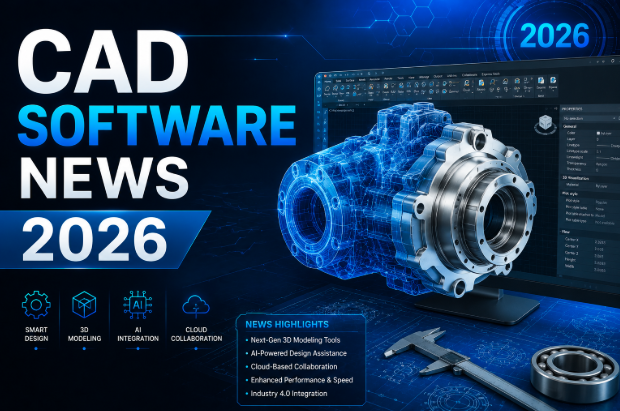
The CAD software industry is experiencing rapid transformation through the integration of AI-assisted design tools, cloud-native collaboration platforms, and significant performance enhancements. These advancements help designers and engineers automate tasks, improve workflow efficiency, and collaborate seamlessly across different locations.
As organizations increasingly adopt digital design technologies, modern CAD solutions are becoming faster, smarter, and more scalable than ever before. In the following sections, we will discuss these innovations in detail and explore how they are shaping the future of CAD software.
What Is CAD Software News?
CAD software news covers the latest updates, industry trends, and technological advancements in Computer-Aided Design (CAD). In the points below, we will explain it in detail.
Latest Software Updates and Releases
CAD software vendors regularly introduce new versions that improve performance, usability, and design capabilities. These updates often include enhanced modeling tools, faster rendering engines, and improved compatibility with industry standards.
Companies release updates to meet changing user requirements and technological demands. Staying informed about these releases helps professionals maximize productivity and take advantage of new features.
Emerging Industry Trends
The CAD industry continuously evolves as new technologies and workflows reshape design processes. Trends such as cloud-based design, remote collaboration, and digital twins are becoming increasingly important across various sectors.
These developments help organizations improve efficiency, reduce project delays, and streamline communication. Following industry trends enables businesses to remain competitive in a rapidly changing market.
Technological Advancements in CAD
Modern CAD software is benefiting from innovations such as artificial intelligence, machine learning, and automation tools. These technologies assist designers by reducing repetitive tasks, improving accuracy, and generating intelligent design recommendations.
Advanced simulation and visualization capabilities are also enhancing project planning and decision-making. As technology advances, CAD software continues to become more powerful and user-friendly.
Why CAD Software News Matters
Keeping up with CAD software news allows professionals to understand new opportunities, challenges, and best practices within the design industry. Timely information helps organizations make informed decisions when selecting software solutions or upgrading existing systems.
It also provides insights into future developments that may influence workflows and project outcomes. Regularly following CAD news ensures users stay informed about the latest innovations shaping the industry.
Why Staying Updated with CAD Software News Is Important
Staying updated with CAD software news helps professionals adopt new innovations, avoid compatibility issues, and maximize overall productivity. In the points below, we will explain it in detail.
Adopting the Latest Design Technologies
CAD software evolves rapidly with the introduction of AI-powered features, automation tools, and advanced modeling capabilities. Keeping up with industry news allows professionals to take advantage of these innovations early. This helps improve design quality and workflow efficiency.
Avoiding Hardware and Software Compatibility Problems
Software updates often introduce new system requirements and compatibility changes. Staying informed helps users prepare for upgrades and avoid unexpected performance issues. This reduces downtime and ensures smooth project execution.
Improving Productivity and Workflow Efficiency
New CAD features are designed to simplify complex tasks and eliminate repetitive work. Following software news helps users discover tools that can save time and improve accuracy. As a result, teams can complete projects more efficiently.
Making Better Business and Technology Decisions
Regularly monitoring CAD software developments helps organizations evaluate new solutions and industry trends. This information supports smarter investment decisions and long-term planning. Businesses can remain competitive by adapting to emerging technologies at the right time.
Artificial Intelligence Is Reshaping CAD Software
Artificial intelligence is transforming CAD software by automating tasks, optimizing designs, and enabling more intuitive user interactions. In the points below, we will explain it in detail.
Automating Repetitive Design Tasks
AI-powered CAD tools can handle routine activities such as dimensioning, feature recognition, and drawing generation. This reduces manual effort and allows designers to focus on more creative and complex tasks. As a result, workflows become faster and more efficient.
Generative Design for Optimized Geometry
Generative design uses AI algorithms to create multiple design alternatives based on specific goals and constraints. Engineers can evaluate these options and select the most efficient solution. This approach often improves performance while reducing material usage and production costs.
Natural Language Design Assistance
Modern CAD platforms are beginning to support natural language commands and AI-driven assistants. Users can describe design requirements in simple language instead of relying solely on manual commands. This makes software easier to learn and use.
Enhanced Decision-Making and Accuracy
AI helps analyze large amounts of design data to identify potential issues and recommend improvements. These insights support better decision-making throughout the design process. Improved accuracy also helps reduce costly errors and revisions.
AI Copilots and Smart Automation in Modern CAD
AI copilots and smart automation are transforming CAD software from a basic digital drafting board into an intelligent design partner. In the points below, we will explain it in detail.
- Automated Design Assistance
AI copilots can suggest design improvements, recommend tools, and automate repetitive actions. This helps users complete projects faster and with greater accuracy. - Real-Time Error Detection
Smart automation can identify design inconsistencies and potential issues as work progresses. Early detection reduces costly revisions and improves overall quality. - Intelligent Workflow Optimization
AI analyzes user behavior and project requirements to streamline design workflows. This allows teams to work more efficiently and reduce unnecessary steps. - Natural Language Interaction
Modern CAD systems enable users to perform tasks using simple text or voice commands. This makes complex software easier to learn and operate. - Data-Driven Design Recommendations
AI can evaluate large datasets and provide recommendations based on performance goals. These insights help designers make better-informed decisions throughout the project.
CAD Software Comparison Table for 2026
Before choosing a CAD platform, the following comparison table helps professionals evaluate the most popular CAD software based on features, AI capabilities, cloud support, pricing approach, and ideal use cases.
| Software | Best For | Cloud Support | AI Features | Industry Focus |
| AutoCAD | Drafting | Yes | Moderate | Multi-Industry |
| SolidWorks | Mechanical Design | Partial | Advanced | Manufacturing |
| Fusion 360 | Product Design | Yes | Advanced | Engineering |
| CATIA | Enterprise Design | Yes | Advanced | Aerospace |
| Onshape | Collaboration | Full Cloud | Advanced | Engineering |
| BricsCAD | BIM & Drafting | Yes | Growing | Construction |
| SketchUp | Architecture | Yes | Basic | Architecture |
| nanoCAD | Budget Users | Limited | Basic | General CAD |
Generative Design Innovations in CAD
Generative design innovations in CAD use AI and machine learning to automatically create optimized 3D models based on specific design requirements. In the points below, we will explain it in detail.
How Generative Design Works
Generative design software analyzes goals, constraints, materials, and performance requirements provided by the user. AI algorithms then generate multiple design alternatives that meet those conditions. This process helps designers explore solutions that may not be considered manually.
Benefits of AI-Generated 3D Models
AI-generated models can improve efficiency by creating highly optimized structures with less material waste. These designs often achieve better strength-to-weight ratios and enhanced performance. As a result, companies can reduce production costs while maintaining quality.
Applications Across Industries
Generative design is widely used in industries such as aerospace, automotive, manufacturing, and architecture. Engineers use it to develop lightweight components, optimize structures, and improve product performance. Its versatility makes it valuable for both simple and complex projects.
Future of Generative Design Technology
As AI and machine learning technologies continue to advance, generative design capabilities are expected to become even more powerful. Future systems may offer faster processing, more accurate simulations, and deeper integration with CAD workflows. This will further transform the way products and structures are designed.
AR and VR Technologies in CAD Workflows
AR and VR technologies are transforming CAD workflows by turning traditional 2D and 3D designs into immersive, life-size interactive experiences. In the points below, we will explain it in detail.
Enhanced Design Visualization
AR and VR allow designers to view digital models in a realistic environment before production begins. This provides a better understanding of scale, proportions, and spatial relationships. Improved visualization helps reduce design errors and misunderstandings.
Improved Collaboration and Communication
Teams can use virtual environments to review and discuss designs regardless of their physical location. Stakeholders can interact with models in real time and provide immediate feedback. This leads to faster decision-making and more effective collaboration.
Faster Design Validation and Testing
Virtual simulations enable engineers and designers to evaluate products before creating physical prototypes. Potential issues can be identified and corrected early in the development process. This reduces costs and shortens project timelines.
Future Impact on CAD Workflows
As AR and VR technologies continue to evolve, they are expected to become a standard part of modern CAD environments. More advanced hardware and software integrations will enhance user experiences and design accuracy. These innovations will further improve efficiency across multiple industries.
Challenges Facing CAD Software Users Today
CAD software users face several challenges, including steep learning curves, rising subscription costs, and demanding hardware requirements. In the points below, we will explain it in detail.
Steep Learning Curves for New Users
Many CAD platforms offer powerful features but require significant time and training to master. Beginners often struggle with complex interfaces, advanced tools, and technical workflows. This can slow adoption and reduce initial productivity.
High Software Subscription Costs
Modern CAD solutions are increasingly offered through subscription-based pricing models. While these plans provide regular updates, they can become expensive for individuals and small businesses. Managing software expenses remains a major concern for many users.
Resource-Intensive 3D Modeling Workflows
Advanced 3D modeling, rendering, and simulation tasks require powerful hardware and large amounts of system resources. Users with outdated computers may experience slow performance and workflow interruptions. This can affect project efficiency and overall productivity.
Managing Compatibility and Collaboration Issues
CAD professionals often work with multiple software platforms, file formats, and project stakeholders. Compatibility problems can create delays and increase the risk of data loss or design inconsistencies. Effective collaboration requires careful management of these technical challenges.
FAQs
Q1: Are there any free CAD software options available for students and beginners in 2026?
The article does not mention free CAD tools, but platforms like FreeCAD, Tinkercad, and student versions of Fusion 360 are popular free options. Students should explore educational licensing programs offered by major CAD vendors before investing in paid subscriptions.
Q2: How can CAD professionals protect their design files and intellectual property in cloud-based platforms?
The article highlights cloud collaboration benefits but does not specifically address intellectual property protection measures. Professionals should review data ownership policies, encryption standards, and access control features of any cloud CAD platform before uploading sensitive design files.
Q3: Will AI in CAD software eventually replace the need for human designers and engineers?
AI is designed to assist and automate repetitive tasks rather than fully replace human creativity and decision-making in design work. Human expertise remains essential for interpreting project requirements, making creative decisions, and managing complex engineering challenges that AI cannot fully handle.
Conclusion
CAD software continues to evolve through AI integration, cloud collaboration, generative design, and immersive AR/VR technologies. These innovations are improving productivity, accuracy, and teamwork across design industries.
At the same time, users must navigate challenges such as learning complexity, subscription costs, and hardware demands. Staying informed about the latest CAD software news helps professionals adapt to change and maintain a competitive advantage.
Related Articles
2579xao6 New Software Name Explained: Features, Pricing, Benefits, Comparison & Full 2026 Guide
Business Software Gonzay Com: Features, Benefits, Uses & Complete Guide 2026
REsimpli vs FreedomSoft Differences Real Estate Software – Complete 2026 Guide
Winobit3.4 Software Error: Causes, Fixes, Troubleshooting & Prevention Guide
Is Capstone Software Considered CAD? Complete Expert Explanation


