
REsimpli vs FreedomSoft Differences Real Estate Software – Complete 2026 Guide
June 15, 2026
Energy Broker Software: Complete Guide for Energy Brokers and Consultants
June 16, 2026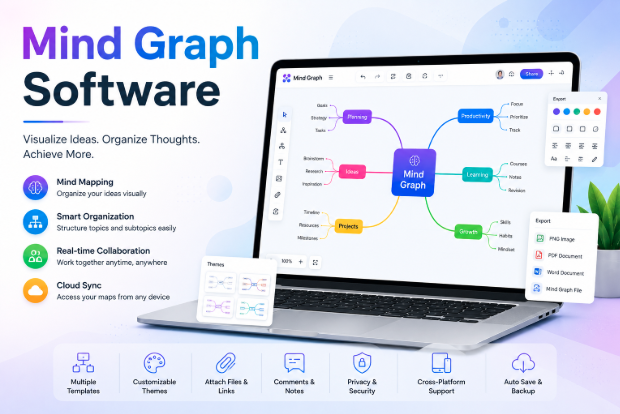
Introduction to Mind Graph Software
Mind graph software is a digital tool designed to organize information visually. It helps people arrange ideas, concepts, tasks, and plans in a structured format. Instead of using traditional notes, users can create connected branches that show relationships between different topics. This visual approach makes information easier to understand and remember.
The concept of mind mapping has been used for many years, but modern technology has transformed it into powerful software solutions. Today, mind graph software is widely used by students, professionals, writers, project managers, and businesses because it simplifies complex information and improves productivity.
Visual thinking plays an important role in learning and decision-making. By presenting information in a graphical format, mind graph software allows users to see the bigger picture while also focusing on smaller details.
How Mind Graph Software Works
Mind graph software follows a simple structure. Everything starts with a central topic placed in the middle of the map. From this main idea, branches extend outward to represent related subjects. Each branch can contain subtopics, creating a clear hierarchy of information.
For example, if someone is planning a business project, the central idea could be “Project Launch.” Main branches might include marketing, budget, timeline, and resources. Each category can then be expanded into smaller sections.
This method helps users:
- Understand relationships between ideas.
- Organize information logically.
- Improve memory retention.
- Manage tasks more efficiently.
Because of its flexible structure, mind graph software can be adapted to various personal and professional purposes.
Key Features of Mind Graph Software
Modern mind graph software comes with many useful features that improve organization and collaboration. Most tools provide drag-and-drop functionality, allowing users to create and modify maps easily.
Some common features include:
- Custom colors and themes.
- Icons and images for visual clarity.
- Notes and attachments.
- Hyperlinks to external resources.
- Cloud synchronization.
- Export options in multiple formats.
- Team collaboration tools.
These features make mind graph software suitable for both individual users and organizations.
Benefits of Using Mind Graph Software
One of the biggest advantages of mind graph software is its ability to improve creativity. Instead of writing information in a linear format, users can connect ideas naturally and discover relationships they may have overlooked.
Another major benefit is improved productivity. People can organize tasks, create schedules, and track progress more efficiently. Since information is displayed visually, it becomes easier to understand complicated subjects.
Some important benefits include:
- Better organization.
- Increased focus.
- Enhanced creativity.
- Faster problem-solving.
- Improved learning and memory.
- Effective planning and decision-making.
These advantages explain why mind graph software has become popular across many industries.
Applications of Mind Graph Software
Mind graph software has numerous applications in daily life and professional environments. Students use it for note-taking and exam preparation, while businesses rely on it for project planning and strategic development.
Writers often create story outlines and article structures using mind maps. Researchers use them to organize data and concepts. Teams also benefit from collaborative mind mapping during meetings and brainstorming sessions.
Common uses include:
- Goal setting.
- Project management.
- Research planning.
- Content creation.
- Business analysis.
- Educational purposes.
- Personal productivity.
Because of its flexibility, mind graph software serves users with different needs and objectives.
Types of Mind Graph Software
Different types of mind graph software are available depending on user preferences and requirements.
| Type | Description |
| Desktop Software | Installed directly on a computer |
| Web-Based Tools | Accessible through internet browsers |
| Mobile Applications | Designed for smartphones and tablets |
| Cloud-Based Platforms | Allow synchronization across devices |
| Open-Source Software | Free solutions with customizable features |
| Premium Software | Advanced tools with professional capabilities |
Choosing the right type depends on budget, usage requirements, and preferred working style.
Popular Mind Graph Software
Several platforms have gained popularity because of their ease of use and advanced features.
| Software | Main Strength |
| XMind | User-friendly interface |
| MindMeister | Online collaboration |
| EdrawMind | Professional templates |
| MindManager | Business planning |
| Coggle | Simple visual maps |
| Mindomo | Education and teamwork |
| FreeMind | Open-source solution |
| GitMind | AI-assisted features |
Each platform offers unique capabilities, making it important to select software that matches individual requirements.
Components of an Effective Mind Map
A well-designed mind map contains several essential components. The central topic serves as the foundation, while branches represent major categories. Keywords should remain short and meaningful to maintain clarity.
Colors and symbols improve visual understanding, while images help users remember information more effectively. Relationships between ideas should be clearly represented to ensure the map remains organized and easy to follow.
When these elements are used properly, mind graph software becomes an extremely powerful productivity tool.
How to Create a Mind Map
Creating a mind map is simple. First, identify the main topic and place it at the center. Then, add major branches representing important categories. Each branch can be expanded with smaller subtopics and supporting details.
Users should keep descriptions short and focus on keywords rather than long sentences. Colors and icons can improve readability and make the map more attractive.
The process generally involves:
- Choosing a central idea.
- Creating main branches.
- Adding subtopics.
- Using colors and symbols.
- Reviewing and refining the structure.
- Saving and sharing the map.
This approach ensures better organization and understanding.
Mind Graph Software for Students
Students often face challenges when managing large amounts of information. Mind graph software provides a practical solution by transforming notes into visual structures.
It helps students:
- Prepare for exams.
- Organize assignments.
- Understand difficult concepts.
- Improve memory retention.
- Manage study schedules.
Because information is arranged visually, learning becomes more engaging and efficient.
Mind Graph Software for Businesses
Businesses use mind graph software for planning, communication, and decision-making. Managers can outline strategies, assign responsibilities, and track project progress more effectively.
Team members can collaborate in real time and contribute ideas without confusion. This leads to improved efficiency and better communication throughout the organization.
Business applications include:
- Workflow planning.
- Strategic analysis.
- Meeting management.
- Knowledge organization.
- Problem-solving.
As companies continue to embrace digital tools, mind graph software remains an important part of modern business operations.
Mind Graph Software for Writers and Creators
Content creators and writers benefit greatly from mind graph software. It allows them to organize ideas before beginning the writing process.
Authors can plan chapters, develop characters, and arrange storylines logically. Bloggers can structure articles, while video creators can outline scripts and production schedules.
This organized approach improves creativity and reduces the chances of missing important details.
Project Management and Collaboration Features
Project management requires clear communication and structured planning. Mind graph software helps teams break large projects into manageable tasks.
Collaboration features allow multiple users to edit maps simultaneously. Comments, version history, and cloud storage ensure everyone remains informed about project developments.
These capabilities make teamwork more efficient and reduce misunderstandings.
Integration with Other Tools
Modern mind graph software often integrates with productivity platforms and cloud services. These integrations improve workflow and reduce manual work.
Common integrations include:
- Microsoft Office.
- Google Workspace.
- Slack.
- Trello.
- Dropbox.
- OneDrive.
- Notion.
Such connectivity allows users to manage information more effectively across multiple platforms.
Advantages and Limitations
Like any technology, mind map software has strengths and limitations.
Advantages
- Encourages creativity.
- Improves organization.
- Enhances productivity.
- Supports collaboration.
- Simplifies complex information.
Limitations
- Some tools require subscriptions.
- Advanced features may have a learning curve.
- Large maps can become complicated.
- Cloud-based systems depend on internet access.
Despite these limitations, the overall benefits usually outweigh the drawbacks.
Free vs Paid Mind Graph Software
Both free and paid solutions are available. Free versions are suitable for basic tasks and personal use. Paid software generally offers advanced features such as collaboration, templates, cloud synchronization, and business integrations.
| Feature | Free Software | Paid Software |
| Basic Mapping | Yes | Yes |
| Collaboration | Limited | Advanced |
| Templates | Few | Extensive |
| Cloud Storage | Limited | Available |
| Export Options | Basic | Multiple Formats |
| Customer Support | Limited | Priority Support |
Users should choose based on their needs and budget.
Tips for Creating Better Mind Maps
Creating effective mind maps requires simplicity and structure. Users should focus on keywords instead of lengthy explanations. Colors should be used consistently, and branches should remain organized.
Some useful practices include:
- Keep information concise.
- Use meaningful keywords.
- Add symbols and colors.
- Avoid overcrowding.
- Maintain a clear hierarchy.
- Review maps regularly.
These techniques improve readability and make mind maps more useful.
Future Trends in Mind Graph Software
Technology continues to shape the future of mind graph software. Artificial intelligence is making map creation faster and more intelligent. Voice commands and automation features are becoming increasingly common.
Cloud technology enables better collaboration, while smart recommendations help users organize ideas more efficiently. As digital transformation continues, mind graph software will become even more powerful and user-friendly.
Conclusion
Mind graph software helps users organize ideas, boost creativity, and improve productivity through visual planning. It is widely used by students, businesses, writers, and professionals for managing information efficiently.
Modern features and AI integration continue to make these tools more powerful and user-friendly. Choosing the right mind graph software can support better organization, smarter decisions, and greater success.
FAQs
1. What is mind graph software?
Mind graph software is a digital tool that helps users organize ideas, information, and tasks visually through connected branches and diagrams.
2. What are the main benefits of mind graph software?
It improves creativity, productivity, organization, brainstorming, and understanding of complex information.
3. Who can use mind graph software?
Mind graph software can be used by students, teachers, writers, business professionals, project managers, and anyone who wants to organize ideas effectively.
Related Articles
REsimpli vs FreedomSoft Differences Real Estate Software – Complete 2026 Guide
Bespoke Software: Complete Guide to Custom Software Development for Businesses
Is Capstone Software Considered CAD? Complete Expert Explanation


