

Is Capstone Software Considered CAD? Complete Expert Explanation
June 8, 2026
Download Software UStudioBytes: Complete Download, Installation & User Guide
June 8, 2026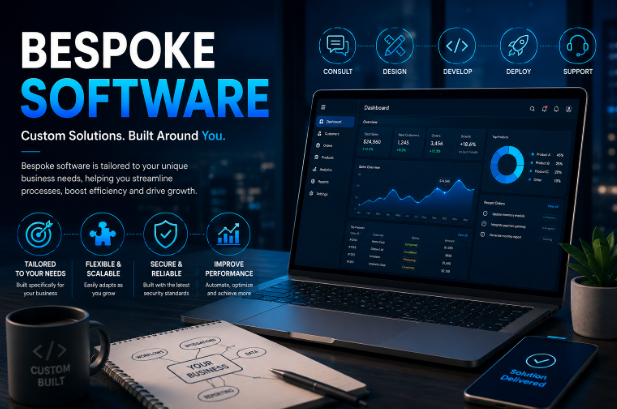
Bespoke software is a digital solution built from scratch to meet the unique operational requirements of a specific organization. Unlike off-the-shelf software, it is specifically designed to match a company’s workflows, goals, and business processes.
This customization helps improve efficiency, flexibility, and overall productivity. In the following sections, we will explore bespoke software in detail, including its features, benefits, development process, and business applications.
How Bespoke Software Is Developed?
Bespoke software is developed through an iterative lifecycle of discovery, design, development, testing, and deployment. In the points below, we will explain it in detail.
Discovery and Requirement Analysis
The development process begins by identifying business goals, challenges, and user requirements. Developers work closely with stakeholders to understand workflows and define the software’s purpose. This stage creates a clear roadmap for the project.
Software Design and Planning
After gathering requirements, developers create system architecture, user interface designs, and technical specifications. Planning helps ensure the software aligns with business objectives and user expectations. A well-structured design reduces future development issues.
Development and Coding
During this phase, developers build the software’s features and functionality based on approved designs. The project is often divided into smaller iterations for easier management and continuous improvements. Regular feedback helps keep development on track.
Testing and Quality Assurance
The software is thoroughly tested to identify bugs, performance issues, and security vulnerabilities. Quality assurance ensures all features work as intended before release. This stage improves reliability and user satisfaction.
Deployment and Ongoing Support
Once testing is complete, the software is deployed to the production environment for end users. Developers continue monitoring performance and provide updates when needed. Ongoing support helps the software adapt to changing business requirements.
Benefits of Bespoke Software
Bespoke software provides a tailored fit, unique competitive advantages, and complete ownership without the burden of recurring licensing fees. In the points below, we will explain it in detail.
Customized for Business Needs
Bespoke software is designed specifically around an organization’s workflows and requirements. This eliminates unnecessary features and improves operational efficiency. Businesses can work more effectively with tools built for their exact needs.
Competitive Advantage
Custom-built solutions allow companies to implement unique features that competitors may not have. These specialized capabilities can improve customer experiences and streamline internal processes. As a result, businesses can gain a stronger position in the market.
Full Ownership and Control
Organizations have complete control over the software, its features, and future development. Unlike subscription-based solutions, there are no ongoing licensing restrictions from third-party vendors. This provides greater flexibility and long-term independence.
Better Scalability
Bespoke software can be expanded as business requirements grow and change over time. New features and integrations can be added without major limitations. This makes it a suitable long-term solution for growing organizations.
Enhanced Security
Custom software can be developed with security measures tailored to the organization’s specific risks and compliance requirements. Developers can address vulnerabilities more effectively than with generic software. This helps protect sensitive business and customer data.
Challenges of Bespoke Software
Bespoke software can involve high upfront costs, prolonged development timelines, and ongoing maintenance responsibilities. In the points below, we will explain it in detail.
High Upfront Costs
Custom software requires a significant initial investment because it is built specifically for one organization. Costs include planning, design, development, testing, and deployment. The final budget often depends on the project’s complexity and scope.
Prolonged Development Timelines
Unlike ready-made solutions, bespoke software must be developed from the ground up. The process can take months to complete due to multiple development and testing phases. Careful planning is necessary to keep the project on schedule.
Ongoing Maintenance Responsibilities
After deployment, the software requires continuous updates, monitoring, and technical support. Businesses must address bugs, security issues, and changing operational needs over time. Regular maintenance helps ensure long-term performance and reliability.
Requirement Changes During Development
Business needs may evolve while the software is being built. New requirements can lead to additional development work, increased costs, and extended timelines. Effective communication helps manage these changes more efficiently.
Dependence on Technical Expertise
Custom software often relies on experienced developers for future updates and enhancements. Organizations may need ongoing access to technical specialists for support. Proper documentation can reduce dependency and simplify future modifications.
Bespoke Software vs Off-the-Shelf Software Comparison Table
Before choosing a software solution, it is important to understand how bespoke software compares with ready-made software products.
| Feature | Bespoke Software | Off-the-Shelf Software |
| Customization | Fully Customized | Limited |
| Initial Cost | Higher | Lower |
| Long-Term Value | High | Moderate |
| Ownership | Full Ownership | Vendor Ownership |
| Scalability | Highly Scalable | Limited by Vendor |
| Security | Tailored Security | Standard Security |
| Integration | Easy Integration | May Require Workarounds |
| Maintenance | Controlled by Business | Controlled by Vendor |
| Competitive Advantage | Strong | Limited |
| Deployment Speed | Slower | Faster |
Bespoke Software vs Customized Software
Bespoke software is built entirely from scratch to your exact requirements, while customized software modifies an existing platform or commercial product to better fit specific business needs. In the points below, we will explain it in detail.
Bespoke Software
- Developed from the ground up specifically for one organization.
- Every feature, workflow, and interface is created according to business requirements.
- Provides maximum flexibility for unique processes and operational needs.
- Allows complete control over future development and feature additions.
- Often requires more time and investment during the initial development phase.
Customized Software
- Based on an existing software product that is modified after purchase.
- Uses pre-built functionality as the foundation for customization.
- Faster to implement because much of the core system already exists.
- May have limitations imposed by the original platform’s architecture.
- Updates and changes can depend on the software vendor’s capabilities and policies.
Key Differences
- Bespoke software starts with a blank slate, whereas customized software starts with an existing solution.
- Bespoke solutions offer greater flexibility for specialized requirements.
- Customized software generally has lower initial development costs.
- Bespoke software provides full ownership of the final product.
- Customized software may still require licensing or subscription agreements.
Which Option Is Better?
- Bespoke software is often suitable for businesses with highly specific processes or unique operational demands.
- Customized software can be a practical choice for organizations that need modifications without building a system from scratch.
- The right option depends on budget, timeline, scalability requirements, and long-term business goals.
In-House vs Outsourced Bespoke Software Development
The choice between in-house and outsourced bespoke software development depends on your specific needs, budget, and available resources. In the points below, we will explain it in detail.
In-House Bespoke Software Development
An in-house team works directly within the organization and has a deeper understanding of internal processes. Communication and project oversight are often more straightforward. However, hiring and maintaining a skilled development team can be costly.
Outsourced Bespoke Software Development
Outsourcing involves hiring an external company or development team to build the software. This approach provides access to specialized expertise and can reduce recruitment costs. It is often a practical option for businesses without an internal development department.
Cost Comparison
In-house development typically requires ongoing expenses for salaries, training, and infrastructure. Outsourcing usually offers more predictable project-based pricing. The most cost-effective option depends on the project’s size and duration.
Control and Flexibility
In-house teams provide greater control over daily development activities and project priorities. Outsourced teams may require structured communication and project management processes. Both approaches can be effective when managed properly.
Choosing the Right Approach
Organizations should evaluate their technical capabilities, budget, project complexity, and long-term goals. Some businesses prefer full internal control, while others benefit from external expertise. The best choice depends on the specific requirements of the project.
Security and Compliance in Bespoke Software
Security and compliance can be embedded directly into the codebase and architecture from day one. In the points below, we will explain it in detail.
Built-In Security Measures
Bespoke software is designed with security requirements in mind from the beginning of development. Developers can implement access controls, encryption, and authentication features tailored to business needs. This proactive approach helps reduce security risks.
Compliance with Industry Regulations
Custom software can be developed to meet specific regulatory and legal requirements. Compliance standards can be incorporated into workflows, data handling processes, and reporting systems. This helps organizations operate within required guidelines.
Secure Data Management
Businesses can define how sensitive information is stored, processed, and accessed within the system. Security controls are tailored to protect confidential customer and company data. Proper data management reduces the likelihood of unauthorized access.
Ongoing Security Updates
Regular maintenance allows developers to address emerging vulnerabilities and security threats. Updates can be applied quickly without waiting for third-party vendors. Continuous monitoring helps maintain a strong security posture.
Reduced Exposure to Common Threats
Because bespoke software is built for a specific organization, it is less likely to be targeted by attacks designed for widely used commercial software. Unique architectures and custom security measures can provide an additional layer of protection.
Common Mistakes to Avoid When Developing Bespoke Software
The biggest mistakes to avoid are rushing the requirement-gathering phase, ignoring long-term scalability, and over-complicating features. In the points below, we will explain it in detail.
Rushing the Requirement-Gathering Phase
A lack of detailed planning can lead to misunderstandings and costly revisions later in the project. Businesses should clearly define goals, workflows, and user expectations before development begins. Strong requirements create a solid foundation for success.
Ignoring Long-Term Scalability
Software should be designed with future growth in mind rather than only current needs. Failing to plan for expansion can make upgrades difficult and expensive. Scalable architecture helps the system adapt as the business evolves.
Over-Complicating Features
Adding unnecessary functionality can increase development costs and reduce usability. Focusing on essential features first helps keep the project efficient and manageable. Simpler solutions often provide a better user experience.
Poor Communication Between Stakeholders
Misalignment between business teams and developers can result in features that do not meet expectations. Regular communication helps ensure everyone remains focused on the same objectives. Feedback throughout development reduces costly mistakes.
Neglecting Testing and Quality Assurance
Skipping thorough testing can leave bugs, performance issues, and security vulnerabilities unresolved. Quality assurance should be an ongoing part of the development process. Proper testing improves reliability and user satisfaction before deployment.
FAQs
How long does it typically take to develop bespoke software?
Development time depends on project complexity, features, and team size, but most projects take between 3 and 12 months. Simpler systems can be completed faster while enterprise-level solutions require longer development and testing cycles. Proper planning and clear requirements significantly help reduce overall development time.
Can bespoke software be integrated with existing third-party tools and systems?
Yes, bespoke software is specifically designed to integrate smoothly with existing tools like CRM systems, payment gateways, and third-party APIs. Since it is built from scratch, developers can create custom integration points that off-the-shelf software may not support. This flexibility makes it highly compatible with a company’s existing technology infrastructure.
What happens if the development company shuts down after delivering the software?
If the development company closes, the business still retains full ownership of the source code and all related documentation. This is why receiving complete source code and technical documentation upon project delivery is essential. Organizations can then hire new developers to maintain or update the software independently without any dependency issues.
Is bespoke software suitable for small businesses or only large enterprises?
Bespoke software can benefit businesses of any size, but the high upfront cost makes it more practical for medium to large organizations.
Small businesses with very specific needs that no existing software can fulfill may also benefit significantly from a custom solution.
Evaluating long-term return on investment helps determine whether bespoke development is the right choice for smaller companies.
Conclusion
Bespoke software provides organizations with a custom-built solution designed to meet their exact business requirements. While it often requires a higher initial investment and longer development time, it offers greater flexibility, scalability, security, and control than many standard software options.
For businesses with unique processes and long-term growth plans, bespoke software can be a valuable investment that delivers lasting operational and competitive advantages.
Related Articles
Winobit3.4 Software Error: Causes, Fixes, Troubleshooting & Prevention Guide
What Is the Easiest 3D Modeling Software for Beginners in 2026?
Is Capstone Software Considered CAD? Complete Expert Explanation


