
New Software RCSDassk: A Complete Guide for Beginners and Professionals
June 3, 2026
Business Software Gonzay Com: Features, Benefits, Uses & Complete Guide 2026
June 4, 2026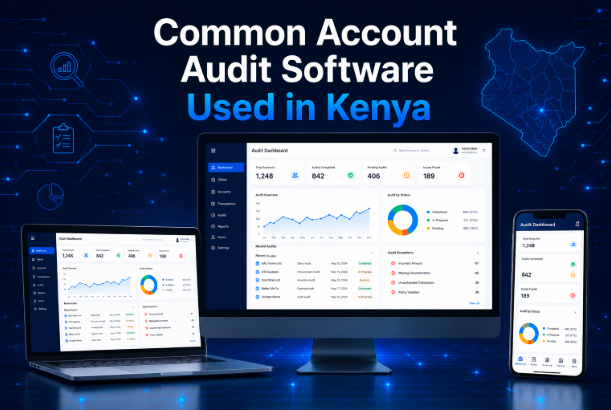
Common Account Audit Software Used in Kenya mainly includes Generalized Audit Software (GAS) for data analysis and Audit Management Software (AMS) for managing the entire audit lifecycle. These tools help organizations improve audit accuracy, detect financial irregularities, strengthen compliance, and reduce manual work.
Kenyan businesses, government agencies, NGOs, and financial institutions increasingly rely on audit software to enhance efficiency and transparency in their operations. In the following sections, we will discuss these software solutions in detail, including their features, benefits, use cases, and how they support modern auditing practices in Kenya.
Why Audit Software Is Important for Kenyan Businesses
Audit software helps Kenyan businesses ensure compliance, reduce errors, improve accuracy, and secure financial data. In the points below, we will explain it in detail.
Compliance with KRA Regulations
Audit software helps businesses stay compliant with Kenya Revenue Authority (KRA) requirements by automating record-keeping and reporting processes. It ensures that financial transactions are properly documented and easily accessible during audits.
Automated compliance checks reduce the risk of penalties and regulatory issues. This makes tax management more efficient and reliable for organizations of all sizes.
Reduction of Manual Errors
Traditional spreadsheet-based auditing is prone to human mistakes that can affect financial accuracy. Audit software automates calculations, data validation, and reporting tasks to minimize errors.
It helps auditors identify inconsistencies quickly and maintain accurate financial records. As a result, businesses can improve decision-making and financial transparency.
Enhanced Data Security
Modern audit software includes advanced security features such as encryption, user access controls, and secure cloud storage. These features protect sensitive financial information from unauthorized access and cyber threats.
Businesses can safely manage audit records while maintaining confidentiality. Strong security measures also help organizations meet regulatory and industry standards.
Improved Efficiency and Productivity
Audit software streamlines audit workflows by automating repetitive tasks and organizing documentation in one place.
Auditors can analyze large volumes of data faster and generate reports with minimal effort. This reduces the time required to complete audits and increases overall productivity. Businesses benefit from faster insights and more effective risk management.
Common Account Audit Software Used in Kenya
Kenyan businesses use audit tools like TeamMate and DataSnipper, along with QuickBooks and Sage for accounting and financial management. In the points below, we will explain it in detail.
TeamMate Audit Management Software
TeamMate is a widely used audit management platform that helps organizations plan, execute, and monitor audits efficiently. It centralizes audit documentation and improves collaboration among audit teams.
The software also supports risk assessment and compliance tracking. Its structured workflow helps auditors complete engagements more effectively.
DataSnipper for Document Verification
DataSnipper is designed to simplify audit testing and document verification within spreadsheets. It automates repetitive tasks such as tracing, validating, and cross-referencing audit evidence.
This reduces manual effort and improves audit accuracy. Auditors can save significant time while maintaining high-quality documentation.
QuickBooks for Financial Record Management
QuickBooks is a popular accounting software used by many Kenyan small and medium-sized businesses. It helps manage bookkeeping, invoicing, expense tracking, and financial reporting. The software provides accurate financial records that support audit processes. Its user-friendly interface makes financial management easier for business owners.
Sage Accounting Software
Sage is a comprehensive accounting solution that supports financial reporting, payroll management, and regulatory compliance. Businesses use it to maintain organized financial records and streamline accounting operations.
The software offers detailed reporting tools that assist auditors during reviews. Its scalability makes it suitable for both small and large organizations.
Best Audit Software for Small Businesses in Kenya
The best audit software for small businesses in Kenya combines accounting, bookkeeping, and audit trail features to improve financial accuracy and compliance. In the points below, we will explain it in detail.
Comprehensive Accounting Features
Modern audit software provides accounting tools that help businesses record, organize, and manage financial transactions efficiently. These features simplify bookkeeping and ensure accurate financial records. Business owners can easily track income, expenses, and cash flow. This creates a strong foundation for auditing and reporting.
Robust Audit Trail Capabilities
A robust audit trail records every financial transaction and system change made within the software. This improves transparency and allows auditors to verify financial activities quickly. Detailed logs help detect errors, unauthorized changes, and potential fraud. As a result, businesses can maintain reliable and trustworthy records.
Improved Compliance and Reporting
Audit software helps small businesses comply with tax regulations and financial reporting requirements. Automated reports reduce manual work and ensure greater accuracy in financial statements. Businesses can generate audit-ready documents whenever needed. This makes regulatory compliance simpler and more efficient.
Cost-Effective Solution for Growth
Many audit software solutions are affordable and scalable for small businesses. They reduce the need for extensive manual processes while improving productivity. As the business grows, the software can handle larger transaction volumes and more complex audits. This makes it a valuable long-term investment for financial management.
Best Audit Software for Medium-Sized Businesses
Medium-sized businesses commonly use DataSnipper, Hyperproof, and NetSuite to streamline audits, automate compliance, and improve financial oversight. In the points below, we will explain it in detail.
- DataSnipper for Excel-Based Audits
DataSnipper integrates with Microsoft Excel and automates audit documentation tasks. It helps auditors verify data faster and reduce manual work. - Hyperproof for Compliance Workflows
Hyperproof centralizes compliance activities and automates control monitoring. This improves audit readiness and reduces administrative effort. - NetSuite for Financial Auditing
NetSuite provides built-in ERP audit features with real-time financial visibility. Auditors can access accurate records and generate reports efficiently. - Improved Audit Efficiency
These tools automate repetitive processes and organize audit data in one place. This saves time and increases overall productivity. - Better Risk and Compliance Management
Advanced reporting and monitoring features help identify risks early. Businesses can maintain stronger compliance and financial controls.
Comparison Table of Common Account Audit Software Used in Kenya
The following table compares the most popular audit software solutions used by Kenyan businesses based on features, compliance support, pricing, and business suitability.
| Software | Best For | Audit Trail | KRA Compliance Support | Cloud-Based | Ease of Use | Pricing Level |
| CaseWare Audit | Audit Firms | Yes | Yes | Partial | Medium | High |
| QuickBooks | Small Businesses | Yes | Yes | Yes | Easy | Medium |
| Sage Pastel | SMEs | Yes | Yes | Yes | Easy | Medium |
| SAP Audit Management | Large Enterprises | Advanced | Yes | Yes | Complex | High |
| IDEA Audit Software | Forensic Audits | Advanced | Yes | No | Medium | High |
| Xero | Startups & SMEs | Yes | Yes | Yes | Easy | Medium |
| Zoho Books | Small Businesses | Yes | Yes | Yes | Easy | Low |
| Oracle NetSuite | Enterprises | Advanced | Yes | Yes | Medium | High |
| Microsoft Dynamics 365 | Growing Companies | Advanced | Yes | Yes | Medium | High |
| Odoo | SMEs | Yes | Yes | Yes | Easy | Low |
Best Audit Software for Large Enterprises and Financial Institutions
Large enterprises and financial institutions often use Optro (AuditBoard), Workiva, MetricStream, and DataSnipper to manage complex audits, compliance, and risk operations. In the points below, we will explain it in detail.
AuditBoard (Optro) for Enterprise Auditing
AuditBoard helps large organizations manage internal audits, risk assessments, and compliance programs from a centralized platform. It streamlines audit planning, testing, and reporting processes.
The software improves collaboration across departments and enhances visibility into audit activities. This makes enterprise audit management more efficient and scalable.
Workiva for Reporting and Compliance
Workiva is widely used for financial reporting, regulatory compliance, and audit documentation. It connects data from multiple sources to create accurate and transparent reports. Teams can collaborate in real time while maintaining data integrity. This helps organizations meet reporting requirements with greater confidence.
MetricStream for Risk Management
MetricStream provides integrated solutions for governance, risk, and compliance management. It helps businesses identify, assess, and monitor risks across the organization. Automated workflows improve consistency and reduce compliance gaps. As a result, organizations can strengthen their overall risk management framework.
DataSnipper for Audit Automation
DataSnipper enhances audit efficiency by automating document verification and evidence collection within Microsoft Excel. It reduces repetitive manual tasks and improves audit accuracy. Auditors can review large volumes of information more quickly and effectively. This leads to faster audit completion and better-quality results.
Challenges Businesses Face When Implementing Audit Software
Businesses often face integration issues, high implementation costs, and data management challenges when adopting audit software. In the points below, we will explain it in detail.
Integration with Existing Systems
Many organizations use ERP platforms and legacy systems that may not easily connect with new audit software. Integration can require additional customization and technical expertise. Poor system compatibility may lead to delays during deployment. This can increase project complexity and implementation time.
High Implementation and Maintenance Costs
Audit software often involves licensing fees, training expenses, and ongoing maintenance costs. Small and medium-sized businesses may find these investments challenging to manage. Additional costs can arise from system upgrades and technical support. Careful budgeting is essential for long-term success.
Centralizing Audit Evidence
Organizations frequently struggle to gather audit evidence from multiple departments and systems. Information may be stored in different formats and locations, making management difficult. Centralizing documents requires effective processes and software configuration. Without proper organization, audit efficiency can be reduced.
User Adoption and Training Challenges
Employees may need time to learn new audit software and adapt to updated workflows. Insufficient training can lead to errors and lower productivity during the transition period. Organizations must provide ongoing support and education to ensure successful adoption. Proper training helps maximize the software’s value and effectiveness.
Common Mistakes to Avoid When Choosing Audit Software
Businesses should avoid selecting audit software without evaluating their needs, integration requirements, and employee training plans. In the points below, we will explain it in detail.
Choosing Generic Software Without Assessing Needs
Many organizations purchase audit software based on popularity rather than business requirements. A solution that works for one company may not fit another’s audit processes. Failing to assess specific needs can result in unnecessary features or missing capabilities. Proper evaluation helps ensure a better return on investment.
Ignoring Integration Requirements
Audit software should work seamlessly with existing ERP, accounting, and business systems. Neglecting integration needs can create data silos and inefficient workflows. Employees may need to enter information manually across multiple platforms. This can increase errors and reduce operational efficiency.
Underestimating User Training
Even the most advanced audit software can be ineffective if users are not properly trained. Employees need to understand system features, workflows, and reporting functions. Lack of training often leads to mistakes and lower adoption rates. Continuous learning helps organizations maximize software benefits.
Focusing Only on Cost
Choosing the cheapest solution without considering functionality and long-term value can create problems later. Low-cost software may lack essential audit, compliance, or reporting features. Businesses should evaluate overall performance, scalability, and support options. A balanced approach leads to a more successful software investment.
FAQs
Can audit software in Kenya work in both English and Swahili languages?
Most international audit software like QuickBooks and Sage primarily operates in English with limited Swahili support. Always confirm language options with the vendor before purchasing.
Is cloud-based audit software safe given Kenya’s internet connectivity challenges?
Many platforms offer offline modes that sync data automatically once the internet is restored. Businesses in low-connectivity areas should prioritize software with strong offline functionality.
How does audit software handle data privacy under Kenya’s Data Protection Act?
Audit software should comply with Kenya’s Data Protection Act 2019 through encryption, secure storage, and controlled access features. Always verify that the vendor supports Kenyan data protection compliance before implementation.
Can NGOs and government agencies use the same audit software as private businesses?
Yes, platforms like CaseWare and TeamMate support different organizational structures, including NGOs and government agencies. However, always check if the software supports public sector compliance and donor reporting requirements.
Conclusion
Account audit software plays a vital role in helping Kenyan businesses improve accuracy, compliance, and financial transparency. From small businesses to large enterprises, different solutions offer features tailored to specific audit and reporting needs.
Choosing the right software can streamline audit processes, reduce risks, and enhance operational efficiency. By evaluating business requirements carefully, organizations can invest in audit tools that support long-term growth and regulatory compliance.
Related Articles
Winobit3.4 Software Error: Causes, Fixes, Troubleshooting & Prevention Guide
CAD Software News 2026: Latest Updates, AI Innovations, Industry Trends & New CAD Releases
Download Software UStudioBytes: Complete Download, Installation & User Guide
Bespoke Software: Complete Guide to Custom Software Development for Businesses


