
Old 3D CGI Rendering Software: A Complete History and Guide
August 4, 2026
Easient CAM Software for 3018 Mac: Complete Beginner’s Guide
August 5, 2026
Introduction
Custom enterprise software development has become one of the most important investments for growing businesses today. Instead of forcing a company to adjust its workflow around a generic tool, this approach builds software that fits the business exactly the way it operates.
Companies choose custom enterprise software development because it improves efficiency, strengthens security, and supports long-term growth. This guide explains every important aspect of custom enterprise software development in a simple and detailed manner, so business owners and decision makers can understand its real value.
By the end of this article, you will know why so many organizations are shifting toward custom enterprise software development instead of relying on ready-made products.
What is Custom Enterprise Software Development?
Custom enterprise software development is the process of building large-scale business applications specifically designed for one organization. Unlike ready-made software, it is created after studying the company’s actual workflow. This ensures every feature serves a real purpose instead of sitting unused.
Why Businesses Are Shifting Toward Custom Solutions
Many businesses outgrow generic tools because these tools cannot handle unique operational demands. Custom enterprise software development solves this by offering flexibility that off-the-shelf products simply cannot match. Companies gain more control over their data, processes, and future upgrades.
Custom vs Off-the-Shelf Software: Quick Overview
Off-the-shelf software is fast to deploy but limited in flexibility, while custom enterprise software development takes longer but delivers a perfect fit. Businesses with simple needs may prefer ready-made tools, but companies with complex operations usually benefit more from a custom-built system.
Understanding Enterprise Software
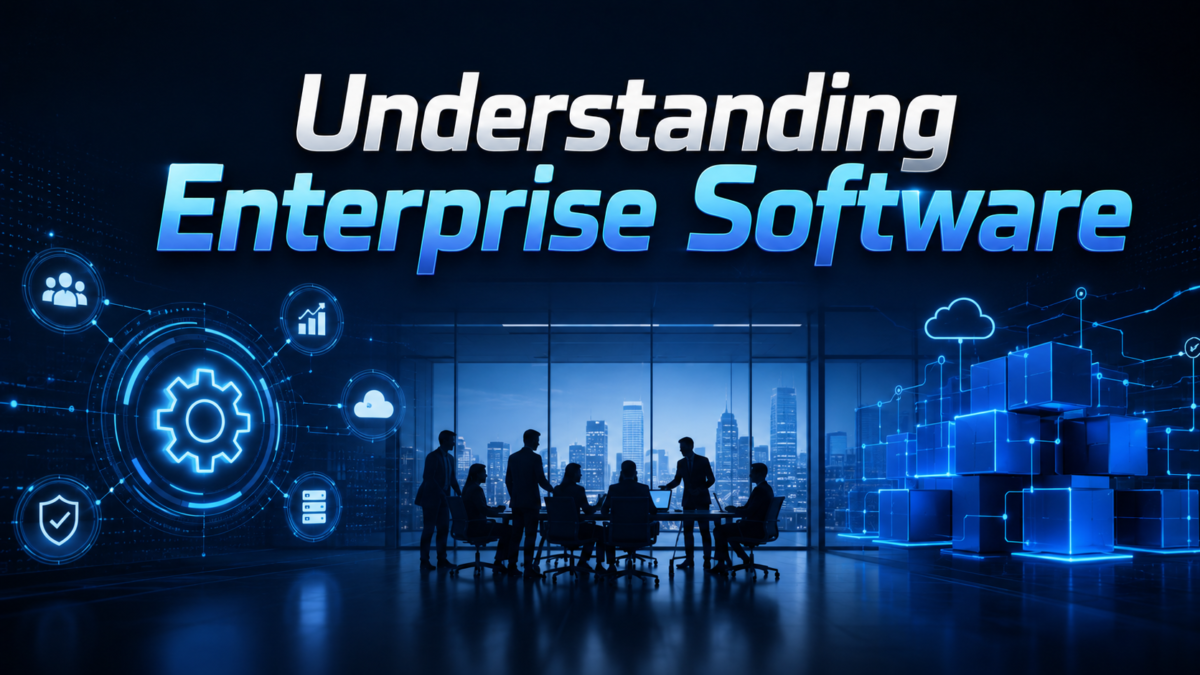
Enterprise software is different from regular business tools because it is designed to support large organizations with many users, departments, and data sources working together at the same time.
Definition and Scope
Enterprise software refers to large applications used across entire organizations rather than by a single team. It usually connects multiple departments such as finance, sales, and operations under one unified system.
Key Characteristics of Enterprise-Grade Software
Enterprise-grade software is built to handle heavy workloads, multiple users, and strict security requirements. It must remain stable even when thousands of people are using it simultaneously, which is why custom enterprise software development focuses heavily on performance and reliability.
Who Needs Custom Enterprise Software?
Organizations with complex workflows, strict compliance needs, or unique customer demands benefit the most from custom enterprise software development. This includes large corporations, government bodies, healthcare providers, and financial institutions.
Custom vs Off-the-Shelf Software (Detailed Comparison)
Choosing between custom and ready-made software depends on budget, timeline, and how unique the business processes are. The table below highlights the main differences clearly.
| Factor | Custom Enterprise Software | Off-the-Shelf Software |
| Cost | Higher initial investment | Lower initial cost |
| Flexibility | Fully adaptable to business needs | Limited customization |
| Security | Built specifically for the organization | Shared security model |
| Integration | Designed to connect with existing systems | May require workarounds |
| Long-term value | Higher ROI over time | Ongoing subscription costs |
Cost Comparison
Custom enterprise software development requires a bigger upfront budget because everything is built from scratch. However, businesses save money over time since they are not paying repeated licensing fees for features they never use.
Flexibility & Scalability
A custom system can grow alongside the business without major limitations. This flexibility is one of the strongest reasons companies invest in custom enterprise software development instead of generic platforms.
Security & Compliance
Custom software allows businesses to build security measures around their specific industry regulations. This is especially important for sectors like healthcare and banking, where compliance cannot be compromised.
Long-Term Value & ROI
Even though custom enterprise software development costs more initially, it usually delivers stronger returns because it directly supports business efficiency and eliminates unnecessary features.
When to Choose Which Option
Businesses with simple, common processes may do well with ready-made tools, while organizations with specialized workflows should strongly consider custom enterprise software development for long-term success.
Types of Custom Enterprise Software
Custom enterprise software comes in many forms, each designed to solve a specific business challenge.
ERP (Enterprise Resource Planning) Systems
ERP systems combine finance, inventory, and operations into a single platform. Custom ERP solutions are built around a company’s exact processes instead of forcing changes to fit a generic template.
CRM (Customer Relationship Management) Systems
A custom CRM helps businesses manage customer relationships in a way that matches their specific sales cycle. This improves customer satisfaction and increases sales efficiency significantly.
Supply Chain Management Software
Custom supply chain tools track inventory, shipments, and vendor relationships in real time. These systems are especially valuable for manufacturing and logistics companies with complex supply networks.
HR & Workforce Management Tools
Custom HR software simplifies employee management, payroll, and performance tracking. It is designed around the company’s actual policies rather than generic HR rules.
Business Intelligence & Analytics Dashboards
These tools convert raw business data into clear insights through custom dashboards. Decision-makers can view exactly the metrics that matter most to their organization.
Industry-Specific Platforms
Certain industries such as healthcare, finance, retail, and manufacturing require specialized systems. Custom enterprise software development ensures these platforms follow strict industry rules while still supporting daily operations smoothly.
Legacy System Modernization
Many companies still rely on outdated systems that slow down productivity. Custom enterprise software development helps modernize these legacy systems without losing important historical data.
Key Benefits of Custom Enterprise Software
Custom software offers advantages that generic tools simply cannot provide, making it a smart long-term investment.
Tailored to Business Processes
Every feature in a custom system is built around actual business needs, eliminating wasted effort on irrelevant tools.
Scalability for Growth
As a business expands, custom software can be updated and expanded without switching to an entirely new platform.
Seamless Integration with Existing Systems
Custom enterprise software development ensures new systems work smoothly with existing databases, tools, and platforms already in use.
Enhanced Security & Compliance
Security features are designed specifically for the organization’s risk level and industry regulations, offering stronger protection than generic solutions.
Competitive Advantage
A custom system gives companies unique capabilities that competitors using standard software may not have access to.
Full Ownership & Control
Businesses fully own their custom software, meaning there are no restrictions from third-party vendors regarding future changes or upgrades.
Challenges & Risks in Custom Development
While custom software offers many benefits, it also comes with certain challenges that businesses should prepare for.
High Initial Investment
Building software from scratch requires more time and money compared to buying a ready-made product.
Longer Development Timelines
Custom enterprise software development takes longer since every feature must be planned, designed, and tested carefully.
Choosing the Right Development Partner
Selecting an inexperienced development team can lead to poor quality software and wasted resources.
Managing Scope Creep
Without proper planning, project requirements can keep expanding, leading to delays and increased costs.
Change Management Within Organizations
Employees may need training and time to adjust to a new custom system, which requires proper change management strategies.
The Custom Software Development Process
Understanding the development process helps businesses know what to expect when building custom enterprise software.
Discovery & Requirement Gathering
This stage involves understanding the business’s exact needs, challenges, and goals before any coding begins.
Planning & Architecture Design
Developers create a technical blueprint that outlines how the software will function and scale in the future.
UI/UX Design
Designers focus on creating an interface that is easy to use while matching the company’s branding and workflow.
Agile Development & Sprints
Development happens in small stages called sprints, allowing continuous feedback and improvements throughout the project.
Quality Assurance & Testing
Every feature is tested thoroughly to ensure the software works correctly before it is deployed.
Deployment
Once testing is complete, the software is launched on cloud, on-premise, or hybrid environments based on business needs.
Maintenance & Continuous Support
After launch, ongoing support ensures the software stays updated, secure, and aligned with changing business requirements.
Technology Stack for Enterprise Software
The technology stack determines how powerful, secure, and scalable the final software will be.
Front-End Technologies
Front-end tools control how the software looks and feels to users, directly impacting user experience.
Back-End Technologies
Back-end systems handle the core logic, data processing, and server-side operations of the software.
Databases & Cloud Platforms
Reliable databases and cloud platforms ensure data is stored securely and can be accessed quickly.
APIs & Third-Party Integrations
APIs allow custom software to connect with other tools, expanding its functionality without rebuilding everything from scratch.
DevOps & CI/CD Tools
These tools automate testing and deployment, making updates faster and more reliable.
Security & Compliance Considerations
Security remains one of the top priorities in custom enterprise software development, especially for sensitive industries.
Data Protection Best Practices
Encryption, secure authentication, and regular backups help protect sensitive business data from potential threats.
Industry Regulations
Custom software must often comply with regulations such as GDPR or HIPAA depending on the industry and location.
Role-Based Access Control
This ensures employees only access the information relevant to their role, reducing security risks.
Regular Security Audits
Frequent audits help identify vulnerabilities before they become serious security issues.
Cost of Custom Enterprise Software Development
Understanding cost factors helps businesses budget properly for their custom software project.
Factors Affecting Cost
Cost depends on project complexity, number of features, development timeline, and the experience level of the development team.
In-House vs Outsourced Development Costs
In-house teams often cost more long-term, while outsourcing can reduce costs while still delivering quality results.
Hidden Costs to Watch For
Maintenance, updates, and unexpected scope changes can add extra costs if not planned for in advance.
Estimating ROI
Businesses should calculate expected efficiency gains and cost savings to understand the long-term return on their investment.
In-House vs Outsourcing vs Hybrid Development
Choosing the right development model affects both cost and quality of the final product.
Pros & Cons of In-House Teams
In-house teams offer more control but require higher salaries, benefits, and management effort.
Pros & Cons of Outsourcing
Outsourcing reduces costs and provides access to specialized skills, though communication and time zone differences can be challenging.
Hybrid Model Approach
A hybrid model combines in-house oversight with outsourced development, balancing control and cost efficiency.
How to Choose the Right Development Partner
Businesses should evaluate experience, past projects, and communication style before selecting a development partner.
How to Choose the Right Custom Software Development Company
Picking the right company greatly impacts the success of a custom enterprise software development project.
Key Qualities to Look For
A good development company should have strong technical expertise, clear communication, and relevant industry experience.
Questions to Ask Before Hiring
Businesses should ask about past projects, development timelines, security practices, and post-launch support options.
Red Flags to Avoid
Vague pricing, lack of portfolio, and poor communication are warning signs of an unreliable development partner.
Evaluating Portfolios & Case Studies
Reviewing previous projects helps businesses understand a company’s real capabilities before signing a contract.
Real-World Use Cases & Examples
Seeing practical examples helps businesses understand how custom enterprise software development works in real situations.
Case Study: ERP Implementation
A manufacturing company replaced multiple disconnected tools with one custom ERP system, improving efficiency across departments.
Case Study: Legacy System Modernization
A financial institution upgraded its outdated system into a modern custom platform, improving speed and security significantly.
Case Study: Custom CRM for Sales Growth
A retail business implemented a custom CRM that increased customer retention through better relationship tracking.
Future Trends in Enterprise Software Development
The future of custom enterprise software development is shaped by emerging technologies that continue to improve business operations.
AI & Machine Learning Integration
AI is increasingly used to automate tasks and provide smarter business insights within custom platforms.
Cloud-Native Applications
Cloud-native development allows businesses to scale software more efficiently while reducing infrastructure costs.
Low-Code/No-Code Platforms
These platforms speed up certain parts of development, though complex enterprise systems still require full custom development.
Automation & AI Agents
Automated workflows and AI agents are reducing manual work, allowing employees to focus on more strategic tasks.
Enhanced Cybersecurity Measures
As threats evolve, custom software increasingly includes advanced security layers to protect sensitive business data.
Conclusion
Custom enterprise software development remains one of the smartest long-term investments for businesses that need flexibility, security, and scalability.
While it requires more time and budget compared to ready-made tools, the long-term benefits usually outweigh the initial costs. Companies that invest in custom enterprise software development often gain a strong competitive advantage through systems built specifically for their needs.
FAQs
What is custom enterprise software development?
It is the process of building large business applications specifically designed for one organization’s unique needs.
Is custom software more expensive than off-the-shelf software?
Initially yes, but it often saves money long-term by eliminating unnecessary licensing fees and improving efficiency.
How long does custom enterprise software development take?
Timelines vary based on complexity, but most enterprise projects take several months to complete.
Is custom software more secure than ready-made software?
Yes, because security features are built specifically around the organization’s risk level and compliance needs.
Should small businesses consider custom software?
Small businesses with simple needs may not require it immediately, but growing companies often benefit from custom solutions over time.
Related Articles
Clipping Software Guide 2026: Features, Tools, Benefits & How to Use
Custom Manufacturing Software: A Complete Guide for Modern Manufacturers
Seisa Mouse Software: Complete Guide to Installation, Features & Customization
Redragon EISA Magnetic Keyboard K686 Software: Complete Setup and Feature Guide


