
Seisa Mouse Software: Complete Guide to Installation, Features & Customization
July 28, 2026
Clipping Software Guide 2026: Features, Tools, Benefits & How to Use
July 29, 2026
Every factory runs differently, and that is exactly why generic software often fails to keep up with real production needs. Custom manufacturing software is built around the actual way a business works, not the other way around. It connects planning, inventory, quality checks, and reporting into one system that matches the factory floor instead of forcing the floor to match the software.
This guide walks through what custom manufacturing software really means, why manufacturers are adopting it, what it includes, and how it gets built. By the end, you will have a clear picture of whether this kind of solution fits your own operation.
What Is Custom Manufacturing Software
Custom manufacturing software is a system designed specifically for one company’s production process instead of a one-size-fits-all package. It reflects the exact workflow, machines, and compliance rules that a factory already follows.
Definition and Core Idea
At its core, custom manufacturing software is built from the ground up, or heavily modified from an existing base, so it matches a company’s specific operations.
Instead of asking staff to change their process to fit the software, the software is shaped around the process itself. This makes daily operations smoother because nothing feels forced or out of place.
Custom Software Versus Off-the-Shelf Tools
Off-the-shelf manufacturing tools are built for the average user, which means they often include features a business never uses while missing the ones it actually needs.
Custom manufacturing software removes that gap entirely by focusing only on what a specific factory requires. This usually leads to faster staff adoption since the interface already speaks the language of that particular plant.
Where It Fits Into the Bigger Picture
A factory typically already uses tools for accounting, sales, or logistics, and custom manufacturing software is meant to sit alongside these systems, not replace them.
It usually connects through integrations so data flows between production and the rest of the business without manual re-entry. This connection is what turns scattered information into one clear operational picture.
Why Manufacturers Are Choosing Custom Solutions Over Generic Software
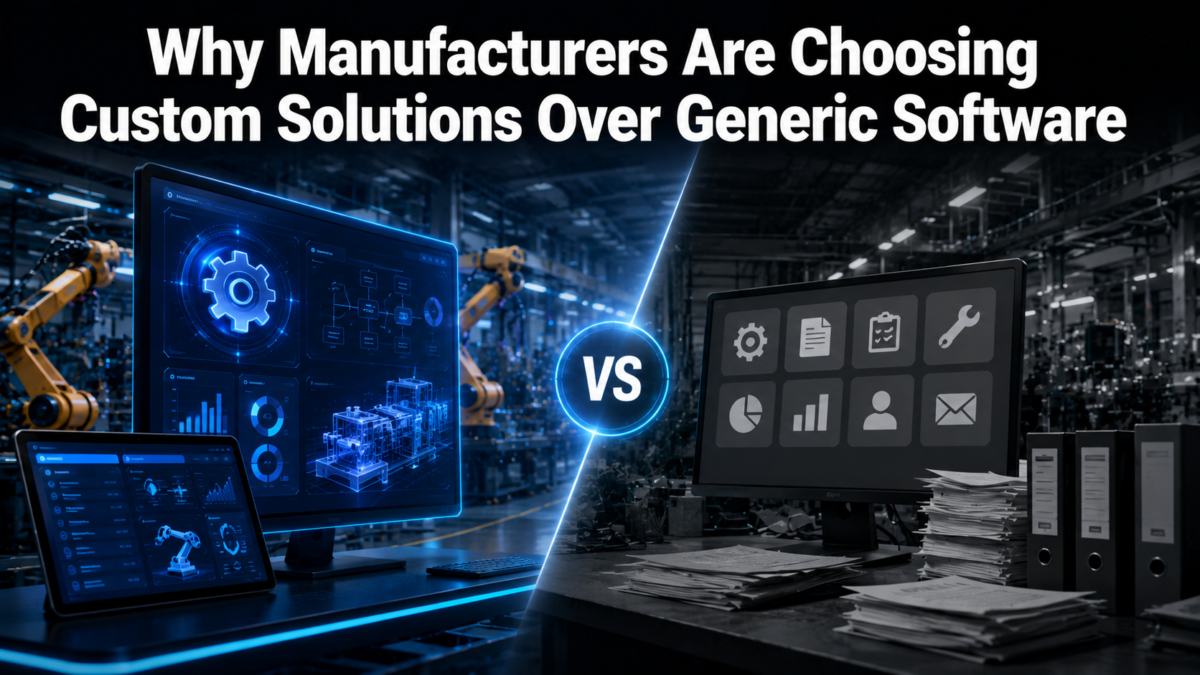
Generic manufacturing platforms work fine for very basic operations, but most manufacturers eventually hit a wall with them. Industry rules, unique machinery, and growth plans usually push companies toward a system built specifically for them.
Limitations of Generic Manufacturing Tools
Most off-the-shelf platforms are designed to serve thousands of different companies at once, so they stay general by design. This often means paying for unnecessary modules while still needing workarounds for tasks the software was never built to handle. Over time, these workarounds slow teams down instead of helping them.
Industry-Specific Demands
Sectors like pharmaceuticals, aerospace, and food processing operate under strict regulations that generic software rarely covers in full detail.
Custom manufacturing software can be built to match these exact regulatory checkpoints, from batch documentation to safety sign-offs. This reduces the risk of failing an audit due to a system that was never designed for that industry.
Scalability and Long-Term Growth
A small manufacturer today may double its production lines within a few years, and generic tools often cannot expand cleanly with that growth.
Custom manufacturing software is planned with future scaling in mind, so new machines, product lines, or locations can be added without rebuilding the whole system. This long-term flexibility is one of the strongest reasons manufacturers move away from packaged solutions.
Core Features and Modules Inside Custom Manufacturing Software
Most custom manufacturing software is built around a set of core modules that cover the full production cycle. These modules can be combined or expanded depending on how the factory actually operates.
Production Planning and Scheduling
This module manages work orders, machine allocation, and shift planning so that production stays on schedule. It helps avoid bottlenecks by showing which machines or teams are free at any given moment. Good scheduling directly reduces idle time and missed deadlines.
Inventory, Quality, and Traceability
Inventory tracking keeps raw materials, work-in-progress, and finished goods properly recorded at every stage. Quality control features log inspections and defects so problems get caught early rather than after shipment. Traceability then ties every batch or serial number back to its source, which is critical for recalls or audits.
Reporting and System Integration
Reporting tools turn daily production data into dashboards that show output, downtime, and efficiency trends at a glance. These reports are usually paired with integration into existing ERP or accounting systems so numbers do not need to be entered twice. Below is a quick comparison of how core modules typically differ between generic and custom manufacturing software.
| Feature Area | Generic Software | Custom Manufacturing Software |
| Workflow Match | Fixed, one-size-fits-all | Built around actual factory process |
| Compliance Fit | Basic, often generic | Matches specific industry rules |
| Scalability | Limited by vendor plans | Designed for planned growth |
| Integration | Often requires extra plugins | Built to connect with existing tools |
| Cost Structure | Recurring license fees | One-time build plus maintenance |
Types of Custom Manufacturing Software
Custom manufacturing software is not a single product; it usually refers to a category of systems that can be built separately or combined depending on the factory’s needs.
Manufacturing Execution Systems
A Manufacturing Execution System, often shortened to MES, tracks real-time activity on the shop floor, from machine status to worker output. It gives managers a live view of production instead of relying on end-of-day reports. This real-time visibility is one of the biggest reasons manufacturers invest in custom MES platforms.
ERP Built for Manufacturing
An ERP system designed specifically for manufacturing connects production data with finance, procurement, and sales in one place. Unlike general business ERPs, a manufacturing-focused version understands concepts like bill of materials and production costing. This makes financial reporting far more accurate for factory-based businesses.
PLM, IoT, and Warehouse Systems
Product Lifecycle Management software tracks a product from design through production and eventual retirement, keeping every version documented.
IoT-based monitoring adds sensors to machines so performance and maintenance needs are tracked automatically. Warehouse management systems then round out the picture by organizing storage, picking, and shipping in sync with production output.
Development Process and Cost Considerations
Building custom manufacturing software is a structured process, not a single step, and understanding it helps set realistic expectations for both timeline and budget.
How the Software Gets Built
The process usually starts with mapping out the current factory workflow in detail before any code is written. From there, developers choose the right technology stack, design the interface for shop floor usability, and build the system in stages rather than all at once. Testing and staff training follow before the system goes fully live.
What Affects the Overall Cost
Cost depends heavily on how many modules are needed, how many machines or systems must be integrated, and how customized the interface needs to be.
A simple system covering one or two modules will always cost less than a full plant-wide platform. Ongoing maintenance and support should also be budgeted separately from the initial build cost.
In-House Development Versus Outsourcing
Some larger manufacturers build custom manufacturing software with an internal development team, which offers more control but requires ongoing technical staff.
Outsourcing to a specialized development partner is usually faster and often more cost-effective for small and mid-sized manufacturers. The right choice generally depends on internal technical capacity and long-term maintenance plans.
Future Trends Shaping Custom Manufacturing Software
Manufacturing technology continues to shift, and custom manufacturing software is increasingly being built to support these newer directions rather than older, rigid processes.
Industry 4.0 and Smart Factories
Smart factories connect machines, sensors, and software into one automated network that shares data instantly. Custom manufacturing software is central to this shift because it can be tailored to a specific factory’s exact machine set and layout. This trend is pushing more manufacturers toward custom builds instead of packaged software.
Predictive Maintenance and Digital Twins
Predictive maintenance uses machine data to flag potential breakdowns before they actually happen, cutting down on unexpected downtime.
Digital twins take this further by creating a virtual model of the entire production line for testing changes safely. Both features are becoming standard requests in newer custom manufacturing software projects.
Frequently Asked Questions
Is custom manufacturing software expensive compared to off-the-shelf tools?
It usually costs more upfront, but it often saves money over time by removing unnecessary features and reducing workarounds. Most manufacturers see this cost balance out within a few years of use.
How long does it take to build custom manufacturing software?
Timelines vary widely, but a mid-sized system typically takes a few months from planning to full deployment. Larger, multi-module platforms can take longer depending on integration needs.
Can custom manufacturing software replace an existing ERP system?
It can either replace an ERP or work alongside one, depending on what the manufacturer already has in place. Most custom builds are designed to integrate rather than fully replace existing business tools.
Conclusion
Custom manufacturing software gives manufacturers a system built around their real process instead of forcing them into a generic template. It supports better compliance, smoother scaling, and clearer visibility across production.
For any manufacturer outgrowing off-the-shelf tools, moving toward a custom-built solution is usually the more sustainable long-term choice.
Related Articles
Advantages of meetshaxs software: A Complete Guide for Modern Businesses
Great Plains Software: The Complete History From Fargo Startup to Microsoft Dynamics GP
Help Desk Software Jobs: A Complete Career Guide
HOA Management Software: The Complete Guide for Communities
Error 207 AMD Software: Complete Guide to Fix the Graphics Device Detection Issue


