
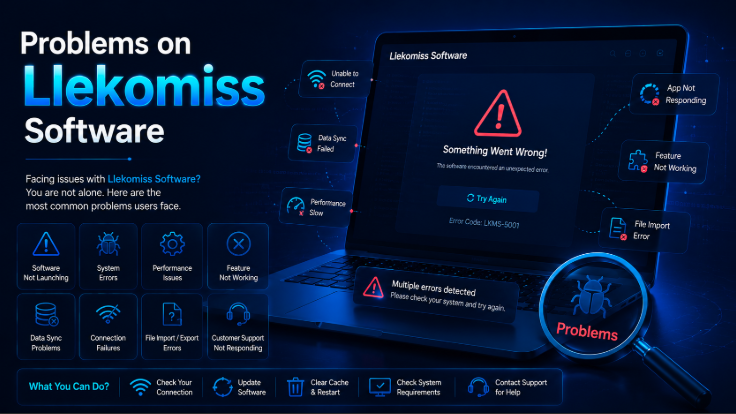
Problems on Llekomiss Software: Complete 2026 Guide to Errors, Causes, Fixes & Troubleshooting
June 4, 2026
Custom Financial Software Development: Complete Guide to Building Secure, Scalable & Compliant Financial Solutions in 2026
June 5, 2026
Software development generally follows a structured engineering lifecycle, and understanding how Mogothrow77 software is built helps explain how modern systems are created and managed. This process includes key stages such as planning, system design, coding, testing, and deployment to ensure reliability and performance.
Each stage is carefully executed to build a secure and scalable application. Mogothrow77 follows this structured approach to maintain quality and efficiency throughout development. In the next sections, we will explore each step in more detail to understand the complete building process.
What Is Mogothrow77 Software?
Mogothrow77 Software is an open-source development project focused on transparent software development and collaborative innovation. In the points below, we will explain it in detail.
Overview of Mogothrow77 Software
Mogothrow77 Software is built as an open-source system where developers can freely access and improve the codebase. It encourages transparency, allowing users to clearly understand how the software functions. The project is designed to support continuous updates and community-driven development. In the next section, we will look deeper into its structure and core components.
Purpose of Mogothrow77 Software
The main purpose of Mogothrow77 Software is to promote open collaboration among developers and reduce dependency on closed systems. It helps organizations and individuals build customizable solutions according to their needs. The software also focuses on improving efficiency through shared innovation. Next, we will discuss how it supports modern development workflows.
Key Concept Behind Mogothrow77
Mogothrow77 is based on the idea of transparency and shared development, where every change in the system can be tracked and reviewed. This ensures higher reliability and better code quality across the project. It also allows faster problem-solving through community contributions. Further details will explain its technical architecture.
Development Approach of Mogothrow77
The development approach of Mogothrow77 follows an agile and modular system, making it easy to update and scale. Each part of the software is developed independently and then integrated into the main system. This improves stability and reduces errors during updates. In the upcoming section, we will explore its technical workflow in detail.
Software Development Lifecycle (SDLC) of Mogothrow77
The SDLC of Mogothrow77 follows a structured framework ensuring transparent development, open-source collaboration, seamless installation, and continuous improvement. In the points below, we will explain it in detail.
Requirement Analysis Phase
This phase focuses on identifying the needs and expectations of users and developers involved in Mogothrow77. All functional and non-functional requirements are documented clearly for better understanding. It ensures that the project goals are aligned with user needs and open-source standards. In the next stage, these requirements are converted into a proper system design.
System Design Phase
In the design phase, the overall architecture of Mogothrow77 is planned, including modules, database structure, and system flow. Developers create blueprints that define how each component will interact with others. This step ensures scalability, flexibility, and efficient system performance. Next, the actual development process begins based on this design.
Development & Coding Phase
During this phase, developers start writing code for Mogothrow77 based on the approved system design. Open-source collaboration allows multiple contributors to improve different modules simultaneously. Clean, reusable, and optimized code is written to ensure stability and performance. After coding, the system moves to the testing phase for quality assurance.
Testing, Deployment & Maintenance Phase
In this final stage, the software is thoroughly tested to identify and fix bugs or security issues. Once verified, Mogothrow77 is deployed for users with proper installation and configuration support. Continuous monitoring and updates ensure smooth performance and long-term reliability. Maintenance keeps the system secure and aligned with new requirements.
System Architecture of Mogothrow77 Software
Mogothrow77 uses a modular, distributed architecture with microservices and Clean Architecture to ensure scalable and independent components. In the points below, we will explain it in detail.
Microservices Architecture Layer
Mogothrow77 uses a microservices-based structure where each service operates independently and handles a specific function of the system. This allows better scalability and easier maintenance because each module can be updated without affecting the entire system. It also improves system performance by distributing workloads efficiently. In the next layer, these services communicate through secure APIs.
User Interface (UI) Layer
The UI layer of Mogothrow77 is designed to be lightweight and fully decoupled from backend processes. It focuses on providing a smooth and responsive user experience across different devices. Any changes in the backend do not directly affect the interface due to separation of concerns. Next, we will look at how data management is handled in the system.
Data Management Layer
This layer is responsible for storing, retrieving, and managing all system data efficiently and securely. Mogothrow77 ensures that databases are structured in a way that supports fast access and high reliability. The separation of data logic from business logic improves system stability. In the next section, we will discuss the business logic layer.
Business Logic (Clean Architecture) Layer
The business logic layer follows Clean Architecture principles, ensuring that core rules remain independent of external tools and frameworks. This makes the system highly adaptable to changes in UI, databases, or third-party integrations. It also improves code readability and maintainability for developers. Overall, this layer is the core engine of Mogothrow77 software.
Technology Stack Used in Mogothrow77
The core technology stack of Mogothrow77 is built using modern, scalable, and open-source technologies to ensure high performance, security, and flexibility. In the points below, we will explain it in detail.
• Frontend Technologies
The frontend uses modern frameworks to create fast, responsive, and interactive user interfaces.
It ensures a smooth and consistent user experience across all devices and screen sizes.
• Backend Technologies
The backend is designed to handle application logic, APIs, and system operations efficiently.
It uses scalable frameworks to ensure high performance and smooth communication between services.
• Database System
The database system manages large volumes of structured and unstructured data securely.
It is optimized for fast retrieval, reliability, and continuous system availability.
• DevOps Tools
DevOps tools are used for automation, deployment, monitoring, and continuous integration.
They help ensure faster updates, system stability, and efficient infrastructure management.
• Security Frameworks
Security frameworks protect the system through encryption, authentication, and access
control.
They ensure safe data handling and prevent unauthorized access or security threats.
Comparison Table: Traditional Software Development vs Mogothrow77 Build Process
Before understanding the direct differences, it is important to see how modern structured development approaches like Mogothrow77 improve speed, scalability, and reliability compared to traditional methods.
| Feature | Traditional Software Development | Mogothrow77 Build Process |
| Development Speed | Slow and linear | Fast and iterative (Agile) |
| Deployment | Manual releases | Automated CI/CD pipeline |
| Scalability | Limited and rigid | Highly scalable architecture |
| Error Handling | Late detection | Early testing + automation |
| Security Integration | Added at final stage | Built into every layer |
| Maintenance | Costly and complex | Continuous and optimized |
| Performance Optimization | Post-launch only | Continuous optimization |
CI/CD Pipeline and Automation Process
A CI/CD pipeline is an automated DevOps workflow that streamlines software development by enabling continuous integration, continuous testing, and continuous deployment for faster and more reliable software delivery. In the points below, we will explain it in detail.
Continuous Integration (CI)
Continuous Integration is the process where developers regularly merge their code changes into a shared repository. It automatically runs builds and tests to detect errors early in the development cycle. This helps improve code quality and ensures that all components work together smoothly. Overall, it reduces integration issues and speeds up the development process.
Continuous Delivery (CD)
Continuous Delivery ensures that code is always kept in a deployable state after passing automated tests. It prepares the software for release with minimal manual effort, making deployments faster and more reliable. This process allows teams to release updates safely and frequently. It improves efficiency by reducing delays between development and production.
Continuous Deployment
Continuous Deployment is the process where every tested and approved code change is automatically released into the production environment. It removes the need for manual intervention, making the release cycle faster and more efficient. This ensures that users always receive the latest updates without delay. It supports continuous improvement of the software system.
Automation Testing Process
Automation Testing is used to run predefined test cases automatically to check software performance and functionality. It helps detect bugs, errors, and security issues before the software is released. This process reduces human effort and increases testing speed and accuracy. It ensures consistent quality and reliability in every update.
Key Advantages of Mogothrow77 Software Architecture
The Mogothrow77 software architecture provides unparalleled scalability, fault isolation, and low-latency processing, making it highly efficient for high-throughput and performance-critical environments. In the points below, we will explain it in detail.
Scalability Advantage
Mogothrow77 architecture is designed to scale easily as system demand and user load increase over time. It distributes workloads across multiple services to maintain stable performance. This ensures the system can handle high traffic without slowing down. Overall, it supports long-term growth and expansion.
Fault Isolation
Fault isolation ensures that if one component fails, it does not affect the entire system. Each module operates independently, reducing the risk of system-wide failures. This improves system reliability and stability during unexpected issues. It allows quick recovery without major disruptions.
Low-Latency Processing
The architecture is optimized for low-latency processing to ensure fast response times. Data is processed efficiently through distributed services and optimized communication layers. This reduces delays and improves real-time performance. It is ideal for high-speed and critical applications.
High-Throughput Performance
Mogothrow77 supports high-throughput processing, allowing it to handle large volumes of data simultaneously. Its microservices-based design ensures efficient workload distribution across the system. This improves overall processing speed and system efficiency. It makes the software suitable for demanding environments.
Common Challenges in Building Mogothrow77 Software
Building Mogothrow77 software involves challenges like scope changes, unclear requirements, and complex architecture that require strong engineering and structured management. In the points below, we will explain it in detail.
Scope Creep Issues
Scope creep occurs when new features or changes are added without proper planning or control. This can delay development timelines and increase project complexity. It also affects budget and resource allocation if not managed properly. Proper requirement documentation helps reduce this issue.
Poorly Defined Requirements
Unclear or incomplete requirements can lead to misunderstandings during the development process. Developers may build features that do not match user expectations. This results in rework, delays, and reduced efficiency. Clear planning and stakeholder communication are essential to solve this problem.
Complex Architecture Management
Managing a complex and tightly coupled architecture can create integration and maintenance challenges. It becomes difficult to update one part of the system without affecting others. This increases the risk of system failures and slows down development. A modular approach helps reduce this complexity.
Testing and Deployment Challenges
Testing and deployment can become difficult when systems are large and distributed. Ensuring all components work together correctly requires extensive testing cycles. Deployment errors may also occur if automation is not properly implemented. Continuous testing and CI/CD pipelines help overcome these challenges.
FAQs
How does Mogothrow77 handle version control and code collaboration among distributed teams?
Mogothrow77 supports distributed development teams by using version control systems like Git, which allow multiple developers to work on different branches simultaneously. Each contributor can submit pull requests that are reviewed before merging into the main codebase. This ensures code integrity and prevents conflicts during collaborative development.
What kind of licensing model does Mogothrow77 follow as an open-source project?
As an open-source project, Mogothrow77 follows a permissive or copyleft licensing model that allows developers to freely use, modify, and distribute the software. The license defines the terms under which contributions can be made and how the code can be used commercially. This ensures legal clarity and encourages broader community participation
How does Mogothrow77 manage user authentication and access control?
Mogothrow77 implements role-based access control (RBAC) to ensure that only authorized users can access specific system features and data. It uses secure authentication protocols such as OAuth 2.0 or JWT tokens to verify user identities. This layered approach protects sensitive information and prevents unauthorized system access.
Does Mogothrow77 support third-party integrations and external APIs?
Mogothrow77 is designed with an API-first approach, making it compatible with a wide range of third-party tools and external services. Developers can integrate payment gateways, analytics platforms, or communication tools through well-documented REST or GraphQL APIs. This flexibility allows organizations to extend the software’s functionality based on their specific business needs.
conclusion
Mogothrow77 software is built on a structured and modern development approach that ensures scalability, transparency, and high performance. Its architecture and SDLC processes support efficient collaboration and continuous improvement.
The use of advanced technologies and automation makes it reliable and adaptable for complex environments. Overall, it represents a well-organized system designed for long-term growth and stability.
Related Articles
Winobit3.4 Software Error: Causes, Fixes, Troubleshooting & Prevention Guide
CAD Software News 2026: Latest Updates, AI Innovations, Industry Trends & New CAD Releases
Download Software UStudioBytes: Complete Download, Installation & User Guide


