
How Mogothrow77 software is built?
June 4, 2026
Best Perplexity Rank Tracker Software: Complete AI Visibility Guide
June 5, 2026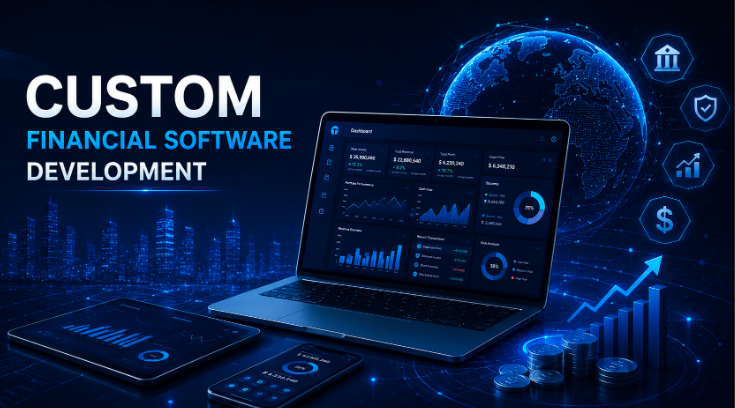
Custom financial software development is the creation of tailored financial solutions designed to meet an organization’s unique business and regulatory requirements. Unlike standard software, it offers greater flexibility, security, scalability, and integration capabilities.
These solutions are widely used for banking, payments, compliance, and financial management processes. In the following sections, we will discuss its features, benefits, development process, and key considerations in detail.
What Is Custom Financial Software Development?
Custom financial software development is the creation of tailored financial applications that meet an organization’s specific operational, security, and compliance requirements. In the points below, we will explain it in detail.
Purpose of Custom Financial Software
The primary purpose of custom financial software is to help businesses manage financial operations more efficiently through solutions built specifically for their workflows. Unlike generic software, it aligns with organizational goals and processes, reducing manual work and improving accuracy. Companies can automate repetitive tasks while maintaining greater control over financial data and reporting. This results in better productivity, compliance, and decision-making.
Key Components of Financial Software Development
Custom financial software typically includes modules for transaction processing, accounting, reporting, compliance management, and data security. These components work together to create a unified system that supports daily financial activities. Integration with banking systems, payment gateways, and third-party platforms is also common. The combination of these features helps organizations streamline operations and improve financial visibility.
How Custom Solutions Differ from Off-the-Shelf Software
Off-the-shelf software is designed for a broad audience, while custom financial software is built around the specific requirements of a single organization. Custom solutions offer greater flexibility, allowing businesses to add unique features and workflows as needed. They can also scale more effectively as the organization grows and regulations change. This personalized approach often delivers better long-term value and operational efficiency.
Industries That Use Custom Financial Software
Many industries rely on custom financial software, including banking, insurance, investment management, fintech, healthcare, and retail. Each sector has unique financial processes and compliance requirements that standard software may not fully address. Custom solutions enable organizations to manage transactions, reporting, and risk more effectively. As digital transformation continues, demand for tailored financial software is growing across various industries.
Evolution of Financial Software Development
Financial software development has evolved from traditional banking systems to modern AI-powered, cloud-based, and mobile-first financial platforms. In the points below, we will explain it in detail.
Early Financial Software Systems
The earliest financial software systems were built on centralized mainframe computers used primarily by banks and large financial institutions. These systems focused on basic transaction processing, account management, and record-keeping. While reliable for their time, they offered limited flexibility and were expensive to maintain. Their primary goal was to improve accuracy and reduce manual financial operations.
Rise of Digital and Online Banking
The growth of the internet introduced digital banking solutions that allowed customers to access financial services remotely. Financial institutions began developing online portals for account management, fund transfers, and bill payments. This shift improved customer convenience and expanded access to banking services. It also laid the foundation for modern financial technology innovations.
Adoption of Cloud, Mobile, and AI Technologies
Cloud computing, mobile applications, and artificial intelligence transformed the financial software landscape by making services faster and more accessible. Financial organizations could deploy scalable solutions while reducing infrastructure costs. AI-powered tools improved fraud detection, customer support, and financial analysis. Mobile-first platforms further enhanced user experiences by enabling banking from anywhere.
The Future of Financial Software Development
Modern financial software is increasingly focused on automation, personalization, and real-time data processing. Emerging technologies such as blockchain, machine learning, and open banking are creating new opportunities for innovation. Financial institutions are investing in secure and scalable solutions to meet evolving customer expectations. As technology advances, financial software will continue to become smarter, more efficient, and more interconnected.
Why Custom Financial Software Development Matters in 2026
Custom financial software development is crucial in 2026 because it helps organizations meet evolving regulations, improve security, and gain a competitive advantage. In the points below, we will explain it in detail.
- Regulatory Compliance
Financial institutions must comply with regulations such as GDPR, PCI-DSS, and emerging frameworks like PSD3. Custom software allows businesses to build compliance requirements directly into their systems. - Enhanced Data Security
Tailored financial solutions include advanced security controls designed for specific business risks. This helps protect sensitive financial data from cyber threats and unauthorized access. - Freedom from Vendor Lock-In
Custom software gives organizations full control over their technology infrastructure and data. Businesses can avoid dependency on third-party vendors and adapt systems as requirements change. - AI-Powered Risk and Fraud Management
Modern financial platforms use artificial intelligence to identify suspicious activities and assess risks in real time. This improves fraud prevention and supports faster decision-making. - Competitive Business Advantage
Custom solutions enable unique features, personalized services, and optimized workflows that generic software cannot provide. This helps organizations deliver better customer experiences and stay ahead of competitors.
Comparison Table: Custom Financial Software vs Off-the-Shelf Software
Before selecting a financial technology solution, businesses should understand the differences between custom-built and ready-made software platforms.
| Feature | Custom Financial Software | Off-the-Shelf Software |
| Customization | Fully Tailored | Limited |
| Security | Advanced & Business-Specific | Generic Security |
| Compliance | Custom Compliance Features | Standard Compliance |
| Scalability | Highly Scalable | Limited Scalability |
| Integration | Seamless Integration | Restricted Integration |
| Ownership | Full Ownership | Vendor Controlled |
| Cost | Higher Initial Investment | Lower Upfront Cost |
| Long-Term ROI | Higher | Moderate |
Types of Custom Financial Software Solutions
Custom financial software solutions are specialized applications designed to support unique financial operations, security requirements, and business workflows. In the points below, we will explain it in detail.
Banking and Payment Processing Software
Banking and payment processing software helps financial institutions manage transactions, customer accounts, and digital payments efficiently. These systems support secure fund transfers, payment gateways, and real-time transaction monitoring. Custom development ensures the platform meets specific regulatory and operational requirements.
Accounting and Financial Management Software
Custom accounting software automates tasks such as bookkeeping, invoicing, budgeting, and financial reporting. Organizations can build features that align with their internal processes and reporting standards. This improves accuracy, reduces manual effort, and enhances financial visibility.
Investment and Wealth Management Platforms
Investment management software is designed to help firms manage portfolios, analyze market data, and monitor investment performance. Custom solutions provide tailored dashboards, reporting tools, and risk assessment capabilities. These platforms support informed decision-making and better client service.
Risk Management and Compliance Software
Risk management and compliance software helps organizations identify financial risks and meet industry regulations. Custom-built systems can automate compliance checks, audit tracking, and fraud detection processes. This strengthens security while reducing the burden of regulatory management.
Key Features of Custom Financial Software Development
Custom financial software development provides tailored solutions that support business growth, security, compliance, and operational efficiency. In the points below, we will explain it in detail.
Tailored Business Logic and Workflows
Custom financial software is designed around an organization’s specific processes and requirements. This allows businesses to automate tasks and workflows without changing their existing operations. As a result, efficiency and productivity improve significantly.
Advanced Security and Data Protection
Financial applications handle sensitive information, making security a critical feature. Custom solutions can include encryption, multi-factor authentication, access controls, and fraud detection mechanisms. These measures help protect data and maintain customer trust.
Scalability and Performance
Custom software is built to grow alongside the organization and accommodate increasing workloads. Businesses can add new features, users, and services without major system limitations. This ensures long-term performance and flexibility.
Seamless Integration Capabilities
Financial software often needs to connect with banking systems, payment gateways, CRM platforms, and other business tools. Custom development enables smooth integration with existing infrastructure and third-party services. This creates a unified ecosystem that improves data flow and operational efficiency.
Security Requirements in Custom Financial Software Development
Custom financial software requires strong security measures to protect sensitive data, prevent fraud, and ensure user trust. In the points below, we will explain it in detail.
Data Encryption Standards
Encryption protects financial information from unauthorized access during storage and transmission. Strong encryption protocols ensure that customer records, payment details, and transaction data remain secure. This is one of the most important security layers in any financial system.
Multi-Factor Authentication (MFA)
Multi-factor authentication requires users to verify their identity through multiple verification methods before accessing the system. This significantly reduces the risk of unauthorized logins and account breaches. MFA has become a standard security requirement for modern financial applications.
Audit Logs and Activity Tracking
Audit logs record every important user action and system event within the software. These records provide transparency, support compliance requirements, and help investigate suspicious activities. Immutable logs also strengthen accountability across financial operations.
Fraud Prevention and Risk Monitoring
Custom financial software should include tools that continuously monitor transactions and user behavior for unusual patterns. Real-time alerts can help organizations detect and stop fraudulent activities before major damage occurs. Effective risk monitoring improves both security and operational confidence.
Benefits of Custom Financial Software Development
Custom financial software development provides greater efficiency, stronger security, and long-term scalability for financial operations. In the points below, we will explain it in detail.
Improved Operational Efficiency
Custom software automates repetitive financial tasks and streamlines complex workflows. This reduces manual effort, minimizes errors, and allows employees to focus on higher-value activities. As a result, overall productivity and operational performance improve.
Enhanced Security and Compliance
Financial organizations can implement security features that match their specific risk and compliance requirements. Advanced protections such as encryption, access controls, and monitoring tools help safeguard sensitive information. This strengthens customer trust and regulatory compliance.
Scalability for Future Growth
Custom financial software can expand as business needs evolve and transaction volumes increase. Organizations can add new features, users, and integrations without major disruptions. This flexibility ensures the system remains effective over the long term.
Better Integration and Control
Custom solutions integrate seamlessly with existing financial systems, payment platforms, and business applications. Organizations maintain full control over features, updates, and data management. This creates a more connected and efficient technology environment.
FAQs
Q1: How long does it typically take to develop custom financial software from start to finish?
Development timelines vary based on complexity, but most custom financial software projects take between 6 and 18 months to complete. Simpler systems with fewer integrations can be delivered faster, while enterprise-level platforms require more development and testing time.
Q2: How much does custom financial software development typically cost for a medium-sized business?
Costs depend on features, security requirements, integrations, and team expertise, making it difficult to give a fixed price. Medium-sized businesses should expect a significant investment, and requesting detailed quotes from multiple development firms helps compare realistic costs.
Q3: Can custom financial software be updated or modified easily after it has been deployed?
Yes, one major advantage of custom software is that updates and modifications can be made anytime without depending on a third-party vendor. Having access to the original source code and proper documentation makes future changes significantly easier and more cost-effective.
conclusion
Custom financial software development helps organizations create secure, scalable, and efficient solutions tailored to their specific financial needs. It offers greater flexibility, stronger security, and better integration than off-the-shelf software.
As financial regulations and customer expectations continue to evolve, custom solutions provide a reliable foundation for long-term growth. Investing in the right financial software can improve operations, enhance user experiences, and deliver a lasting competitive advantage.
Related Aeticles
How HCS 411GITS Software Built: Complete Architecture
Best Perplexity Rank Tracker Software: Complete AI Visibility Guide
How Mogothrow77 software is built?
Business Software Gonzay Com: Features, Benefits, Uses & Complete Guide 2026
REsimpli vs FreedomSoft Differences Real Estate Software – Complete 2026 Guide


