

Droven.io AI Automation Tools: Complete 2026 Guide
June 30, 2026
How to Flash Software on LCD Controller: Complete Step-by-Step Guide
June 30, 2026
Running a sober living home or recovery residence is rewarding work, but it also comes with a long list of daily responsibilities that can quickly become overwhelming. From tracking bed availability to managing drug testing schedules, collecting rent, and maintaining compliance records, operators often find themselves buried in paperwork instead of focusing on resident care. This is exactly why recovery home management software solutions have become so important in recent years. These digital platforms are designed specifically to simplify the administrative side of running a recovery residence, allowing staff to spend more time supporting residents and less time chasing spreadsheets and paper files.
In this guide, we will walk through everything you need to know about recovery home management software solutions, including their core features, benefits, compliance considerations, and how to choose the right one for your organization.
The Challenges of Running a Recovery Home Without Software
Before understanding why recovery home management software solutions matter, it helps to look at the problems they actually solve. Many sober living operators still rely on a combination of spreadsheets, paper forms, and sticky notes to keep their homes running. While this might work for a single small house, it quickly becomes unmanageable as the number of residents or properties grows.
Manual bed tracking often leads to double bookings or empty beds that go unnoticed for days, which directly affects revenue and resident placement. Paper-based intake forms are easy to misplace, and important resident information can be lost or duplicated across different staff members.
Drug and alcohol testing results are sometimes recorded inconsistently, which creates problems if the records are ever needed for compliance audits or legal purposes. Rent collection without a proper system often results in confusion about who has paid, who is behind, and how much is owed in total. On top of all this, staff communication tends to break down when there is no central system to share updates, leading to missed curfews, overlooked house rule violations, and gaps in resident accountability.
Core Features of Recovery Home Management Software
Recovery home management software solutions are built around a set of core features that directly address the challenges mentioned above. Understanding these features will help you evaluate which platform best fits the needs of your organization.
Bed and Occupancy Management
One of the most valuable features of any recovery home management platform is real-time bed and occupancy tracking. Instead of guessing which beds are open across multiple properties, staff can view an up-to-date dashboard showing exactly how many beds are filled, vacant, or pending intake. This reduces the risk of overbooking and helps operators maximize occupancy without sacrificing accuracy.
Resident Intake and Application Processing
Digital intake forms replace stacks of paper applications, allowing new residents to apply online or through a tablet at the facility. This information is automatically stored in the resident’s profile, reducing duplicate data entry and making it easier for staff to review applications quickly and consistently.
Drug and Alcohol Testing Tracking
Most recovery home management software solutions include a dedicated module for logging urinalysis (UA) results, breathalyzer tests, and other screening procedures. This creates a reliable, timestamped record that can be referenced during compliance reviews or if a resident’s progress needs to be evaluated over time.
Rent and Payment Processing
Built-in billing tools allow operators to track rent payments, send automated reminders, and generate financial reports without relying on a separate accounting system. Some platforms even allow residents to pay directly through an online portal, which reduces missed payments and late fees.
Case Management and Progress Notes
Staff can document resident progress, milestones, and concerns directly within the platform, creating a centralized case history that multiple team members can access. This is particularly useful when staff shifts change or when a resident transitions between different levels of care.
Document Storage and E-Signatures
Recovery home management software solutions typically include secure cloud storage for important documents such as house agreements, identification records, and insurance paperwork. Many platforms also support electronic signatures, which speeds up the intake process significantly.
Communication Tools
Built-in messaging features allow staff to send SMS or email alerts to residents regarding curfews, meetings, or important announcements. This keeps everyone informed without relying on word-of-mouth or printed notices posted around the house.
Reporting and Analytics Dashboards
Operators can generate reports on occupancy trends, payment history, and resident outcomes, which helps with both day-to-day decision-making and long-term strategic planning. These analytics are especially useful for organizations applying for grants or demonstrating program effectiveness to stakeholders.
Benefits of Using Recovery Home Management Software
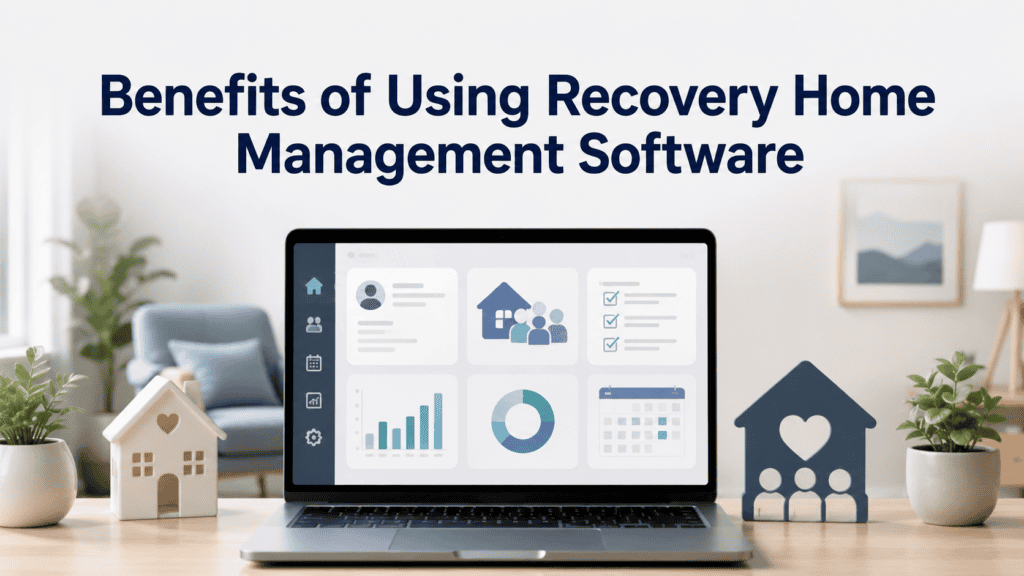
- The advantages of adopting recovery home management software solutions extend well beyond simple convenience. Operators who switch from manual systems to digital platforms often report noticeable improvements in efficiency, accuracy, and overall resident satisfaction.
- Operational efficiency improves significantly because staff no longer need to manually update spreadsheets or search through filing cabinets for resident records. Compliance becomes easier to maintain since the software automatically organizes documentation in a format that is ready for audits or state inspections.
- Resident accountability tends to improve as well, since digital tracking of curfews, testing, and house rules creates clear expectations and consistent enforcement. Administrative workload is reduced dramatically, freeing up staff time to focus on actual recovery support rather than paperwork.
- Because the software centralizes data, decision-making becomes more informed, allowing operators to identify trends such as which houses have higher turnover or which residents may need additional support.
Compliance and Regulatory Considerations
Compliance is one of the most critical reasons operators invest in recovery home management software solutions. Many states require recovery residences to meet certain standards in order to operate legally or receive funding, and proper documentation is essential for passing inspections.
Organizations such as the National Alliance for Recovery Residences (NARR) have established quality standards that many states reference when certifying sober living homes. Software platforms that align with these standards make it easier for operators to demonstrate compliance during reviews.
State-specific certification requirements can vary widely, so it is important to choose software that allows for customizable documentation fields based on local regulations. Resident privacy is another major concern, and many platforms are designed with data protection practices that align with healthcare privacy expectations, even though recovery residences are not always classified as covered entities under federal healthcare privacy law.
Key Factors to Consider When Choosing Software
Selecting the right platform among the many recovery home management software solutions available today requires careful evaluation of your organization’s specific needs. The table below summarizes the most important factors to consider during your evaluation process.
| Factor | Why It Matters |
| Ease of use | Staff and residents should be able to navigate the system without extensive training, which reduces onboarding time and errors. |
| Scalability | The software should support growth from a single home to a multi-property network without requiring a complete system change. |
| Integrations | Compatibility with testing labs, payment processors, and accounting tools saves time and reduces manual data entry. |
| Mobile accessibility | Staff often need to update records while on the move, so a mobile-friendly platform improves day-to-day usability. |
| Customer support | Reliable support and training resources help resolve issues quickly and reduce downtime during critical operations. |
| Pricing structure | Costs may be based on subscription tiers, number of beds, or number of properties, so it is important to choose a model that fits your budget. |
Taking time to compare these factors against your organization’s size, budget, and long-term goals will help ensure you select a platform that truly fits your operational needs rather than one that simply looks appealing on the surface.
How to Successfully Transition to Recovery Home Software
Switching from manual processes to a digital platform requires thoughtful planning to avoid disruption. Data migration should be handled carefully, ensuring that existing resident records, payment histories, and compliance documents are transferred accurately into the new system.
Staff training is equally important, since even the most powerful software will not be effective if employees are unsure how to use it properly. Resident onboarding should also be considered, particularly if the platform includes a resident-facing portal or mobile app that current residents will need to learn.
Common pitfalls during implementation include rushing the transition without adequate staff training, failing to back up historical records before migration, and underestimating the time needed to fully adopt new workflows. Taking a phased approach, starting with one house or one feature at a time, often leads to smoother adoption across the entire organization.
Future Trends in Recovery Home Management Technology
The recovery housing industry continues to evolve, and software providers are beginning to incorporate more advanced technology into their platforms. Artificial intelligence is increasingly being explored for case management support, helping staff identify patterns in resident behavior that may indicate a need for additional intervention.
Predictive analytics tools are also emerging, aiming to flag potential relapse risks based on historical data trends, although these tools should always be used alongside professional judgment rather than as a replacement for it. Telehealth integration is becoming more common as well, allowing residents to connect with counselors or medical providers directly through the same platform used for daily operations.
Mobile-first resident apps are also gaining popularity, giving residents more direct control over tasks like rent payments, schedule viewing, and communication with house staff.
Frequently Asked Questions
What does recovery home management software typically cost?
Pricing varies widely depending on the provider and the size of the operation, with most platforms charging either a flat monthly subscription or a per-bed pricing model. Smaller operators with a single house may find affordable entry-level plans, while larger networks with multiple properties should expect higher costs due to increased data and user volume.
Is recovery home management software compliant with privacy regulations?
Most reputable platforms are built with strong data protection practices in mind, even though recovery residences are not always legally required to follow the same privacy rules as licensed healthcare providers. It is still important to ask vendors directly about their specific data security measures before committing to a platform.
Can the software integrate with existing accounting systems?
Many recovery home management software solutions offer integrations with popular accounting tools, which helps avoid duplicate data entry and keeps financial records consistent across systems. It is worth confirming integration compatibility during the vendor evaluation process, especially if your organization already relies on a specific accounting platform.
Do residents need to download a separate app to use the software?
This depends on the specific platform, as some solutions offer a resident-facing mobile app while others operate primarily through a staff-only dashboard. If resident self-service features are important to your organization, this should be a key consideration when comparing different software options.
Conclusion
Recovery home management software solutions have transformed the way sober living homes and recovery residences operate on a daily basis. By centralizing bed tracking, intake processing, testing records, billing, and communication into a single platform, operators can reduce administrative burden while improving compliance and resident outcomes.
As the industry continues to grow and regulatory requirements become more detailed, investing in the right software is no longer just a convenience but a practical necessity for organizations that want to operate efficiently and responsibly. Taking the time to evaluate your specific needs, compare available platforms, and plan a thoughtful implementation process will set your organization up for long-term success in providing safe and well-managed recovery housing.
Related Articles
GFXRobotection AI Software by GFXMaker: Full Review, Features, Pricing & Verdict (2026)
Outbound Dialing Software Benefits: A Complete Guide for Modern Businesses
Recovery Home Management Software Solutions: Complete Guide (2026)
Recovery Home Management Software Solutions: Complete Guide (2026)
Verified Software Formal Methods Postdoc Position: The Complete 2025 Guide


