
BestOutcome PPM Software Company Overview
July 13, 2026
Should Cost Software: A Complete Guide for Smart Procurement Teams
July 13, 2026
Manufacturing costing software is a specialized digital solution built to help manufacturers calculate, monitor, and manage every cost involved in producing goods. From raw materials to labor and overhead, this software gives businesses a clear picture of what a product truly costs to make.
Companies use it to price products correctly, avoid losses, and stay competitive in the market. In today’s fast-moving industrial world, relying on manual spreadsheets is no longer enough, which is why more manufacturers are shifting toward automated costing systems. This guide walks you through everything you need to know about manufacturing costing software in simple, easy-to-understand language.
Understanding Manufacturing Costs
Before adopting any tool, it is important to understand what actually makes up manufacturing costs. These costs are usually divided into different categories that together determine the final price of a product.
Direct Costs
Direct costs include raw materials and labor that go directly into making a product. For example, the steel used in a car frame or the wages paid to assembly line workers are direct costs. Manufacturing costing software tracks these expenses in real time so businesses always know their exact production spending.
Indirect Costs
Indirect costs, also called overhead, include electricity bills, machine maintenance, rent, and administrative expenses. These costs do not directly attach to one product but still affect overall profitability. Good costing software distributes these expenses fairly across all products being manufactured.
Fixed vs Variable Costs
Fixed costs stay the same no matter how much is produced, such as factory rent. Variable costs change depending on production volume, like raw material usage. Manufacturing costing software helps separate these two cost types so managers can make smarter production decisions based on accurate data.
Core Features of Manufacturing Costing Software
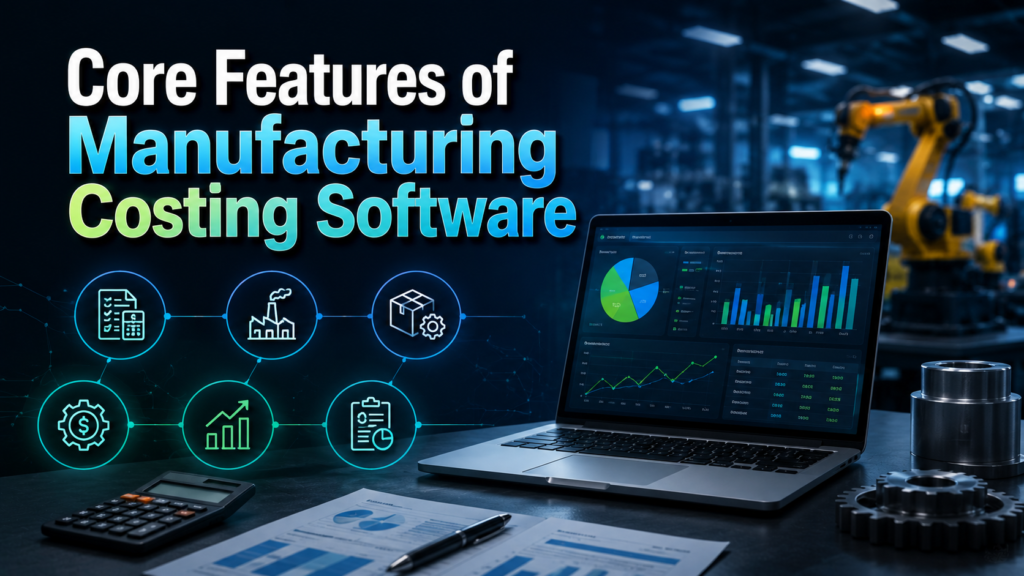
Every reliable costing solution comes packed with features designed to simplify complex cost calculations. These features work together to give a complete financial picture of the production process.
Bill of Materials Costing
This feature calculates the total cost of a finished product by adding up the cost of every raw material and component listed in the Bill of Materials. It gives an accurate base cost before any labor or overhead is added.
Standard vs Actual Costing
Standard costing sets an expected cost for production, while actual costing records what was really spent. Comparing both helps businesses identify differences, known as variances, and understand where money is being lost or saved during manufacturing.
Real-Time Cost Tracking
Modern manufacturing costing software updates cost data instantly as production happens. This means managers do not have to wait until month-end to see financial performance, allowing faster and more informed decision-making on the factory floor.
Types of Costing Methods Explained
Different industries use different costing methods depending on how their products are made. Choosing the right method is essential for getting accurate cost data.
Job Order Costing
This method calculates costs for each individual job or custom order separately. It works best for manufacturers who create unique or made-to-order products, such as custom furniture makers or specialized machine builders.
Process Costing
Process costing is used when products are manufactured in large, continuous batches, such as chemicals or beverages. Instead of tracking each unit separately, costs are averaged across the entire production run for simplicity and accuracy.
Standard Costing
Standard costing uses predetermined cost estimates for materials, labor, and overhead. It is widely used because it allows companies to plan budgets in advance and quickly spot unusual cost variations during production.
Here is a quick comparison of these costing methods:
| Costing Method | Best For | Cost Tracking Style |
| Job Order Costing | Custom or unique products | Per individual job |
| Process Costing | Continuous mass production | Averaged per batch |
| Standard Costing | Budget planning and control | Predetermined estimates |
Benefits of Using Costing Software
Investing in manufacturing costing software brings measurable advantages that directly impact a company’s bottom line. Below are some of the most important benefits businesses experience after implementation.
Accurate Product Pricing
With precise cost data, companies can set product prices that cover expenses and still generate healthy profit margins, avoiding the common mistake of underpricing products due to guesswork.
Reduced Manual Errors
Manual cost calculations using spreadsheets are prone to human error. Automated manufacturing costing software eliminates these mistakes by calculating costs consistently and accurately every single time.
Better Decision Making
When managers have access to real-time, reliable cost data, they can make faster and smarter decisions about production planning, supplier negotiations, and pricing strategies without relying on outdated information.
The overall benefits can be summarized as follows:
- More accurate pricing and quoting for customers
- Fewer costly errors in financial reporting
- Faster response to market and material price changes
- Stronger negotiation power with suppliers
- Improved overall profit margins
How to Choose the Right Manufacturing Costing Software
Selecting the right software depends on your business size, industry, and specific needs. Taking time to evaluate these factors carefully prevents costly mistakes later.
Business Size and Industry Fit
Small manufacturers may only need basic costing tools, while large enterprises require advanced systems with multiple cost centers. Choosing software that matches your business scale ensures you are not overpaying for unnecessary features.
Integration Capabilities
The best manufacturing costing software connects smoothly with existing ERP, MRP, or accounting systems. This integration prevents duplicate data entry and keeps all financial information synchronized across departments.
Pricing and Return on Investment
Before purchasing, compare the software’s cost against the value it delivers. A slightly more expensive tool that saves significant time and reduces errors often provides better long-term return than a cheaper, limited option.
Popular Manufacturing Costing Software Tools
Several established platforms dominate this market, each offering unique strengths depending on business requirements.
Enterprise-Level Solutions
Tools like SAP CO Module and Oracle NetSuite Manufacturing are designed for large organizations needing deep financial integration across multiple departments and locations. They offer powerful reporting but usually require significant setup time and investment.
Specialized Costing Platforms
aPriori and Costimator focus specifically on should-costing and cost estimation, making them popular among engineering and procurement teams that need detailed product cost modeling before production begins.
Small to Mid-Size Business Tools
Katana MRP and Fishbowl are lighter, more affordable options suited for smaller manufacturers. They combine inventory management with basic costing features, making them a practical starting point for growing businesses.
Common Mistakes to Avoid
Even with the right software, businesses can still make errors that reduce its effectiveness. Being aware of these mistakes helps ensure a smoother implementation.
Ignoring Overhead Costs
Many businesses focus only on material and labor costs while forgetting overhead expenses. This leads to inaccurate pricing and shrinking profit margins over time, even when the business appears to be performing well on paper.
Using Outdated Cost Data
Material prices and labor rates change frequently. Relying on old cost data instead of regularly updating it inside the software results in pricing decisions that no longer reflect current market realities.
Poor System Integration
When manufacturing costing software does not properly connect with other business systems, data gaps appear. This creates confusion between departments and reduces the overall accuracy and usefulness of the cost reports generated.
Frequently Asked Questions
Is manufacturing costing software suitable for small businesses?
Yes, many affordable options exist specifically designed for small manufacturers with simpler costing needs.
Does this software replace an accountant?
No, it supports accounting teams by providing accurate cost data but does not replace professional financial expertise.
How long does implementation usually take?
Implementation time varies from a few weeks to several months depending on business size and system complexity.
Can costing software integrate with existing ERP systems?
Most modern manufacturing costing software offers integration options with popular ERP and MRP platforms.
Conclusion
Manufacturing costing software has become an essential tool for businesses that want accurate pricing, reduced errors, and stronger control over production expenses. By understanding cost types, choosing the right features, and avoiding common mistakes, manufacturers of any size can improve profitability and make smarter financial decisions. Investing in the right costing solution today builds a stronger foundation for long-term business growth.
Related Articles
What Is the Easiest 3D Modeling Software for Beginners in 2026?
Bus Management Software: Features, Benefits, Types, Working Process, and Complete Guide
How to Actually Create Software: Step-by-Step Beginner to Advanced Guide
Fix As Glitchy Software: How to Debug Your Habits Like a Computer Program


