

Exposure Modeling Software: A Complete Guide
July 9, 2026
Chicago Custom Software Development: The Complete Guide for Businesses
July 10, 2026
Custom software development for logistics is quickly becoming the backbone of modern supply chain operations across the world. Businesses today are moving away from generic tools and choosing tailored systems that match their exact workflow needs.
This shift is happening because logistics companies deal with unique challenges that ready-made software often fails to solve properly. From fleet tracking to warehouse automation, custom solutions give companies better control and visibility. This guide explains everything a business owner needs to know before investing in custom logistics software.
What is Custom Software Development for Logistics
Custom software development for logistics refers to building digital tools specifically designed around a company’s operational structure rather than adjusting the business to fit a generic product. It focuses on solving real supply chain problems through personalized technology.
Meaning and Purpose
This type of development involves creating applications that manage transportation, warehousing, and delivery according to a company’s own rules. Unlike standard software, it is shaped around actual business processes. The purpose is to remove unnecessary features and add only what genuinely improves daily operations.
How It Differs from Regular Software
Regular logistics software is built for a broad audience with generic features that may not match every business model. Custom software, on the other hand, is developed after studying a company’s specific workflow. This difference results in smoother operations and fewer manual adjustments during daily use.
Why Logistics Companies Are Choosing Custom Solutions
Many logistics businesses are shifting toward custom software because their operations have grown too complex for one-size-fits-all systems. This section explains the main reasons behind this growing trend.
Handling Complex Supply Chains
Modern supply chains involve multiple vendors, transport modes, and delivery points that generic software cannot always manage properly. Custom systems are designed to handle this complexity by connecting every stage of the chain smoothly. This helps businesses avoid delays caused by disconnected tools.
Reducing Operational Costs Over Time
Although custom development requires a higher initial investment, it often reduces costs in the long run. Businesses no longer need to pay repeated licensing fees for features they don’t use. Over time, this makes custom software a more cost-effective choice for growing companies.
Common Challenges Solved by Custom Logistics Software
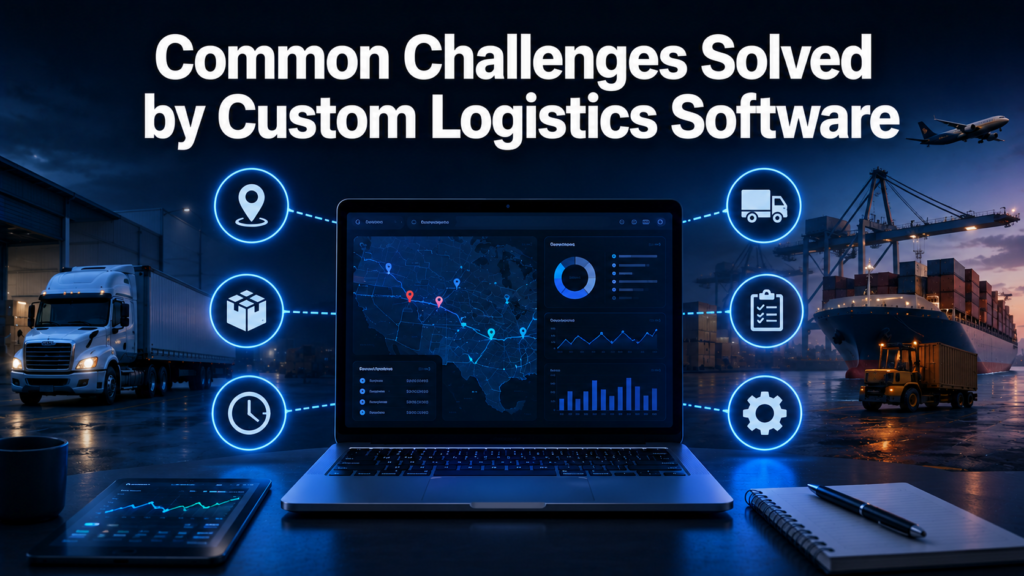
Logistics companies face several everyday problems that custom software is specifically designed to fix. Understanding these challenges makes it easier to see the real value of tailored technology.
Poor Visibility Across Operations
Many logistics businesses struggle to track shipments, vehicles, and inventory in real time using outdated or disconnected systems. Custom software brings all this data into a single dashboard for complete visibility. This allows managers to make faster and more accurate decisions.
Manual and Time-Consuming Processes
Traditional logistics operations often depend heavily on manual entry, paperwork, and phone calls Custom software automates these repetitive tasks, saving valuable time for staff. This automation also reduces human error significantly.
Types of Custom Logistics Software Solutions
There are several categories of custom software designed for different logistics functions. Each type addresses a specific part of the supply chain to improve overall efficiency.
Transportation Management Systems
These systems help businesses plan routes, manage carriers, and track shipments from start to finish. A custom transportation management system is built around a company’s specific fleet size and delivery regions. This ensures better route planning and fuel savings.
Warehouse Management Systems
Warehouse management software handles inventory placement, order picking, and stock movement inside storage facilities. When built custom, it matches the exact layout and workflow of a warehouse. This reduces picking errors and speeds up order fulfillment.
Fleet Management Software
Fleet management tools monitor vehicle location, fuel usage, and maintenance schedules. Custom fleet software is designed according to the type and number of vehicles a company operates. This helps reduce breakdowns and unplanned repair costs.
Last-Mile Delivery Applications
Last-mile delivery software focuses on the final stage of product delivery to customers. These applications are built to match specific delivery zones, customer expectations, and driver workflows. This improves delivery accuracy and customer satisfaction.
Key Features to Include in Logistics Software
Certain features are essential for any custom logistics software to function effectively. This section highlights the most important ones businesses should consider during development.
Real-Time Tracking and Route Optimization
Real-time tracking allows businesses to monitor vehicles and shipments at every stage of transit. Route optimization further helps in choosing the fastest and most fuel-efficient paths. Together, these features significantly improve delivery timelines.
Integration with Existing Business Systems
Custom logistics software should connect smoothly with existing tools like accounting or inventory systems. This integration avoids duplicate data entry and keeps all departments aligned. It also allows for smoother reporting across the organization.
Mobile Access for Field Staff
Drivers and warehouse workers need mobile-friendly access to update statuses and receive instructions instantly. This feature keeps communication clear between office staff and field teams. It also reduces delays caused by manual reporting.
Technologies Used in Custom Logistics Software Development
Modern logistics software relies on several advanced technologies to function efficiently. Understanding these technologies helps businesses make informed development decisions.
Artificial Intelligence and Machine Learning
AI and machine learning are used to predict demand, optimize routes, and detect unusual patterns in operations. These technologies allow logistics companies to plan ahead instead of reacting to problems. Over time, this leads to smarter and more efficient supply chains.
Internet of Things Devices
IoT devices such as sensors and trackers provide real-time data about vehicle conditions and shipment status. This data is fed directly into the custom software for instant monitoring. It also helps in maintaining product quality during transit.
Cloud Computing Infrastructure
Cloud-based systems allow logistics software to be accessed from anywhere without heavy hardware requirements. This makes it easier for businesses to scale operations as they grow. It also improves data backup and system reliability.
The Development Process for Logistics Software
Building custom logistics software follows a structured process to ensure the final product meets business needs. This section breaks down the major steps involved.
Requirement Analysis and Planning
The process begins with understanding the company’s current workflow and identifying problem areas. Developers work closely with logistics teams to gather accurate requirements. This step forms the foundation for the entire development project.
Design and Development Phase
Once requirements are clear, developers design the software interface and build the core functionality. This phase focuses on creating a system that is both functional and easy to use. Regular feedback from the business ensures the software stays aligned with actual needs.
Testing and Quality Assurance
Before launch, the software undergoes thorough testing to identify bugs or performance issues. This step ensures the system works reliably under real operational conditions. Proper testing also prevents costly errors after deployment.
Cost Factors in Custom Logistics Software Development
The cost of custom software depends on several factors that vary from business to business. Knowing these factors helps companies plan their budget more accurately.
Complexity of Business Requirements
Software with more advanced features or multiple integrations naturally costs more to develop. Simple tracking systems are less expensive compared to full-scale supply chain platforms. Businesses should clearly define their needs before estimating costs.
Choice of Development Team
Costs can vary significantly depending on whether a business hires an in-house team, freelancers, or an outsourced development company. Each option comes with different pricing structures and long-term commitments. Choosing the right team affects both cost and software quality.
Below is a simple comparison table for better understanding:
| Development Option | Cost Level | Best Suited For |
| In-House Team | High | Large enterprises with ongoing needs |
| Outsourced Agency | Medium | Mid-size businesses seeking expertise |
| Freelance Developers | Low to Medium | Small projects with limited budgets |
Choosing the Right Development Partner
Selecting the right team is one of the most important decisions in this process. This section explains what businesses should look for before hiring.
Experience in Logistics Projects
A development partner with prior logistics experience understands industry-specific challenges better. This experience often results in fewer mistakes during development. Businesses should always review previous project examples before hiring.
Communication and Support
Clear communication throughout the project ensures the final product matches expectations. Ongoing support after launch is equally important for fixing issues and adding future updates. A reliable partner offers both development and long-term maintenance.
Future Trends in Logistics Software Development
The logistics software industry continues to evolve with new technologies and business demands. This section looks at what the future may hold.
Growth of Predictive Analytics
Predictive analytics is expected to play a larger role in forecasting demand and preventing delays. Businesses will increasingly rely on data-driven decisions rather than guesswork. This trend will make supply chains more proactive.
Rise of Sustainable Logistics Software
As environmental concerns grow, software focused on reducing fuel consumption and carbon emissions is gaining importance. Companies are starting to prioritize eco-friendly route planning and vehicle usage. This trend reflects a broader shift toward sustainable business practices.
Conclusion
Custom software development for logistics offers businesses the flexibility, efficiency, and scalability that generic tools often cannot provide. By investing in tailored solutions, companies can solve specific operational problems while preparing for future growth. As technology continues to advance, custom logistics software will remain a valuable tool for staying competitive in a fast-changing industry.
FAQs
How long does it take to build custom logistics software?
Development timelines vary based on complexity, usually ranging from a few months to over a year for large systems.
Is custom logistics software expensive?
nitial costs are higher than off-the-shelf tools, but long-term savings often make it a cost-effective choice.
Can custom software integrate with existing business tools?
Yes, custom solutions are specifically built to connect smoothly with existing ERP, CRM, and accounting systems.
Is custom logistics software secure?
When developed properly, custom software offers strong security since it is not widely used or easily targeted like generic platforms.
Related Articles
Exposure Modeling Software: A Complete Guide
Fix As Glitchy Software: How to Debug Your Habits Like a Computer Program
Bank Statement to Excel Software: The Complete Guide
Perplexity Free Rank Tracking Software: Complete Guide
Free Yaesu Remote Software FT-991A: Complete Guide


