

Embroidery Software: The Complete Guide for Beginners and Professionals
August 31, 2026
Hatch Embroidery Software: The Complete Guide for Beginners and Hobbyists
August 31, 2026
EAM software, short for Enterprise Asset Management software, is a digital system that helps companies track, maintain, and manage physical assets throughout their entire lifecycle. Instead of relying on spreadsheets or manual logs, businesses use EAM software to schedule maintenance, monitor equipment health, and reduce unexpected breakdowns.
This type of software is widely used in manufacturing, healthcare, utilities, and transportation industries where machinery uptime directly affects profitability. In simple words, EAM software acts as a central brain that keeps every asset running smoothly, safely, and cost-effectively.
What Is EAM Software?
EAM software is a centralized platform designed to manage the full journey of a company’s physical assets, from purchase to disposal. It gives businesses visibility into asset condition, cost, and performance at every stage. Below, we break down what counts as an asset and how the lifecycle stages work.
Defining an Enterprise Asset
An enterprise asset is any physical resource a company owns and depends on to run its operations, such as machines, vehicles, or buildings.
These assets usually carry significant value and require regular upkeep to function properly. Tracking them manually becomes difficult once a company scales, which is exactly where EAM software becomes useful.
Types of Assets Managed
EAM software typically manages production equipment, fleet vehicles, IT infrastructure, and facility systems like HVAC or electrical setups.
Some platforms also extend to digital and infrastructure assets connected through sensors. This wide coverage makes EAM software flexible across different industries and asset categories.
Asset Lifecycle Stages
Every asset moves through stages including acquisition, installation, operation, maintenance, and eventual retirement or disposal.
EAM software documents each stage so businesses know exactly when an asset needs servicing or replacement. This lifecycle tracking helps avoid sudden failures and supports long-term budgeting decisions.
Core Features of EAM Software
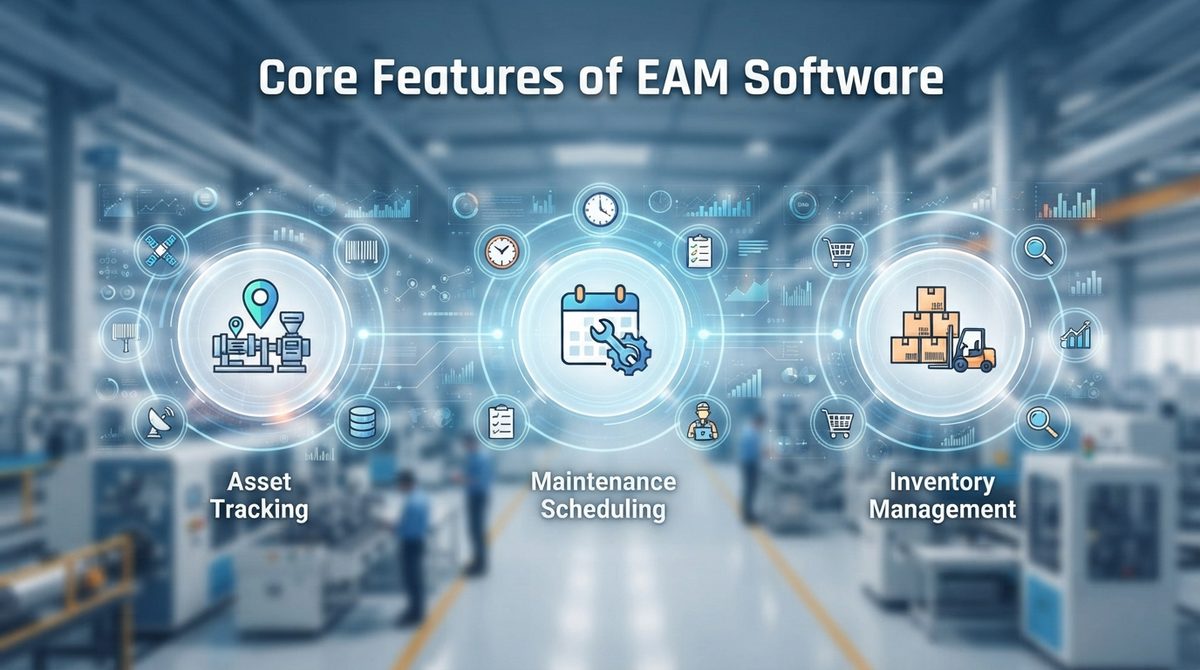
Modern EAM software comes packed with features that go far beyond basic record keeping. These features work together to automate maintenance planning and improve asset reliability across the organization.
Asset Tracking and Registry
This feature keeps a detailed digital record of every asset, including its location, purchase date, and service history. Having this registry available in one place removes the guesswork from asset audits. Teams can instantly pull up asset details instead of searching through paper files.
Preventive and Predictive Maintenance
EAM software schedules maintenance tasks automatically based on time intervals or usage data, preventing costly breakdowns.
Predictive maintenance goes a step further by using sensor data to forecast failures before they happen. This proactive approach significantly reduces unplanned downtime compared to reactive repair methods.
Work Order Management
Work orders are created, assigned, and tracked digitally within the EAM software, ensuring accountability at every step. Technicians receive clear instructions along with required parts and safety notes. This organized workflow reduces confusion and speeds up repair completion times.
Inventory and Spare Parts Management
The software keeps track of spare parts stock levels so maintenance teams are never caught without essential components.
Automatic reorder alerts prevent both overstocking and shortages. This balance helps companies control maintenance costs more effectively.
How EAM Software Works
Understanding the working process of EAM software helps businesses see how data flows from asset registration to reporting. The process is straightforward once the system is properly set up.
Asset Registration and Data Entry
The process begins by entering asset details such as model number, purchase cost, and warranty information into the system. Accurate data entry at this stage ensures reliable reporting later. Many platforms also allow bulk imports from spreadsheets to speed up setup.
Scheduling and Monitoring
Once assets are registered, the EAM software automatically schedules maintenance based on predefined rules or real-time sensor readings. Alerts notify relevant staff when tasks are due or when abnormal readings occur. This continuous monitoring keeps equipment performance within safe limits.
Benefits of Using EAM Software
Businesses adopt EAM software primarily to cut costs and improve operational reliability. The benefits extend beyond maintenance and touch compliance, safety, and long-term planning as well.
| Benefit | Description |
| Reduced Downtime | Fewer unexpected breakdowns through timely maintenance |
| Cost Savings | Lower repair costs and extended equipment life |
| Regulatory Compliance | Easier tracking of inspections and certifications |
| Better Decision-Making | Data-driven insights for budgeting and replacement planning |
| Improved Safety | Fewer accidents caused by faulty or neglected equipment |
Reduced Downtime and Cost Savings
By catching issues early, EAM software helps avoid expensive emergency repairs and production halts. Assets also last longer when maintained on a proper schedule. Over time, this translates into measurable savings on both labor and replacement costs.
Improved Compliance and Safety
Many industries require documented proof of equipment inspections and servicing for regulatory purposes. EAM software stores this history automatically, making audits simpler and faster. Safer, well-maintained equipment also reduces workplace accidents significantly.
Industries That Rely on EAM Software
Different industries use EAM software for different reasons, but the core goal of asset reliability remains the same everywhere. The sections below highlight a few major adopters.
Manufacturing and Utilities
Manufacturing plants depend on EAM software to keep production lines running without interruption. Utility companies use it to manage widespread infrastructure like power lines and water systems. In both cases, downtime translates directly into lost revenue or service disruption.
Healthcare and Transportation
Hospitals use EAM software to ensure medical equipment stays calibrated and compliant with safety standards. Transportation companies rely on it to manage fleet maintenance and reduce vehicle breakdowns on the road. Both sectors treat asset reliability as a matter of safety, not just cost.
Popular EAM Software Solutions
Several established vendors dominate the EAM software market, each offering different strengths depending on company size and industry needs.
| Software | Best For | Notable Strength |
| IBM Maximo | Large enterprises | Strong analytics and AI integration |
| SAP EAM | ERP-linked businesses | Deep integration with SAP systems |
| Infor EAM | Mid to large companies | Industry-specific templates |
| Oracle EAM | Oracle ecosystem users | Robust financial asset tracking |
| Fiix | Small to mid-size teams | User-friendly interface |
| UpKeep | Field service teams | Strong mobile app experience |
Choosing Between Vendors
Larger enterprises often prefer IBM Maximo or SAP EAM due to their scalability and integration depth.
Smaller businesses tend to favor Fiix or UpKeep because of simpler setup and lower cost. The right choice depends heavily on company size, budget, and existing software ecosystem.
How to Choose the Right EAM Software
Selecting EAM software requires evaluating more than just price, since long-term usability matters just as much. The following factors should guide the decision-making process.
Scalability and Integration
A good EAM software should grow alongside the business and connect smoothly with existing ERP or IoT systems. Poor integration can create data silos that reduce the software’s overall value. Businesses should confirm compatibility before committing to a vendor.
Ease of Use and Support
Software that is difficult to navigate often leads to poor adoption among maintenance staff. Vendor support and training resources play a major role in successful implementation. Choosing a platform with responsive customer service reduces long-term frustration.
Challenges in EAM Implementation
Despite its benefits, implementing EAM software is not always a smooth process for every organization. Recognizing these challenges early helps businesses prepare better.
Cost and Data Migration
Initial setup costs and licensing fees can be significant, especially for smaller companies. Migrating historical asset data from old systems or spreadsheets also takes time and careful validation. Planning a realistic budget and timeline helps avoid mid-project setbacks.
Employee Resistance
Staff accustomed to manual processes may resist switching to a new digital system. Proper training and clear communication about the benefits usually ease this transition. Involving maintenance teams early in the rollout process improves overall acceptance.
Future Trends in EAM Software
The EAM software space continues to evolve as new technologies make asset management smarter and more predictive.
AI and IoT Integration
Artificial intelligence is increasingly used to predict equipment failures before they occur, reducing reliance on fixed maintenance schedules.
IoT sensors feed real-time data into EAM software, enabling continuous condition monitoring. Together, these technologies are shifting maintenance from reactive to truly predictive models.
Frequently Asked Questions
What is the main purpose of EAM software?
The main purpose is to track, maintain, and optimize the performance of physical assets throughout their lifecycle, reducing downtime and repair costs.
How is EAM software different from CMMS?
CMMS focuses mainly on maintenance work orders, while EAM software covers the entire asset lifecycle including financial and compliance tracking.
Is EAM software suitable for small businesses?
Yes, several vendors like Fiix and UpKeep offer simplified, affordable EAM software designed specifically for smaller teams.
Which industries benefit most from EAM software?
Manufacturing, healthcare, utilities, and transportation industries benefit the most due to their heavy reliance on physical equipment.
Conclusion
EAM software has become essential for businesses that depend on physical assets to run daily operations smoothly. From preventive maintenance to compliance tracking, it offers a structured way to reduce costs and extend equipment life.
Compared to competitors in the broader maintenance software space, dedicated EAM platforms like IBM Maximo and SAP EAM stand out for their depth of lifecycle and financial tracking, while tools like Fiix and UpKeep compete on simplicity and affordability.
Choosing the right EAM software ultimately depends on company size, budget, and integration needs, but the long-term payoff in reliability and cost savings makes it a worthwhile investment for most asset-heavy organizations.
Related Articles
Student Software: A Complete Guide for Students
Best Customizable Worksheet AI Software: Complete 2026 Guide
Motion Graphics Software: A Complete Guide
Rhino 3D Software: A Complete Guide for Beginners and Professionals
Software Definitie: A Complete and Easy Guide to Understanding Software


