
Lumira Software: Complete Guide to Features, Benefits and Alternatives
August 18, 2026
Best Employee Engagement Software : Complete Guide
August 18, 2026
Healthcare organizations today are moving away from generic, one-size-fits-all software and shifting toward custom healthcare software development services built around their real clinical and operational needs. This shift is happening because every hospital, clinic, or health-tech startup has different workflows, patient volumes, and compliance requirements that ready-made tools cannot properly address.
Custom software allows providers to manage patient data, appointments, billing, and diagnostics through a system designed specifically for them. In this guide, we cover everything you need to know about custom healthcare software development services, from their types and benefits to the development process, compliance rules, and how to choose the right technology partner.
What is Custom Healthcare Software Development?
Custom healthcare software development means building applications, platforms, or systems that are tailored specifically to a healthcare organization’s workflow instead of using pre-built, generic software. It focuses on solving the exact problems a hospital, clinic, or health-tech company faces on a daily basis.
Definition and Core Concept
At its core, custom healthcare software development services involve designing, coding, testing, and deploying applications that match the specific operational structure of a healthcare provider.
Development teams work closely with doctors, administrators, and IT staff to understand real pain points before writing a single line of code, resulting in software that fits naturally into existing routines.
Custom vs. Off-the-Shelf Healthcare Software
Off-the-shelf healthcare software serves a broad market, so it often includes unnecessary features while missing ones a specific clinic actually needs.
Custom healthcare software development services solve this mismatch by building only what is required, and systems can be updated later without waiting for a vendor’s release schedule.
Why Healthcare Needs Custom Solutions
Healthcare providers deal with sensitive patient data, strict legal requirements, and workflows that vary between facilities.
A generic system rarely accounts for the specific compliance rules or clinical protocols followed by an individual hospital, so custom development ensures security and data flow match that organization’s exact risk profile.
Types of Custom Healthcare Software Solutions
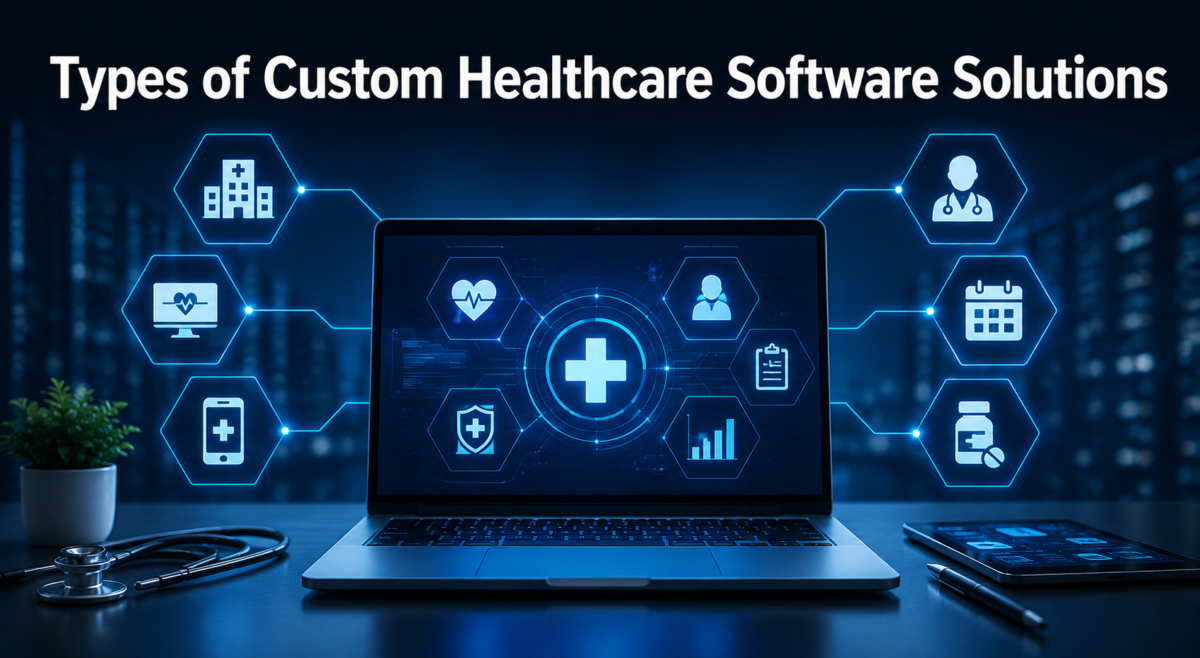
There are many categories of software that fall under custom healthcare software development services, each solving a different operational or clinical challenge. Understanding these categories helps organizations identify exactly which solution matches their current gap.
Electronic Health Records (EHR/EMR) Systems
EHR and EMR systems store patient history, diagnoses, medications, and treatment plans in a digital format clinicians can access instantly.
A custom-built EHR can match the exact documentation style used by a hospital’s doctors instead of a generic template, reducing data entry errors and speeding up daily clinical work.
Telemedicine and Telehealth Platforms
Telehealth platforms allow patients to consult doctors remotely through video calls, chat, or scheduled virtual visits. A custom telemedicine solution can include regional language support and integration with local insurance providers, making remote care more practical for the specific population served.
Hospital and Practice Management Systems
These systems handle scheduling, staff management, billing, and daily administrative tasks within a clinic or hospital.
Custom practice management software can reflect the exact department structure of a facility, keeping administrative work organized without unnecessary complexity.
Patient Engagement Portals and Apps
Patient portals let people book appointments, view test results, and communicate directly with care providers online.
A custom-built portal can match the exact branding and accessibility features needed by the patient demographic, improving satisfaction and reducing phone-based administrative work.
Medical Imaging and Diagnostic Software
Imaging software helps radiologists and doctors view, store, and analyze scans such as X-rays, MRIs, and CT scans.
Custom diagnostic tools can integrate directly with a facility’s existing imaging hardware, reducing the need to switch between disconnected systems during diagnosis.
Laboratory Information Systems (LIS)
An LIS manages the flow of samples, test orders, and results within a laboratory setting. Custom lab systems can match the specific testing equipment already in use at a facility, minimizing manual re-entry and transcription errors.
Pharmacy Management Software
Pharmacy software handles inventory, prescriptions, and billing within a pharmacy setting. A custom pharmacy system can connect directly to the hospital’s EHR to automatically verify prescriptions, helping prevent medication errors and improving stock accuracy.
Remote Patient Monitoring (RPM) Systems
RPM systems collect health data from wearable devices or home monitoring equipment and send it to care providers in real time. Custom-built RPM platforms can be designed around specific chronic conditions a provider frequently treats, allowing more meaningful alerts and follow-up.
Health Insurance and Claims Processing Software
This software manages the submission, tracking, and approval of insurance claims between providers and payers. A custom claims system can be built around specific insurance partners and regional regulations, reducing rejection rates and speeding up reimbursement.
AI-Powered Clinical Decision Support Tools
These tools use data analysis to help doctors make faster, informed treatment decisions based on patient history and symptoms. Custom decision support systems can be trained on the specific patient population relevant to a region or specialty, making recommendations more accurate and clinically useful.
Key Features to Look for in Healthcare Software
Regardless of the type of solution being built, certain core features determine whether a healthcare application will actually perform well in daily use. These features should always be part of the conversation when planning custom healthcare software development services.
Data Security and Encryption
Patient data is highly sensitive, so any custom healthcare software must include strong encryption for data both at rest and in transit. Role-based access controls ensure only authorized staff can view specific patient information, and regular security audits should be part of the maintenance plan after launch.
Interoperability with HL7 and FHIR Standards
Interoperability means the software can exchange data smoothly with other healthcare systems, such as labs, pharmacies, or insurance providers.
HL7 and FHIR are widely accepted standards that let different platforms share patient information consistently, avoiding manual data transfer errors between systems.
Cloud vs. On-Premise Deployment
Cloud-based healthcare software is hosted on remote servers and can be accessed from anywhere, making it easier to scale.
On-premise software runs on a facility’s own servers, offering more direct data control but requiring more internal IT resources. The right choice depends on budget, staff availability, and compliance obligations.
Benefits of Custom Healthcare Software Development
Choosing custom healthcare software development services over generic products brings measurable improvements across clinical, administrative, and financial areas of a healthcare organization. These benefits compound over time as the software continues to evolve alongside the business.
Improved Patient Care and Outcomes
Custom software allows clinicians to access relevant patient information faster, without navigating unrelated features built for other specialties. This reduces time spent on administrative tasks and increases time available for actual patient care, while also supporting better decisions during emergencies.
Streamlined Administrative Operations
Custom systems automate repetitive tasks like appointment reminders, billing calculations, and staff scheduling. This reduces workload on administrative staff, allowing them to focus on more important tasks, and lowers the likelihood of human error in routine paperwork.
Enhanced Data Security and Compliance
Because custom software is built around a specific organization’s risk profile, security measures can be more precisely targeted than in generic products. Compliance requirements such as HIPAA get built directly into the system’s architecture, reducing the risk of costly breaches or penalties.
Cost Efficiency Over Time
While custom development often needs a higher upfront investment, it removes recurring licensing fees common with off-the-shelf software. Organizations also avoid paying for unused features bundled into generic pricing packages, which typically lowers the total cost of ownership over time.
Regulatory Compliance and Standards
Compliance is one of the most important factors in healthcare software, since failing to meet legal standards can result in serious financial and legal consequences. Custom healthcare software development services must account for these regulations from the very first stage of planning.
HIPAA Compliance
HIPAA, or the Health Insurance Portability and Accountability Act, sets strict rules for how patient health information must be stored, transmitted, and accessed in the United States. Custom software built for U.S. providers must include audit trails, encryption, and access controls to remain compliant, since non-compliance can lead to major fines and reputational damage.
HL7 and FHIR Interoperability Standards
HL7 and FHIR are technical standards defining how healthcare data should be structured and shared between systems.
Following these standards ensures a custom-built application can properly communicate with hospital systems, labs, and insurance platforms, avoiding costly compatibility problems after launch.
The Custom Healthcare Software Development Process
Building healthcare software involves a structured process that balances technical development with strict compliance and usability requirements. Each stage plays an important role in ensuring the final product actually solves the intended problem.
Requirement Analysis and Discovery
This first stage involves meeting with doctors, administrators, and IT staff to understand exactly what problems the software needs to solve. Teams document workflows, data requirements, and compliance obligations before design work begins, since skipping this stage often leads to costly changes later.
UI/UX Design for Healthcare Applications
Good design means creating interfaces simple enough for busy clinical staff to use without extensive training. Designers focus on minimizing clicks and reducing cognitive load, since medical staff work under time pressure, and patient-facing interfaces must remain accessible to varying technical comfort levels.
Development, Testing, and Deployment
Once designs are approved, developers build the software in stages, usually using agile methods allowing regular feedback and adjustments. Extensive testing covers functionality, security, and compliance before launch, and the system is closely monitored afterward to resolve early issues quickly.
How to Choose the Right Development Partner
Selecting the right partner for custom healthcare software development services can determine whether a project succeeds or struggles with delays and quality issues. A few key factors should guide this decision-making process.
Industry Experience and Domain Expertise
A development team with prior healthcare project experience will already understand common compliance requirements and clinical workflows. This reduces the learning curve and speeds up the timeline, and reviewing a company’s past projects gives a clear indication of their domain knowledge.
Security and Compliance Track Record
It is important to check whether a partner has previously built HIPAA-compliant or regionally compliant systems. Ask for references or case studies demonstrating their understanding of data protection requirements, since a partner without proven compliance experience adds unnecessary risk.
Cost of Custom Healthcare Software Development
The cost of building custom healthcare software varies widely depending on the complexity, features, and compliance requirements involved. Below is a general breakdown to help set realistic expectations.
| Software Type | Typical Complexity | Relative Cost Range |
| Patient Portal | Low to Medium | Lower cost |
| Practice Management System | Medium | Moderate cost |
| EHR/EMR System | High | Higher cost |
| Telemedicine Platform | Medium to High | Moderate to higher cost |
| AI-Powered Diagnostic Tool | Very High | Highest cost |
Factors Affecting Development Cost
The number of features, level of customization, and compliance requirements all directly influence final development cost. Integration with existing hospital systems, such as older EHR platforms, can add complexity, and ongoing maintenance after launch should also be factored into the overall budget.
Future Trends in Healthcare Software Development
The healthcare software industry continues to evolve rapidly, and staying aware of emerging trends helps organizations plan for long-term relevance.
AI and Predictive Analytics in Healthcare
Artificial intelligence is increasingly used to predict patient risks, recommend treatments, and identify patterns in large sets of medical data.
Custom healthcare software development services are beginning to include predictive analytics modules that give clinicians earlier warnings about potential health issues.
Growth of Telehealth and Remote Care
Telehealth adoption has increased steadily, and patients now expect remote consultation options for many types of care.
Future custom software will likely include deeper integration between telehealth platforms and in-person medical records, creating a more seamless patient experience.
Competitor Landscape Overview
The custom healthcare software development market includes large enterprise IT firms, specialized healthcare technology agencies, and regional development companies.
Enterprise firms typically serve large hospital networks with complex, multi-year projects, while smaller agencies focus on startups and mid-sized clinics needing faster turnaround. Choosing between them depends on project scale, budget, and delivery timeline.
Frequently Asked Questions
How long does it take to build custom healthcare software?
Timelines vary by complexity, but most projects take a few months to over a year for larger systems like EHR platforms.
Is custom software automatically HIPAA compliant?
No, compliance must be built in deliberately through proper security measures and regular audits during development.
What is the difference between EHR and EMR?
EMR typically refers to records used within a single practice, while EHR is designed to be shared across multiple providers.
Can custom software integrate with existing hospital systems?
Yes, integration is a core part of custom healthcare software development services, especially with older EHR or lab systems already in use.
What is the average cost range for custom healthcare software?
Costs vary from moderate investments for simple portals to much higher budgets for advanced AI-driven diagnostic tools.
Conclusion
Custom healthcare software development services give healthcare providers the ability to build systems that truly match their clinical workflows, compliance needs, and patient care goals.
From EHR systems to telemedicine platforms and AI-powered diagnostic tools, the right custom solution can significantly improve both efficiency and patient outcomes. Choosing an experienced development partner with proven healthcare and compliance expertise remains the most important step toward a successful project.
Related Articles
Age Verification Software: Complete Guide to How It Works, Types, and Benefits
Software License Management: The Complete Guide
2020 Design Software: A Complete Guide for Beginners and Professionals
Software Co-Development: A Complete Guide to Collaborative Software Building


