

Should Cost Software: A Complete Guide for Smart Procurement Teams
July 13, 2026
Job Dispatch Software: The Complete Guide for Modern Businesses
July 13, 2026
Every oil and gas company deals with massive amounts of information coming from wells, pipelines, sensors, and field reports every single day. Without a proper system in place, this information quickly turns into chaos, making it hard for teams to find what they need when they need it.
Oil and gas data management software solves this problem by giving companies one organized place to store, clean, and use their data. It connects departments, reduces manual errors, and helps decision makers act on accurate information instead of guesswork. This guide walks through everything you need to know about these systems in simple, easy to understand language.
Understanding the Oil & Gas Data Landscape
Before choosing any software, it helps to understand what kind of data the oil and gas industry actually deals with. This section breaks down the different data types and the challenges that come with managing them.
Types of Data Generated in Oil & Gas Operations
Oil and gas companies generate data from many different sources, including seismic surveys, well logs, drilling records, and production reports. Each of these data types has its own format and purpose, which makes managing them together a real challenge for most teams.
Structured vs Unstructured Data
Structured data includes numbers and records that fit neatly into spreadsheets or databases, such as production volumes. Unstructured data includes things like scanned documents, images, and reports that don’t follow a fixed format and are harder to search or analyze.
Data Volume, Velocity, and Variety Challenges
The oil and gas industry produces data at a scale that traditional filing systems simply cannot handle anymore. Sensors and field equipment generate readings every second, and without the right tools, this flood of information becomes overwhelming rather than useful.
Why the Oil & Gas Industry Needs Specialized Data Management
Generic office software was never built to handle the specific demands of energy operations. This is why companies turn to purpose built oil and gas data management software instead of generic tools.
Complexity of Upstream, Midstream, and Downstream Operations
Each stage of the oil and gas value chain, from exploration to refining, produces its own unique data sets and reporting needs. Managing all of this under one roof requires software designed specifically for these varied operational demands.
Legacy Systems and Data Silos
Many older companies still rely on outdated systems that don’t talk to each other, creating isolated pockets of information known as data silos. This makes it difficult for teams to get a complete picture of operations without wasting time chasing down files.
Risks of Poor Data Management
When data is scattered, outdated, or inaccurate, it can lead to costly mistakes, missed compliance deadlines, and poor business decisions. A single bad data point in drilling or production records can cause delays that cost companies significant time and money.
Core Functions of Oil and Gas Data Management Software
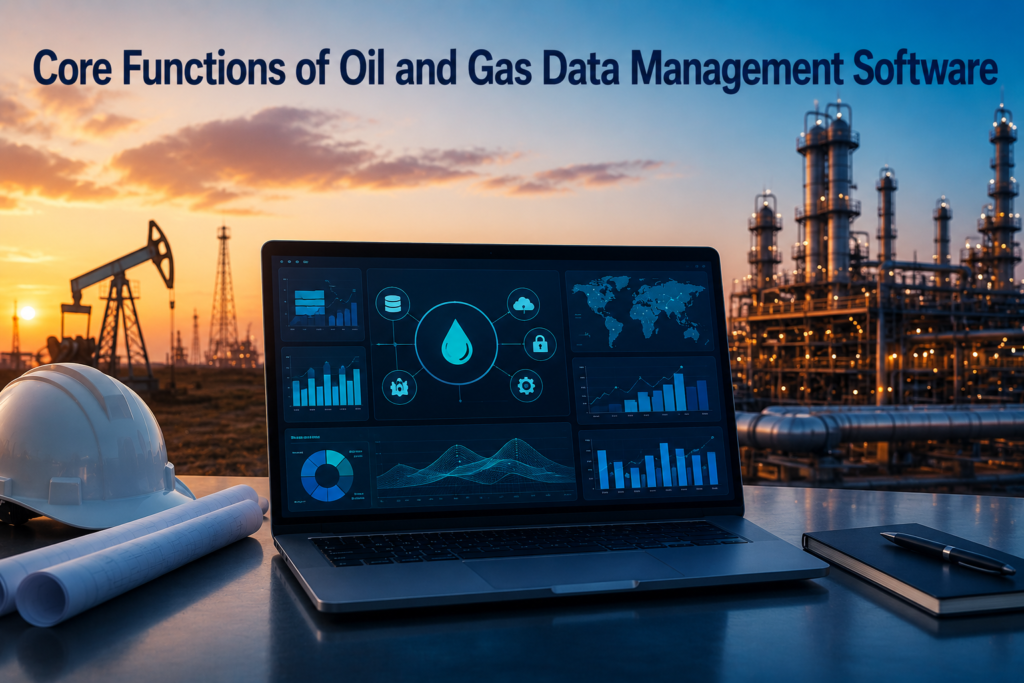
At its heart, this type of software performs several essential jobs that keep information organized and reliable. The table below summarizes these core functions clearly.
| Core Function | What It Does |
| Data Acquisition and Ingestion | Collects data automatically from sensors, field reports, and third-party systems |
| Data Storage and Centralization | Keeps all information in one secure, searchable location |
| Data Validation and Quality Control | Checks for errors, duplicates, and inconsistencies before data is used |
| Data Integration | Connects data across departments like engineering, finance, and operations |
| Data Security and Access Control | Restricts sensitive information to authorized users only |
| Data Visualization and Reporting | Turns raw numbers into charts and dashboards that are easy to understand |
Data Acquisition and Storage
Good software pulls information automatically from multiple sources instead of relying on manual entry, which reduces human error significantly. Once collected, the data is stored centrally so that any authorized team member can access it instantly.
Data Validation and Security
Before data becomes useful, it needs to be checked for accuracy and consistency, and quality control tools handle this automatically. At the same time, strong security features protect sensitive company and regulatory information from unauthorized access.
Key Features to Look For
Not all data management platforms are built the same way, so knowing which features actually matter can save companies from a costly mistake. The next few points highlight what to prioritize during evaluation.
Cloud vs On-Premise Storage
Cloud-based systems offer flexibility and remote access, while on-premise systems give companies full control over their servers and infrastructure. The right choice usually depends on company size, budget, and internal IT capabilities.
Integration with Engineering Tools
The best oil and gas data management software connects smoothly with tools like GIS mapping systems, SCADA controls, and reservoir simulation software. This integration means teams don’t have to switch between multiple disconnected platforms to complete their work.
Automation and AI Capabilities
Modern platforms increasingly use automation and artificial intelligence to flag anomalies, predict equipment failures, and speed up reporting tasks. This reduces the workload on human analysts and allows faster, more confident decision making.
Types of Data Managed in Oil & Gas Software
A single platform typically needs to handle several very different categories of information at once. Below is a quick breakdown of what these categories usually include.
- Geological and geophysical data from seismic surveys and rock formation studies
- Drilling and well construction records covering every stage of a well’s life
- Production and reservoir data tracking output and underground pressure levels
- Land, lease, and title documentation for legal and ownership purposes
- Health, safety, and environmental data required for workplace compliance
- Financial and regulatory records needed for audits and government reporting
Geological and Production Data
Geological data helps teams understand what lies beneath the surface before drilling begins, reducing the risk of costly exploration mistakes. Production data, on the other hand, tracks how much oil or gas a well is producing over time.
Land, Legal, and Compliance Data
Land and lease records determine who owns the rights to explore or extract resources from a particular area. Compliance data ensures that companies are meeting environmental and safety regulations set by governing authorities.
Benefits of Implementing Data Management Software
Investing in the right platform brings measurable improvements across nearly every part of an oil and gas business. These benefits go far beyond simple file organization.
Improved Decision-Making and Efficiency
When decision makers have access to clean, centralized data, they can respond to problems faster and plan operations more accurately. This directly reduces non-productive time and keeps projects running on schedule.
Cost Savings and Risk Reduction
Fewer errors and better compliance tracking mean fewer fines, delays, and repeated work across the organization. Over time, this translates into significant cost savings and a safer working environment for field teams.
Popular Oil and Gas Data Management Software Solutions
Several established vendors dominate this space, each offering slightly different strengths depending on company needs. The table below gives a simple overview for comparison purposes.
| Software Vendor | Known Strength |
| Petrel (SLB) | Subsurface geological modeling and analysis |
| OpenWorks (Halliburton) | Integrated well and reservoir data platform |
| P2 Energy Solutions | Production accounting and land management |
| Enverus | Data analytics and market intelligence |
| Katalyst Data Management | Data archiving and digital transformation |
| Quorum Software | Midstream and commercial operations data |
Comparing Cloud-Based and Traditional Platforms
Cloud-based vendors typically offer faster deployment and easier updates without heavy in-house IT involvement. Traditional on-premise platforms remain popular with larger enterprises that prioritize direct control over their data infrastructure.
Industry Use Cases
Real-world applications help illustrate exactly how this software adds value across different parts of the industry. Each stage of operations benefits in its own specific way.
Upstream Exploration and Production
In upstream operations, data management software helps geologists and engineers share findings quickly, speeding up exploration timelines. It also helps track well performance data so companies can optimize output more effectively.
Midstream and Downstream Applications
Midstream companies use these platforms to monitor pipeline data and logistics in real time, reducing transportation delays. Downstream businesses rely on the same systems to manage refining schedules and distribution records efficiently.
Integration with Emerging Technologies
Modern oil and gas data management software is no longer just about storage, it now works closely with newer digital technologies. This connection is shaping the future direction of the entire industry.
Artificial Intelligence and IoT Sensors
AI algorithms can now scan massive data sets to detect patterns humans might miss, such as early signs of equipment failure. IoT sensors feed real-time field data directly into these systems, keeping information constantly up to date.
Cloud Computing and Digital Twins
Cloud computing allows companies to scale their data storage instantly without investing in physical servers. Digital twins, which are virtual replicas of real equipment, use this data to predict maintenance needs before problems occur.
Challenges in Oil & Gas Data Management
Despite the clear benefits, companies still face real obstacles when adopting these systems. Recognizing these challenges early helps businesses prepare better implementation strategies.
Cybersecurity and Governance Issues
As more data moves online, protecting it from cyber threats becomes an increasingly urgent priority for energy companies. Poor data governance policies can also lead to inconsistent standards across different departments and locations.
Cost and Workforce Challenges
Implementing a full data management system often requires a significant upfront investment in both software and training. Many companies also struggle to find skilled professionals who understand both energy operations and modern data systems.
Regulatory and Compliance Considerations
Regulatory pressure is one of the biggest reasons companies invest in proper data systems in the first place. Staying compliant protects both company reputation and financial standing.
Environmental and Industry Standards
Government bodies require detailed environmental reporting, and software helps automate much of this documentation process. Industry data standards such as PPDM and WITSML also help ensure information stays consistent across different platforms and partners.
How to Choose the Right Software for Your Business
Selecting the right platform depends heavily on a company’s size, budget, and long-term goals. A careful evaluation process avoids costly mistakes down the road.
Assessing Needs and Scalability
Smaller companies may only need basic data storage and reporting tools, while larger enterprises often require advanced analytics and automation features. It’s also important to choose software that can scale as the company grows over time.
Vendor Support and Cost Analysis
Reliable customer support and training resources make a huge difference during the early stages of adoption. Comparing total costs, including hidden fees and maintenance charges, helps companies make a financially sound decision.
Implementation Best Practices
Successfully rolling out new software requires more than just installing a program and hoping for the best. A structured approach makes the transition smoother for everyone involved.
Data Migration and Training
Moving old records into a new system should be done carefully to avoid data loss or corruption during the transfer. Proper staff training ensures employees actually use the new tools correctly instead of falling back on old habits.
Governance and Continuous Monitoring
Setting clear data governance policies from the start helps maintain consistency as the company scales. Regular monitoring and system updates keep the software running efficiently long after the initial launch.
Future Trends in Oil & Gas Data Management
The industry continues to evolve quickly, and data management software is evolving right along with it. Companies that stay ahead of these trends will likely gain a competitive advantage.
AI-Driven Analytics and Cloud Growth
More companies are shifting toward predictive analytics powered by artificial intelligence to forecast production and equipment issues before they happen. Cloud-native platforms continue to grow in popularity due to their flexibility and lower maintenance requirements.
Digital Transformation Across the Industry
As sustainability becomes a bigger priority, some platforms are beginning to integrate renewable energy data alongside traditional oil and gas records. This shift reflects a broader industry-wide push toward complete digital transformation.
Competitor Snapshot
Most established vendors in this space focus heavily on either subsurface geology, production accounting, or midstream logistics rather than covering everything equally well. Newer entrants like Enverus differentiate themselves through stronger analytics and market intelligence features, while legacy providers like Halliburton and SLB rely on deep industry trust and long-standing enterprise relationships.
Conclusion
Oil and gas data management software has become essential for companies that want to stay organized, compliant, and competitive in a fast-moving industry. By centralizing data, improving accuracy, and connecting with modern technologies like AI and IoT, these platforms help businesses make smarter decisions with less risk.
Choosing the right solution depends on company size, budget, and specific operational needs, but the long-term benefits consistently outweigh the initial investment.
FAQs
What is oil and gas data management software used for?
It is used to collect, organize, store, and analyze data from exploration, drilling, and production activities in one centralized system.
Is cloud-based software better than on-premise systems?
Cloud-based systems offer more flexibility and easier scaling, while on-premise systems give companies tighter control over their infrastructure.
How much does this type of software typically cost?
Costs vary widely based on company size and features, ranging from smaller subscription plans to large enterprise licensing agreements.
Can small oil and gas companies benefit from this software too?
Yes, smaller companies can use scaled-down versions of these platforms to stay organized without needing the full enterprise feature set.
Related Articles
Healthcare Contract Management Software: A Complete Guide
Software Engineering Manager Jobs: A Complete Career Guide
Senior Software Engineer Vacancies: Complete Guide
Guru Knowledge Base Software: Complete Guide, Features & Benefits
Standard Assessment Procedure Software Explained: A Complete Guide for Builders and Assessors


