

Custom Software Development for Logistics: A Complete Business Guide
July 10, 2026
Custom MVP Software Development: The Complete Guide
July 10, 2026
Businesses across the Midwest are turning to Chicago custom software development to build tools that fit their exact workflows instead of forcing their operations into rigid, pre-built platforms. From finance to healthcare, logistics to retail, companies in Chicago are investing in tailored digital solutions that give them a real edge over competitors using generic software.
This guide walks you through what custom software development means, why Chicago has become a strong hub for it, and how to choose the right development partner. You will also find information on pricing, technologies, common challenges, and future trends. By the end, you should have a clear picture of how to plan and execute a custom software project in this city.
What is Custom Software Development?
Custom software development refers to designing, building, and maintaining software that is created specifically for one business rather than sold to the general public. Unlike ready-made products, this software is shaped entirely around the way a company already works.
Definition and Core Concept
Custom software is built from the ground up based on a company’s specific requirements, workflows, and goals. A team of developers studies how the business operates and then designs a system that matches those exact needs rather than asking the business to adapt to someone else’s design. This approach often takes longer to build than buying an existing product, but it pays off through a much better long-term fit.
Custom Software vs Off-the-Shelf Software
Off-the-shelf software is built for a wide audience and includes features that may never be used by a particular business, while also missing features that are actually needed. Custom software, on the other hand, includes only what is relevant to that one company. This difference matters a lot when a business has unusual processes, strict compliance needs, or plans to scale in a specific direction that generic tools cannot support.
Key Benefits of Custom Software
Custom software offers scalability, meaning it can grow alongside the business without hitting artificial limits set by a vendor. It also offers flexibility, since features can be added or changed whenever the business needs it. Because competitors using generic tools cannot easily copy a system built specifically for another company, custom software also becomes a genuine competitive advantage over time.
Common Misconceptions
Many business owners assume custom software is only for large enterprises with massive budgets, but smaller companies are increasingly investing in it too because of falling development costs. Another common misconception is that custom software takes forever to build, when in reality, modern development practices like agile methodology allow for faster delivery through smaller, manageable releases.
Why Chicago Businesses Need Custom Software
Chicago’s economy is built on a mix of established industries and fast-growing startups, which creates a strong demand for software that fits very specific operational needs. This is why chicago custom software development has become a key part of business planning across the city.
Local Market Challenges and Opportunities
Chicago businesses often deal with complex supply chains, strict regulatory requirements, and a highly competitive local market. These challenges create opportunities for custom software that can automate manual processes, reduce errors, and give decision-makers real-time visibility into their operations.
Industries Thriving in Chicago
Finance, healthcare, logistics, manufacturing, and retail are among the strongest industries in the city, and each one relies heavily on software tailored to its specific rules and processes. Financial firms need secure transaction systems, healthcare providers need compliant patient management tools, and logistics companies need real-time tracking platforms that off-the-shelf software rarely handles well.
Digital Transformation Trends in the Midwest
Businesses throughout the Midwest are shifting away from paper-based and manual systems toward fully digital operations. This transformation is pushing companies toward custom platforms that can connect different departments, automate reporting, and support remote or hybrid work models more effectively than older legacy systems.
Types of Custom Software Solutions
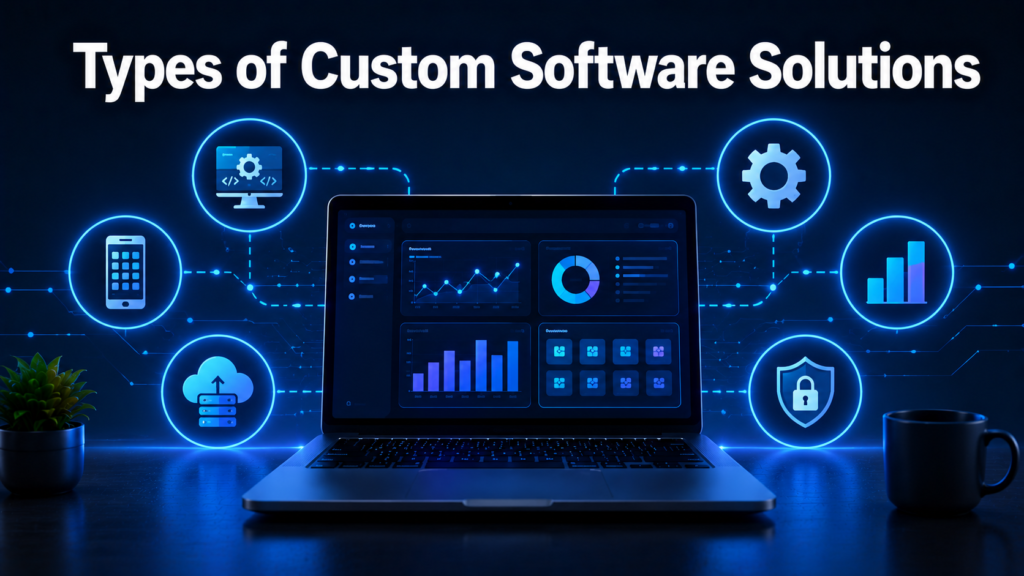
Custom software comes in many different forms depending on what a business actually needs to accomplish. Companies offering chicago custom software development typically build several types of solutions rather than sticking to just one category.
- Web Application Development
- Web applications run directly in a browser and are commonly used for internal business tools, customer portals, and booking systems. They are popular because they do not require installation on individual devices and can be updated centrally without disrupting users.
- Mobile App Development
- Mobile apps for iOS and Android allow businesses to reach customers or employees directly on their phones, which is especially useful for service-based industries. These apps are built to work smoothly even with limited internet connectivity, since many field workers rely on them outside the office.
- Enterprise Software Solutions
- Enterprise software supports large-scale internal operations such as human resources, inventory management, or financial reporting across an entire organization. These systems are usually more complex and require careful planning since they touch multiple departments at once.
- Cloud-Based Software
- Cloud-based software is hosted on remote servers instead of local computers, which allows employees to access it from anywhere with an internet connection. This type of software has become the standard choice for most new projects because it reduces hardware costs and simplifies maintenance.
- SaaS Product Development
- Software as a Service, or SaaS, refers to custom-built platforms that a company may eventually sell as a subscription product to other businesses. This is common among Chicago startups looking to turn an internal tool into a new revenue stream.
- E-commerce Platforms
- Custom e-commerce platforms are built for businesses that need more control over their online store than typical marketplace tools allow. These platforms often include custom checkout flows, loyalty programs, or integrations with local delivery services.
- CRM and ERP Systems
- Customer Relationship Management and Enterprise Resource Planning systems help businesses manage customer data, sales pipelines, and internal resources in one place. Building these systems from scratch allows a company to match the exact fields, reports, and automations their sales or operations teams actually use.
- API Development and System Integration
- APIs allow different software systems to communicate with each other, which is essential when a business relies on multiple tools that need to share data. Custom API development ensures that a company’s existing systems can talk to any new software without manual data entry or duplicate work.
The Custom Software Development Process
Every reliable software project follows a structured process that reduces risk and keeps the final product aligned with business goals. Understanding this process helps business owners know what to expect when working with a chicago custom software development team.
Discovery and Requirement Gathering
This first phase involves detailed conversations between the development team and the business to understand goals, pain points, and technical constraints. A clear set of requirements at this stage prevents costly changes later in the project.
UI/UX Design
Designers create wireframes and prototypes that show how the software will look and function before any code is written. This step allows the business to review and adjust the user experience early, saving significant time during development.
Development Using Agile or Scrum Methodology
Developers build the software in small, manageable chunks called sprints, usually lasting one to two weeks each. This approach allows the business to see progress regularly and provide feedback throughout the project rather than waiting until the very end.
Quality Assurance and Testing
Testers check the software for bugs, security issues, and performance problems before it goes live. This phase is critical because catching issues early is far cheaper than fixing them after the software has already been deployed to real users.
How to Choose a Custom Software Development Company in Chicago
Selecting the right development partner is one of the most important decisions in the entire process, since the wrong choice can lead to wasted budget and missed deadlines. A thoughtful evaluation process helps businesses find a chicago custom software development company that truly understands their goals.
Key Qualities to Look For
A strong development company should have proven technical expertise, clear communication practices, and a portfolio that demonstrates experience in your specific industry. Transparency about timelines and pricing is also a strong indicator of a trustworthy partner.
Questions to Ask Before Hiring
Business owners should ask about the team’s experience with similar projects, how they handle scope changes, and what their post-launch support looks like. Asking for references from past clients can also reveal a lot about how the company handles real-world challenges.
Portfolio and Case Study Evaluation
Reviewing past projects gives insight into the quality of a company’s work and whether their style matches what your business needs. Case studies that include measurable results, such as time saved or revenue increased, are especially valuable during evaluation.
Pricing Models
Development companies typically offer fixed price, hourly, or dedicated team pricing models, and understanding the differences between these three options is outlined further in the table below.
| Pricing Model | Best For | Key Characteristic |
| Fixed Price | Small, well-defined projects | Set cost agreed before work begins |
| Hourly Rate | Projects with evolving requirements | Billed based on actual hours worked |
| Dedicated Team | Long-term or large-scale projects | Ongoing team assigned exclusively to your business |
Red Flags to Avoid
Warning signs include vague pricing, reluctance to share references, and unrealistic promises about timelines that seem too good to be true. Businesses should also be cautious of companies that avoid written contracts or detailed project documentation.
Top Chicago Custom Software Development Companies
Several companies in Chicago have built strong reputations in the custom software space, each with different strengths and specializations. Reviewing a few well-known names can help businesses shortlist potential partners more efficiently.
Criteria Used for Selection
Companies are generally evaluated based on years of experience, client reviews, technical specialization, and the industries they most commonly serve. This ensures the comparison reflects real capability rather than just marketing claims.
Brief Profiles of Leading Firms
Chicago is home to a mix of established agencies and newer, specialized studios that focus on areas like fintech, healthcare technology, or SaaS product development. Some firms handle full end-to-end projects, while others specialize in specific phases such as design or quality assurance.
Specializations of Each Company
While some companies focus heavily on enterprise-level systems for large corporations, others cater specifically to startups needing a minimum viable product built quickly and affordably. Understanding these specializations helps businesses match their project size and industry with the right type of partner.
Cost of Custom Software Development in Chicago
Pricing for custom software varies widely depending on the complexity, timeline, and features involved in a project. Businesses considering chicago custom software development should budget carefully based on the type of solution they need.
Factors Affecting Cost
Cost is influenced by the number of features, the complexity of integrations required, the experience level of the development team, and how quickly the project needs to be completed. Projects requiring advanced security or compliance measures, such as those in healthcare or finance, also tend to cost more.
Average Price Ranges by Project Type
The table below gives a general idea of typical cost ranges, though actual pricing always depends on specific project requirements.
| Project Type | Estimated Cost Range |
| Simple Web Application | $15,000 – $40,000 |
| Mobile App (iOS or Android) | $30,000 – $80,000 |
| Enterprise Software System | $80,000 – $250,000+ |
| SaaS Platform | $50,000 – $150,000 |
Budgeting Tips for Startups vs Enterprises
Startups are often better served by starting with a minimum viable product that includes only core features, allowing them to test the market before investing further. Enterprises, on the other hand, may need to budget for larger systems from the start due to the scale of their existing operations.
Technologies Commonly Used
The technology stack chosen for a project directly affects performance, scalability, and long-term maintenance costs. Development teams working on chicago custom software development typically rely on a proven set of tools rather than experimenting with untested technology.
Programming Languages
Common languages include Python for data-heavy applications, Java and .NET for enterprise systems, and JavaScript for web-based projects. The choice of language often depends on the specific performance and integration needs of the business.
Frameworks
Frameworks like React and Angular are widely used for building responsive front-end interfaces, while Node.js is often chosen for handling back-end processes efficiently. These frameworks speed up development by providing reusable, well-tested building blocks.
Cloud Platforms
AWS, Azure, and Google Cloud are the three most commonly used cloud platforms for hosting custom software. Each offers different pricing structures and tools, so the choice often depends on what other systems the business already uses.
AI and Machine Learning Integration Trends
More businesses are asking for AI-powered features such as predictive analytics, chatbots, or automated data processing built directly into their custom software. This trend is expected to grow significantly as AI tools become more accessible and affordable for mid-sized companies.
Benefits of Hiring a Local Chicago Development Team
Working with a development team based in the same city offers practical advantages that remote or overseas teams cannot always match. These benefits often make the decision easier for businesses evaluating chicago custom software development providers.
Time Zone and Communication Advantages
A local team shares the same working hours, which means faster responses and fewer delays caused by time zone differences. This becomes especially important during critical phases like testing or launch, when quick communication can prevent costly mistakes.
Understanding of Local Business Regulations
Local development teams are often more familiar with Illinois-specific regulations and compliance requirements that may affect certain industries. This local knowledge can reduce the risk of legal or compliance issues arising after the software is already in use.
Easier In-Person Collaboration
Meeting in person, even occasionally, can improve project clarity and build stronger working relationships between the business and the development team. This is particularly valuable during the discovery phase, when detailed requirements are being discussed.
Case Studies and Success Stories
Real examples of past projects help illustrate how custom software solves practical business problems. While specific client details vary, the patterns of success are often similar across industries.
Example Project One
A logistics company in the Chicago area replaced a spreadsheet-based tracking system with a custom web application that gave real-time visibility into shipments. This change reduced manual errors and improved delivery time estimates significantly.
Example Project Two
A local healthcare provider worked with a development team to build a patient scheduling system that integrated directly with their existing records software. The new system reduced scheduling conflicts and cut administrative workload for front-desk staff.
Lessons Learned
These examples show that the most successful custom software projects start with a clear understanding of the specific problem being solved rather than simply adding technology for its own sake. Businesses that invest time in the discovery phase tend to see stronger long-term results.
Future Trends in Custom Software Development
The custom software industry continues to evolve rapidly as new technologies become available and business expectations shift. Staying aware of these trends helps businesses plan projects that remain relevant for years to come.
AI-Driven Development
Developers are increasingly using AI tools to speed up coding, testing, and debugging, which can reduce overall project timelines. This trend is expected to make custom software more affordable and accessible to smaller businesses over time.
Low-Code and No-Code Integration
Some custom software projects now combine traditional coding with low-code tools to speed up development of simpler features. This hybrid approach allows businesses to launch faster while still maintaining full customization where it matters most.
Cybersecurity Focus
As cyber threats continue to grow, security is being built into custom software from the very beginning of development rather than added afterward. This proactive approach helps protect sensitive business and customer data more effectively.
Cloud-Native Architecture
More software is being designed specifically for cloud environments rather than adapted afterward, which improves performance and scalability. This approach is becoming the standard for most new custom software projects in Chicago and beyond.
Common Challenges and How to Overcome Them
Even well-planned software projects can run into obstacles, but understanding common challenges in advance helps businesses prepare and respond effectively.
Budget Overruns
Costs can exceed initial estimates when requirements change midway through a project or when hidden technical complexities are discovered. Setting a clear budget with contingency funds and maintaining open communication with the development team helps manage this risk.
Scope Creep
Scope creep happens when new features are continually added without adjusting the timeline or budget accordingly. Establishing a clear change request process at the start of the project helps keep scope changes organized and controlled.
Communication Gaps
Miscommunication between the business and the development team can lead to a final product that does not match expectations. Regular check-ins and clear documentation throughout the project significantly reduce this risk.
Post-Launch Scalability Issues
Software that works well for a small number of users can sometimes struggle as the business grows and usage increases. Planning for scalability during the initial architecture phase helps avoid costly rebuilds later on.
Frequently Asked Questions
How long does custom software development take?
Most projects take between three and twelve months depending on complexity, though simple applications can sometimes be delivered faster using agile development practices.
What is the difference between custom and template-based software?
Custom software is built specifically for one business, while template-based software uses a pre-built structure that is only partially adjustable to fit different needs.
Do I need ongoing maintenance after launch?
Yes, most software requires regular updates, security patches, and occasional feature improvements to continue running smoothly and securely over time.
Can custom software integrate with existing systems?
Yes, custom software is often specifically designed to integrate with a business’s current tools through APIs, ensuring smooth data flow across all platforms.
Conclusion
Chicago custom software development gives businesses the ability to build tools that match their exact operations rather than settling for generic software. From choosing the right development partner to understanding costs and emerging technology trends, careful planning at every stage leads to stronger long-term results. Businesses that invest time in discovery, choose experienced local teams, and plan for future scalability are best positioned to succeed with their custom software projects.
Related Articles
What Is the Easiest 3D Modeling Software for Beginners in 2026?
Bus Management Software: Features, Benefits, Types, Working Process, and Complete Guide
How to Actually Create Software: Step-by-Step Beginner to Advanced Guide
Oura Senior Software Engineer Interview Questions: A Complete Preparation Guide
Shepherds Software: A Complete Guide for Ministries and Churches


