

Fix As Glitchy Software: How to Debug Your Habits Like a Computer Program
July 9, 2026
Custom Software Development for Logistics: A Complete Business Guide
July 10, 2026
Exposure modeling software helps organizations estimate how much risk they face from natural disasters, chemicals, financial market changes, or health hazards. This kind of software collects data, runs simulations, and produces reports that guide better decisions.
Businesses, government agencies, insurance companies, and health organizations rely on exposure modeling software daily. This guide explains everything about exposure modeling software in simple words, so you can understand how it works and why it matters.
Introduction
Exposure modeling software is a specialized tool used to calculate the level of risk something is exposed to, whether that risk comes from weather events, chemical substances, financial markets, or disease outbreaks.
Companies use this software to protect their assets, employees, and customers from unexpected losses. Over the years, this technology has grown from simple spreadsheets into powerful computer systems that use real-time data and advanced calculations.
What is Exposure Modeling Software?
At its core, exposure modeling software takes information about a person, place, or asset and calculates how vulnerable it is to a particular hazard. For example, an insurance company may use it to figure out how much a hurricane could cost them in claims. The software pulls in data such as location, historical events, and asset value to produce a clear picture of potential exposure.
Why Exposure Modeling Matters
Without exposure modeling, businesses would be guessing about their risks instead of making informed choices. This software allows companies to plan budgets, set insurance premiums, follow safety rules, and protect people from harm. It turns uncertain situations into measurable numbers, which makes planning much easier and more reliable.
Brief History and Evolution
Exposure modeling started decades ago with basic manual calculations done by scientists and actuaries using paper records. As computers became more powerful, software companies built digital tools that could process massive amounts of data quickly. Today, exposure modeling software uses cloud computing and smart algorithms to deliver results within minutes instead of weeks.
Who Uses This Software (Industries & Professionals)
Many types of professionals depend on exposure modeling software to do their jobs well. Insurance underwriters use it to price policies accurately, while environmental scientists use it to track pollution risks. Financial analysts use it to understand market exposure, and safety officers use it to monitor workplace chemical hazards. Public health teams also use exposure modeling to track how diseases might spread among populations.
Understanding Exposure Modeling — The Basics
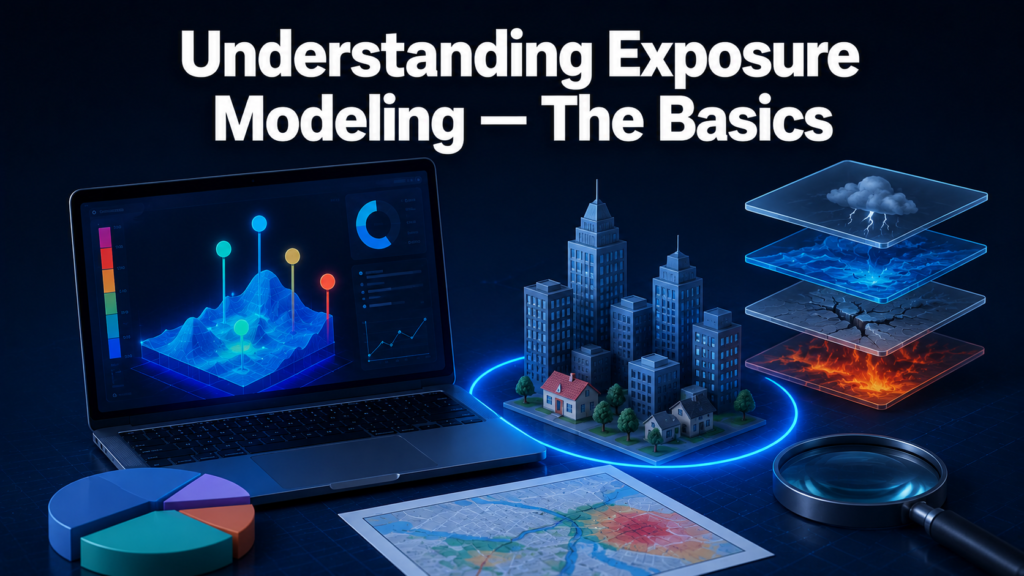
Before choosing any exposure modeling software, it helps to understand the basic ideas behind it. This section explains the core vocabulary and science so that the rest of the guide makes more sense.
Definition of “Exposure” in Different Contexts
The word “exposure” changes meaning depending on the industry. In insurance, exposure means the total value that could be lost due to a disaster. In health and safety, exposure refers to contact with a harmful substance like a chemical or virus. In finance, exposure means the amount of money at risk in an investment. Each industry applies the same basic concept differently.
Key Concepts and Terminology
Understanding a few common terms makes exposure modeling software much easier to use. Hazard refers to the source of potential harm, while vulnerability describes how easily something can be damaged by that hazard. Probability tells you how likely an event is to happen, and impact measures the size of the damage if it does happen. These four ideas work together inside every exposure model.
How Exposure Differs from Risk and Hazard
People often confuse exposure with risk and hazard, but they are not the same thing. A hazard is simply something that could cause harm, like a flood or a toxic chemical. Exposure is how much contact or closeness there is to that hazard. Risk combines both exposure and hazard together with the chance of harm actually occurring, giving a complete risk picture.
The Science Behind Exposure Modeling
Exposure modeling software relies on statistics, geography, and historical data to make predictions. Scientists build mathematical formulas that connect past events with current conditions to estimate future outcomes. These formulas are constantly tested and improved as new data becomes available, which keeps the models accurate and trustworthy over time.
Types of Exposure Modeling Software
There are several categories of exposure modeling software, each built for a specific kind of risk. Knowing these categories helps you choose the right tool for your needs.
- Environmental Exposure Models
- These tools measure how pollutants, chemicals, or emissions spread through air, water, or soil. They help government agencies and companies understand the environmental impact of their operations and stay within legal pollution limits.
- Financial/Market Exposure Models
- Financial exposure models calculate how much money an investor or company could lose due to market changes like currency shifts, interest rate changes, or stock price drops. Banks and investment firms use these models to manage their portfolios safely.
- Insurance & Catastrophe Risk Models
- Insurance companies use catastrophe models to predict losses from natural disasters such as earthquakes, floods, and hurricanes. These models combine weather data, geography, and property values to set fair insurance prices.
- Occupational & Chemical Exposure Models
- These tools track how much workers are exposed to dangerous substances in factories, labs, or construction sites. They help companies follow safety laws and protect employees from long-term health problems.
- Radiological Exposure Models
- Radiological models estimate how much radiation a person or area might be exposed to from nuclear facilities, medical equipment, or accidents. These are critical for nuclear safety and emergency planning.
- Biological/Epidemiological Exposure Models
- These models predict how diseases spread through populations by studying contact patterns, infection rates, and geography. Health departments use them heavily during outbreaks to plan responses and allocate resources.
How Exposure Modeling Software Works
Exposure modeling software follows a clear process from data collection to final results. Understanding this process helps users trust the numbers the software produces.
Data Collection and Inputs
The software first gathers data from multiple sources such as satellite images, historical records, sensors, and public databases. Accurate data collection is the foundation of a reliable exposure model, since poor data leads to poor predictions.
Modeling Techniques and Algorithms
Once data is collected, the software applies mathematical models and algorithms to calculate exposure levels. These techniques range from simple statistical formulas to complex machine learning systems that learn patterns from large datasets.
Simulation and Scenario Analysis
Many exposure modeling tools run simulations of different scenarios, such as a worst-case flood or a sudden market crash. This helps organizations prepare for multiple possible outcomes instead of relying on just one prediction.
Output Interpretation (Reports, Maps, Dashboards)
After processing, the software presents results through easy-to-read reports, interactive maps, or dashboards. These visuals help decision-makers quickly understand which areas or assets carry the highest exposure.
Popular Exposure Modeling Software Tools
Several established tools dominate the exposure modeling software market today. Each one specializes in a particular industry or type of risk.
RMS (Moody’s RMS)
RMS is a leading catastrophe modeling platform used by insurance companies worldwide to estimate losses from natural disasters like hurricanes and earthquakes.
AIR/Verisk Touchstone
Touchstone by Verisk offers detailed risk analytics for insurers, combining weather and geographic data to calculate potential catastrophe losses accurately.
CoreLogic RQE
CoreLogic RQE focuses on property risk quantification, helping insurers and lenders understand exposure tied to real estate and natural hazards.
EPA Tools (AERMOD, EFAST, SHEDS)
The U.S. Environmental Protection Agency offers free tools like AERMOD for air pollution modeling and SHEDS for estimating chemical exposure in humans.
Advanced REACH Tool (ART)
ART is widely used in occupational health to estimate worker exposure to chemicals in industrial and laboratory environments.
RESRAD
RESRAD is a trusted tool for calculating radiological exposure and dose levels around nuclear sites and contaminated areas.
Comparison Table of Features
| Software | Industry Focus | Best For |
| RMS | Insurance | Catastrophe loss estimation |
| AIR/Verisk Touchstone | Insurance | Natural disaster risk analytics |
| CoreLogic RQE | Real Estate/Insurance | Property risk quantification |
| EPA Tools | Environmental | Air and chemical exposure |
| ART | Occupational Health | Workplace chemical exposure |
| RESRAD | Nuclear/Radiological | Radiation dose modeling |
Key Features to Look For
Choosing the right exposure modeling software requires checking a few important features before making a decision.
Data Accuracy and Sources
Reliable software should pull data from trusted, verified sources and update regularly to reflect current conditions, since outdated data leads to weak predictions and poor decisions.
Customization and Flexibility
Good exposure modeling software allows users to adjust settings and scenarios based on their specific industry needs rather than forcing a one-size-fits-all approach.
Integration with Other Systems
The best tools connect smoothly with other business systems like accounting or database software, which saves time and reduces manual data entry errors.
Visualization and Reporting Tools
Clear charts, maps, and dashboards make it easier for teams to understand complex exposure data without needing deep technical knowledge.
Regulatory Compliance Support
Many industries require exposure documentation for legal purposes, so software that generates compliance-ready reports saves significant time during audits.
Benefits of Using Exposure Modeling Software
Organizations that adopt exposure modeling software gain several practical advantages that improve their overall operations and safety standards.
Better Risk Management
Exposure modeling software gives companies a clear, data-backed view of their risks, allowing them to make smarter decisions instead of relying on guesswork.
Cost Savings and Efficiency
By identifying high-risk areas early, organizations can avoid costly mistakes and reduce unnecessary spending on unmanaged risks.
Regulatory Compliance
Many industries are legally required to monitor and report exposure levels, and this software makes meeting those requirements much simpler.
Informed Decision-Making
With accurate exposure data, leaders can plan budgets, set safety policies, and choose insurance coverage with far greater confidence.
Real-World Case Studies
Insurance firms using catastrophe models have successfully predicted hurricane losses within close accuracy, while factories using chemical exposure tools have reduced workplace illnesses significantly through early detection.
Challenges and Limitations
Despite its benefits, exposure modeling software also comes with certain challenges that users should understand before relying on it fully.
Data Quality Issues
Since exposure models depend heavily on data, incomplete or outdated information can lead to inaccurate predictions and poor planning decisions.
Model Uncertainty
No model can predict the future with complete certainty, so results should always be treated as estimates rather than guaranteed outcomes.
High Costs and Complexity
Advanced exposure modeling software can be expensive to purchase and may require specialized training to operate correctly.
Need for Skilled Professionals
Interpreting exposure model results properly often requires trained analysts, which can be a barrier for smaller organizations with limited staff.
Industry-Specific Applications
Different industries apply exposure modeling software in unique ways based on their specific risks and goals.
Insurance Industry
Insurers use exposure modeling to set accurate premiums and prepare financial reserves for potential catastrophe claims.
Environmental Agencies
Government bodies use these tools to monitor pollution levels and enforce environmental protection laws effectively.
Financial Institutions
Banks and investment firms use exposure models to manage portfolio risks and avoid major financial losses during market shifts.
Occupational Health & Safety
Companies use chemical exposure software to protect workers and comply with workplace safety regulations.
Public Health Organizations
Health departments use epidemiological exposure models to track disease spread and plan effective public health responses.
How to Choose the Right Exposure Modeling Software
Selecting the right exposure modeling software depends on your specific industry needs, budget, and technical requirements.
Assessing Your Needs
Start by identifying exactly what type of exposure you need to measure, since environmental, financial, and health-related tools serve very different purposes.
Budget Considerations
Compare pricing plans carefully, as some software charges based on usage while others require yearly licensing fees.
Vendor Reputation and Support
Choose a vendor with a strong track record and responsive customer support, since exposure modeling often involves complex technical questions.
Trial and Testing Recommendations
Whenever possible, request a free trial or demo before committing, so your team can test the software’s accuracy and ease of use firsthand.
Future Trends in Exposure Modeling
The exposure modeling software industry continues to evolve rapidly with new technology shaping how risks are calculated and understood.
Role of AI and Machine Learning
Artificial intelligence is helping exposure modeling software analyze massive datasets faster and detect hidden patterns that traditional methods might miss.
Big Data and Real-Time Modeling
Access to real-time data from sensors and satellites is allowing software to update exposure calculations instantly instead of relying on outdated reports.
Cloud-Based Solutions
Cloud computing is making exposure modeling software more affordable and accessible, since companies no longer need expensive hardware to run complex simulations.
Predictive Analytics Advancements
Future exposure modeling tools will likely offer even more accurate forecasts by combining historical data with advanced predictive analytics techniques.
Conclusion
Exposure modeling software plays a vital role in helping industries understand and manage the risks they face every day. From insurance companies predicting hurricane losses to factories protecting workers from harmful chemicals, this technology turns uncertainty into useful, actionable information.
As data collection and computing power continue to improve, exposure modeling software will only become more accurate and accessible for businesses of every size. Choosing the right tool for your specific industry needs will help you make smarter, safer, and more cost-effective decisions going forward.
FAQs
What industries use exposure modeling software the most?
Insurance, environmental agencies, financial institutions, occupational safety teams, and public health organizations are the biggest users of exposure modeling software today.
Is exposure modeling software expensive?
Costs vary widely depending on features and industry, ranging from free government tools to expensive enterprise platforms used by large insurance companies.
Can small businesses use exposure modeling software?
Yes, many affordable and even free tools exist for smaller organizations, especially in environmental and occupational safety categories.
How accurate is exposure modeling software?
Accuracy depends on data quality and model design, and while these tools are highly useful, results should always be treated as estimates rather than guarantees.
What is the difference between exposure and risk modeling?
Exposure modeling measures how much contact or vulnerability exists to a hazard, while risk modeling combines exposure with probability and impact to give a fuller risk picture.
Related Articles
Shotscribus Software Upgrade Explained: Complete Guide, Reality Check and Safe Alternatives
Secure Video Conferencing Software for Legal Firms
AEC Software News Today: Latest Updates, AI Trends, Releases & Industry Insights
Coding 2.0: The Future of AI-Powered Software Development
Moxhit4.6.1 Software System: Features, Benefits, Working Process, and Applications


