
GDTJ45 Builder Software Details: Features, Risks, Real Status & Best Alternatives
June 4, 2026
How Mogothrow77 software is built?
June 4, 2026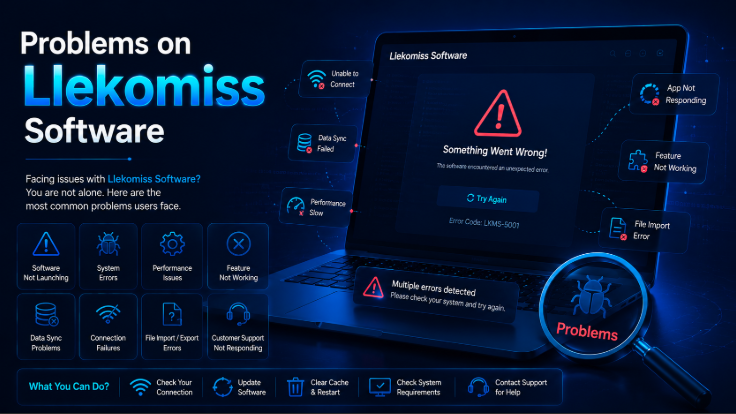
A problem with Llekomiss software can often be fixed by closing the application and restarting your device, as this removes temporary errors and system glitches. It helps when the software is freezing, lagging, or not responding properly by refreshing system memory and processes.
This simple step resets everything and allows the program to run more smoothly again. It is a quick and effective basic solution for many common software issues. Further details will be explained in the next steps.
What Is Llekomiss Software?
Llekomiss software refers to specialized digital tools designed for healthcare and research purposes related to leukemia diagnosis and management. In the points below, we will explain it in detail.
1. Purpose of Llekomiss Software
Llekomiss software is mainly developed to help medical professionals and researchers analyze leukemia-related data more efficiently. It supports a better understanding of blood cancer conditions through digital monitoring tools. The software improves accuracy in diagnosis and helps in tracking patient health progress. In the next section, we will explain its key features in more detail.
2. How Llekomiss Software Works
This software works by collecting and processing patient data such as blood reports, symptoms, and medical history. It uses advanced algorithms to identify patterns that may indicate leukemia or related conditions. Doctors can then use these insights to make more informed treatment decisions. Further details will explain its practical use in real healthcare environments.
3. Key Users of Llekomiss Software
The main users of Llekomiss software include doctors, hematologists, researchers, and medical institutions. It is also useful for laboratories that handle blood testing and cancer diagnostics. Patients may benefit indirectly through more accurate monitoring and treatment planning. More details will be discussed about its benefits in healthcare systems.
4. Importance in Medical Field
Llekomiss software plays an important role in modern medical technology by improving early detection and monitoring of leukemia. It helps reduce human error and increases the speed of diagnosis. This makes treatment more effective and timely for patients. In the next part, we will explore its advantages and limitations in detail.
Most Common Problems in Llekomiss Software
Llekomiss software faces several technical and analytical challenges, mainly related to statistical accuracy, data handling capacity, and model design issues. In the points below, we will explain it in detail.
1. Computational Inaccuracies in Statistical Algorithms
Computational inaccuracies occur when the software produces slightly incorrect or unstable results due to limitations in statistical algorithms. These errors may arise from rounding issues, poor optimization methods, or weak algorithmic design. As a result, research outputs can become less reliable. In the following section, we will explain how these inaccuracies impact overall system performance.
2. Limitations in Handling Complex Datasets
Llekomiss software often struggles with complex datasets such as panel data and time-series data, especially when the dataset is large or highly dynamic. This limitation reduces its ability to analyze long-term patterns effectively. It may also lead to incomplete or simplified outputs. Further details will discuss how this affects data interpretation in real-world scenarios.
3. Model Misspecification Leading to Biased Estimates
Model misspecification happens when the statistical model used does not correctly represent the actual data structure. This can result in biased or misleading estimates that affect decision-making. Even small errors in model design can significantly reduce accuracy. In the next part, we will explore how proper model selection can reduce this issue.
4. Reduced Reliability in Advanced Statistical Analysis
When all these issues combine, Llekomiss software becomes less reliable in advanced statistical analysis tasks. It can negatively impact forecasting accuracy and research conclusions. Users may face inconsistent results when working with complex problems. More explanation will be provided on how to improve overall software performance.
Major Causes Behind Llekomiss Software Problems
Llekomiss software problems mainly arise due to development weaknesses such as poor testing, coding errors, and insufficient real-world integration testing. In the points below, we will explain it in detail.
1. Poor Test Coverage
Poor test coverage is one of the main reasons behind Llekomiss software issues because not all parts of the system are properly tested before release. This leads to hidden bugs and unexpected errors during real usage. When critical functions are not tested, the software becomes unstable under different conditions. In the next section, we will discuss another major cause related to coding quality.
2. Coding Errors
Coding errors occur when developers make mistakes in the program logic or syntax while building the software. These small mistakes can create serious performance issues or incorrect outputs in statistical processing. Over time, unresolved coding errors can reduce system efficiency and reliability. Further details will explain how testing helps reduce these errors.
3. Lack of Real-World Integration Testing
When Llekomiss software is not properly tested in real-world environments, integration problems often appear after deployment. This means the software may work in development but fail when used with actual datasets or systems. Such issues can affect compatibility and data accuracy. In the following section, we will explore how better testing practices can solve this issue.
4. Weak Quality Assurance Process
A weak quality assurance process also contributes to Llekomiss software problems by allowing bugs and performance issues to pass through development stages. Without strict QA checks, software stability and accuracy cannot be guaranteed. This leads to inconsistent results and user dissatisfaction. More improvements in QA can significantly reduce these problems.
Error Types and System Behavior in Llekomiss Software
Software errors and system behavior in Llekomiss software refer to how different faults occur and how the system responds to them during operation and processing. In the points below, we will explain it in detail.
- Runtime Errors
Runtime errors occur while the software is actively running and processing data, often causing sudden crashes or freezes. These errors usually happen due to memory issues, invalid inputs, or unexpected system conditions during execution. - Syntax and Logical Errors
Syntax and logical errors arise from incorrect coding structure or flawed program logic within the system. While syntax errors prevent the program from running, logical errors allow it to run but produce incorrect results. - Data Processing Errors
These errors happen when the software fails to correctly handle or process large or complex datasets. As a result, the output may become incomplete, inconsistent, or inaccurate for decision-making. - System Performance Issues
System performance issues occur when the software slows down, becomes unresponsive, or consumes excessive resources. This is often linked to poor optimization or high computational load. - Integration and Compatibility Errors
Integration errors appear when Llekomiss software does not properly work with other systems or external tools. Compatibility issues can also arise due to different operating systems or outdated configurations.
Comparison Table: Llekomiss Software Problem Types vs Solutions
Before looking at the comparison table below, it’s important to understand how each type of problem differs in cause and solution approach. This helps in choosing the right troubleshooting method quickly and effectively.
| Problem Type | Main Cause | Difficulty Level | Best Solution |
|---|---|---|---|
| Startup Failure | Missing files / corruption | Easy | Reinstall software |
| Runtime Error | Code or system conflict | Medium | Check logs & fix dependencies |
| Login Issue | Server or credentials | Easy | Reset password / check server |
| Performance Lag | Low system resources | Medium | Optimize RAM & processes |
| Sync Error | Network/API issue | Medium | Check internet & API status |
| Python Code Issue | Dependency mismatch | Hard | Virtual environment setup |
Step-by-Step Troubleshooting Guide
A step-by-step troubleshooting guide helps users systematically identify, isolate, and fix technical issues in Llekomiss software for faster and more reliable resolution. In the points below, we will explain it in detail.
1. Identify the Problem
The first step is to clearly identify what issue is occurring, such as crashing, slow performance, or data errors. Understanding the exact problem helps in choosing the correct solution path.
2. Restart the Software
Closing and restarting the software can resolve temporary glitches or memory-related issues. This step refreshes system processes and often restores normal functionality.
3. Check System Requirements
Ensure that the device meets all minimum hardware and software requirements for Llekomiss. Incompatibility can cause errors, lag, or unexpected system behavior.
4. Update or Reinstall the Software
Updating to the latest version or reinstalling can fix bugs and corrupted files. This step ensures the software runs with the newest fixes and improvements.
5. Test and Monitor Performance
After applying fixes, test the software to confirm the issue is resolved. Continuous monitoring helps ensure stability and prevents recurring problems.
Python Llekomiss Code Issues Explained
Python Llekomiss code issues mainly refer to common programming errors, debugging problems, and performance-related bugs that occur during software development and execution. In the points below, we will explain it in detail.
1. Syntax Errors in Python Code
Syntax errors occur when the code does not follow Python’s proper structure or grammar rules. These mistakes prevent the program from running and must be fixed before execution. Common examples include missing colons, brackets, or incorrect indentation. In the next section, we will explain runtime-related issues.
2. Runtime Errors During Execution
Runtime errors happen while the program is running, often due to invalid inputs or unexpected conditions. These errors can cause the program to crash or stop suddenly. Debugging tools are usually used to identify the exact cause. Further explanation will cover logical errors in Python.
3. Logical Errors in Code
Logical errors occur when the code runs without crashing but produces incorrect results. These issues are caused by mistakes in program logic or incorrect formulas. They are harder to detect because the system does not show explicit error messages. More details will explain debugging strategies.
4. Debugging and Performance Issues
Debugging issues arise when developers struggle to find and fix errors in large Python codebases. Poorly optimized code can also slow down execution and affect performance. Using debugging tools and clean coding practices helps improve efficiency. In the next section, we will discuss optimization techniques.
Security Issues in Llekomiss Software
Security issues in Llekomiss software generally refer to common software vulnerabilities like SQL injection, weak authentication, and outdated or unpatched system components that may expose data risks. In the points below, we will explain it in detail.
1. SQL Injection Risks
SQL injection occurs when attackers manipulate input fields to access or damage the database. If Llekomiss software does not properly validate user inputs, it can become vulnerable to unauthorized data access. This can lead to data leaks or corruption of sensitive information. In the next section, we will discuss authentication-related risks.
2. Broken Authentication
Broken authentication happens when login systems are weak or improperly configured, allowing unauthorized users to gain access. This may include weak passwords, session hijacking, or poor encryption methods. Such issues can compromise user accounts and sensitive system data. Further details will explain problems caused by outdated code.
3. Unpatched or Legacy Code Issues
Unpatched or legacy code refers to old software components that have not been updated with security fixes. These outdated parts can contain known vulnerabilities that attackers can exploit easily. If Llekomiss software is not regularly updated, it becomes more exposed to cyber risks. In the following section, we will explore data protection concerns.
4. Data Breach Vulnerabilities
Data breaches can occur when security measures are insufficient to protect stored or transmitted data. This may result in unauthorized access to confidential medical or research information. Weak encryption and poor access control increase this risk significantly. Regular security audits are necessary to prevent such issues.
FAQs
Is Llekomiss software approved or certified by any medical or healthcare regulatory authority?
The article does not mention any official regulatory approval or certification for Llekomiss software from health authorities. Medical professionals should always verify regulatory compliance before using any software for clinical diagnosis or patient management.
Can Llekomiss software be integrated with existing hospital management or electronic health record systems?
The article discusses integration challenges but does not confirm compatibility with specific hospital management or EHR systems. Healthcare institutions should test integration capabilities thoroughly before fully adopting the software in their clinical environment.
Is patient data stored in Llekomiss software protected under healthcare privacy laws like HIPAA?
The article mentions data breach vulnerabilities but does not confirm compliance with healthcare privacy regulations like HIPAA. Organizations handling sensitive patient data must verify that the software meets all applicable legal data protection requirements before deployment.
conclusion
Llekomiss software issues mainly arise from technical limitations, coding errors, and security weaknesses that affect overall performance. Proper testing, regular updates, and strong development practices can significantly reduce these problems. Understanding these issues helps users and developers handle errors more effectively. With continuous improvement, the software can become more stable, secure, and reliable for long-term use.
Related Articles
How HCS 411GITS Software Built: Complete Architecture
How Does EndBugFlow Software Work? Complete Beginner Guide
Best Perplexity Rank Tracker Software: Complete AI Visibility Guide
Hyperlogic Games and Software: Complete Guide to Features, Technology, Applications and Future
Problems on Llekomiss Software: Complete 2026 Guide to Errors, Causes, Fixes & Troubleshooting


