
Zenvekeypo4 Software Problem: Complete Fix Guide, Causes, Error Analysis & Troubleshooting
June 5, 2026
How HCS 411GITS Software Built: Complete Architecture
June 8, 2026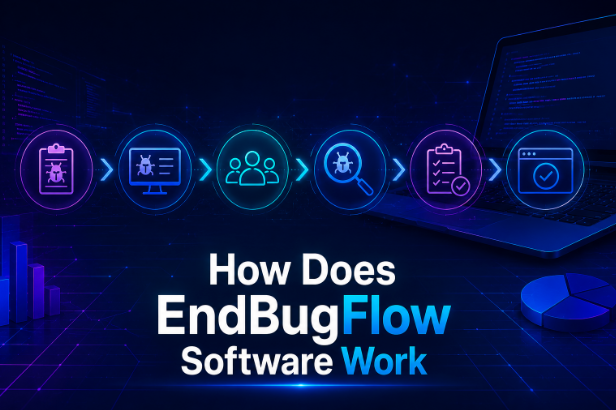
Modern software development depends on speed, teamwork, and software quality. Even a small bug can create major problems for users and businesses. Because of this, development companies now use advanced bug-tracking systems to identify and fix issues quickly.
One platform becoming popular among developers and QA teams is EndBugFlow. Many people want to understand how EndBugFlow software works and why companies use it in Agile and DevOps environments. The software helps teams track bugs, automate workflows, improve communication, and monitor project progress from one dashboard.
This guide explains everything in simple wording, including workflow steps, integrations, reporting tools, architecture, benefits, and future trends.
What Is EndBugFlow Software?
EndBugFlow is a bug-tracking and workflow management platform designed to help development teams manage software issues in an organized way. Instead of using spreadsheets, emails, or disconnected tools, teams can handle everything inside one centralized system.
The following sections explain the purpose of EndBugFlow software and why bug-tracking systems are important for modern software development.
Definition of EndBugFlow Software
EndBugFlow is a platform where teams can report, organize, prioritize, and resolve software bugs. The system stores all issue-related information, such as screenshots, logs, timestamps, comments, and testing results, in one location.
This centralized approach helps developers understand problems faster and improves communication between team members.
Main Purpose of the Platform
The main purpose of EndBugFlow is to simplify issue management and reduce software development delays. Modern applications often generate hundreds of errors during development, testing, and deployment.
The platform automates repetitive tasks like bug assignment, reporting, and notifications so developers can focus more on fixing issues instead of managing spreadsheets.
Why Bug Tracking Software Matters
Bug-tracking software is important because software systems are becoming more complex every year. Websites, mobile apps, cloud services, and APIs all require constant monitoring.
Without proper tracking systems, teams can lose important information, miss deadlines, and release unstable software.
How EndBugFlow Improves Development Workflows
EndBugFlow improves workflows by creating a structured process for handling software issues. Every bug follows a clear lifecycle from detection to final closure.
Real-time updates, automation, and centralized communication reduce confusion and help teams work more efficiently.
How Does EndBugFlow Software Work?
Understanding how EndBugFlow software works requires looking at the complete workflow process. The software uses a step-by-step system that manages bugs from reporting to final resolution.
Each stage helps improve software quality and team coordination.
Step 1 – Creating a Project Workspace
The process begins with creating a project workspace. Managers add developers, testers, and administrators to the system.
Permissions, notification settings, and workflow stages are configured during setup.
Step 2 – Logging Bugs Into the System
Bugs can be reported manually or automatically. Manual reports usually include descriptions, screenshots, reproduction steps, and log files.
| Bug Information | Purpose |
| Error Description | Explains the problem |
| Screenshots | Shows visual evidence |
| Device Details | Identifies affected systems |
| Log Files | Helps with technical analysis |
Detailed reports help developers understand issues quickly.
Step 3 – Automated Bug Detection and Reporting
One important reason companies use EndBugFlow is automation. The software can detect crashes, server failures, and application errors automatically.
For example, if a mobile app crashes, EndBugFlow can create a ticket instantly with timestamps, device information, and error logs.
Step 4 – Smart Priority Classification
Not all bugs have the same importance. EndBugFlow classifies issues according to severity and business impact.
| Priority Level | Description |
| Critical | Major system failure |
| High | Important feature broken |
| Medium | Partial functionality issue |
| Low | Minor visual issue |
This system helps teams focus on urgent problems first.
Step 5 – Assigning Tasks to Developers
After classification, bugs are assigned to developers. The software may recommend developers automatically according to workload and expertise.
Managers can also assign tasks manually when necessary.
Step 6 – Tracking Bug Progress in Real Time
Every bug moves through workflow stages such as:
Open → In Progress → Testing → Resolved → Closed
Managers and team members can monitor updates from the centralized dashboard.
Step 7 – QA Testing and Verification
After developers complete a fix, QA teams test the application to confirm the issue has been solved.
If the problem still exists, the ticket returns to development.
Step 8 – Closing Issues and Saving Reports
Once testing is successful, the issue is closed and stored for future analysis.
Historical reports help teams identify recurring software problems.
Core Features of EndBugFlow Software
EndBugFlow includes multiple features that improve collaboration, automation, and project visibility. These tools help development teams manage software issues more efficiently.
The following sections explain the platform’s most important features.
Centralized Bug Management Dashboard
The dashboard displays open tickets, deadlines, assignments, and recent activity in one location.
Managers can monitor project progress without checking multiple systems.
Automated Error Logging
The software captures technical errors automatically through APIs, monitoring systems, and crash reports.
This reduces manual reporting work and improves accuracy.
Real-Time Team Collaboration
Developers, testers, and managers can communicate directly inside tickets through comments and mentions.
This keeps all discussions organized in one place.
Smart Notifications and Alerts
Automatic notifications inform users whenever ticket statuses change.
Developers receive alerts for assignments while testers get updates when fixes are ready.
Workflow Automation Tools
EndBugFlow automates repetitive tasks such as ticket routing, reporting, and status updates.
Automation improves productivity and reduces delays.
File Attachments and Log Sharing
Users can attach screenshots, crash logs, and documents directly to bug reports.
This additional information helps developers diagnose problems faster.
Role-Based User Permissions
Administrators can control access according to job roles.
For example, managers may access reports while developers only see assigned tasks.
Advanced Analytics and Reporting
The reporting system provides insights into software quality and team performance.
| Analytics Metric | Purpose |
| Resolution Time | Measures debugging speed |
| Error Frequency | Identifies recurring bugs |
| Team Workload | Tracks productivity |
| Reopened Tickets | Detects poor fixes |
EndBugFlow Software Workflow Explained With a Real Example
A practical example helps explain how EndBugFlow software works in real-world environments.
The following example demonstrates a complete bug lifecycle.
Example of a Website Login Error
Imagine an e-commerce website where customers cannot log in after entering correct passwords.
The monitoring system connected to EndBugFlow detects repeated authentication failures automatically.
How the Bug Is Captured Automatically
The software creates a ticket containing browser information, timestamps, server logs, and error messages.
This information is attached automatically without manual reporting.
Developer Assignment Process
The platform assigns the issue to a developer experienced with authentication systems.
Managers can monitor progress and deadlines from the dashboard.
Testing the Bug Fix
After updating the authentication API, the developer marks the issue as resolved.
QA testers then verify the login process across different devices and browsers.
Final Approval and Closure
Once testing is successful, the ticket status changes to closed.
All logs, comments, and fixes remain stored for future reference.
How EndBugFlow Helps Different Teams
EndBugFlow supports developers, QA testers, project managers, and enterprise organizations. Different teams use the software according to their responsibilities.
The following sections explain the major benefits for each department.
Benefits for Developers
Developers receive organized bug reports with screenshots, logs, and technical details.
This reduces the time spent collecting information manually.
Benefits for QA Testers
QA teams use the platform to create test cases, verify fixes, and monitor issue history.
Detailed reporting improves testing accuracy.
Benefits for Project Managers
Project managers monitor workloads, deadlines, and productivity from reporting dashboards.
This improves project planning and resource allocation.
Benefits for Enterprise Organizations
Large companies benefit from scalability, workflow customization, and advanced security.
The platform can manage thousands of tickets simultaneously.
Integration Capabilities of EndBugFlow Software
Modern software development requires multiple tools working together. EndBugFlow supports integrations with repositories, communication platforms, and deployment systems.
These integrations improve workflow efficiency and automation.
GitHub and GitLab Integration
Repositories can connect directly with EndBugFlow.
Code commits linked to ticket numbers update issue statuses automatically.
CI/CD Pipeline Integration
Continuous Integration systems can create tickets automatically when builds fail.
This helps teams respond quickly to deployment problems.
Slack and Team Communication Tools
Messaging integrations send alerts directly to communication channels.
Teams receive updates without constantly checking dashboards.
API and Webhook Support
The software includes APIs and webhooks for custom integrations.
Organizations can connect internal systems and monitoring platforms easily.
Third-Party Monitoring Tools
Monitoring systems can detect crashes, server failures, and unusual activity automatically.
These tools generate tickets immediately when issues occur.
EndBugFlow Software Architecture and System Design
Understanding the architecture helps explain how the EndBugFlow software works behind the scenes. The platform combines databases, workflow engines, cloud systems, and notification tools into one connected environment.
These systems allow the platform to manage large amounts of project data efficiently.
Centralized Database Structure
All tickets, comments, logs, and reports are stored in centralized databases.
This improves organization and data accessibility.
Ticket Processing Engine
The ticket engine manages assignments, status updates, workflow stages, and approvals.
Automation rules reduce manual workload significantly.
Cloud-Based Synchronization
Cloud synchronization allows remote teams to access data from different locations and devices.
Real-time updates improve collaboration.
Real-Time Notification System
The notification system sends alerts whenever project activity changes.
This helps teams respond quickly to important issues.
Security and Data Encryption
EndBugFlow uses authentication systems, encryption, and permission controls to protect sensitive information.
Security is especially important for enterprise organizations.
Comparison Table — EndBugFlow vs Traditional Bug Tracking Methods
Modern automated platforms provide significant advantages over manual tracking systems.
| Feature | Traditional Tracking | EndBugFlow Software |
| Bug Reporting | Manual entry | Automated detection |
| Communication | Email threads | Real-time collaboration |
| Task Assignment | Manual | Smart assignments |
| Reporting | Limited | Advanced analytics |
| Workflow Tracking | Difficult | Centralized dashboard |
| Scalability | Low | High |
| Automation | Minimal | Extensive automation |
| Security | Basic | Advanced controls |
Advantages of Using EndBugFlow Software
EndBugFlow improves software quality, communication, and development efficiency. These benefits make the platform useful for startups and enterprise companies.
The following sections explain the major advantages.
Faster Bug Resolution
Automation and centralized reporting reduce delays during debugging.
Developers receive detailed issue information immediately.
Improved Team Productivity
Teams spend less time managing emails and spreadsheets.
This allows developers to focus more on coding and testing.
Better Communication Between Teams
Centralized communication improves transparency and reduces misunderstandings.
Everyone accesses the same information from one platform.
Reduced Human Errors
Automated logging reduces the risk of missing important technical details.
This improves debugging accuracy.
Improved Software Quality
Organized workflows and faster testing improve overall application quality.
Recurring issues can also be identified through analytics.
Better Project Transparency
Managers gain visibility into deadlines, workloads, and team performance.
This improves decision-making and planning.
Common Challenges and Limitations
Although EndBugFlow offers many benefits, organizations should also understand its limitations before implementation.
Proper preparation helps teams adopt the software more effectively.
Initial Learning Curve
New users may require training before understanding advanced workflow features.
Large organizations especially need structured onboarding.
Subscription and Licensing Costs
Advanced workflow platforms may involve monthly or yearly subscription fees.
Small startups should evaluate pricing carefully.
Setup and Configuration Time
Initial setup may require time depending on workflow complexity and integration requirements.
Permissions and automation rules must be configured correctly.
Managing Large Volumes of Data
Large projects can generate thousands of tickets and reports.
Teams need organized workflows to manage data efficiently.
Best Practices for Using EndBugFlow Efficiently
Organizations can improve productivity significantly by following proper workflow practices.
The following recommendations help teams maximize efficiency.
Create Detailed Bug Reports
Detailed reports help developers understand issues quickly.
Reports should include screenshots, logs, and reproduction steps.
Use Proper Priority Levels
Clear priority systems ensure critical issues receive immediate attention.
This prevents delays during development.
Automate Notifications and Alerts
Automation reduces manual communication workload.
Proper alerts keep teams informed without unnecessary meetings.
Review Analytics Regularly
Managers should review reports regularly to identify recurring issues and workflow bottlenecks.
This improves planning and productivity.
Keep Workflows Organized
Simple and organized workflows reduce confusion.
Teams should avoid unnecessary complexity whenever possible.
Train Team Members Properly
Training improves adoption and reduces mistakes.
Organizations should provide onboarding sessions for new users.
How EndBugFlow Supports Agile and DevOps Teams
Agile and DevOps environments require fast communication, automation, and continuous testing. EndBugFlow supports these requirements through integrations and real-time tracking.
The software helps teams maintain speed while improving software quality.
Sprint-Based Bug Tracking
Agile teams can organize tickets according to sprint cycles.
Managers monitor sprint progress directly from the dashboard.
Continuous Integration Support
CI/CD systems communicate directly with EndBugFlow.
Failed builds can generate tickets automatically.
Faster Release Cycles
Automation reduces testing and debugging delays.
Teams can release updates more frequently.
Collaboration Across Departments
Developers, testers, managers, and operations teams collaborate inside one centralized system.
This improves communication and transparency.
Future of EndBugFlow Software
Bug-tracking systems continue evolving alongside modern development technologies. Future versions of EndBugFlow are expected to include smarter automation and AI-powered analytics.
These improvements may reduce manual workload even further.
AI-Powered Bug Prediction
Artificial intelligence may help identify bugs before they affect users.
Predictive systems could analyze historical data automatically.
Smarter Workflow Automation
Future workflow systems may automate more complex project management tasks.
This would improve productivity further.
Better Cloud Infrastructure
Improved cloud systems may increase scalability and remote collaboration performance.
Enterprise organizations will benefit significantly.
Advanced Performance Monitoring
Future monitoring systems may detect problems earlier and provide deeper insights.
This will improve application stability.
Enhanced Security Features
Future versions may include stronger encryption and AI-based security monitoring.
This will improve protection against cybersecurity threats.
FAQs
Can EndBugFlow be used by remote teams across different time zones?
Yes, EndBugFlow’s cloud-based system allows teams from different locations to access and update project data in real time. All tickets and updates are instantly visible to everyone, regardless of their location. This makes it ideal for distributed or outsourced development teams working globally.
How does EndBugFlow handle duplicate bug reports?
EndBugFlow identifies similar tickets through automated comparison and flags potential duplicates before they are assigned to developers. Teams can then merge duplicate reports into a single ticket to avoid working on the same issue twice. This keeps the dashboard clean and ensures development resources are used efficiently.
Can non-technical users like product managers use EndBugFlow?
Yes, EndBugFlow has a user-friendly interface that allows non-technical users to submit reports, track progress, and review analytics easily. Role-based permissions ensure they only see relevant information without complex technical details. This improves communication between technical teams and business stakeholders.
Conclusion
Understanding how EndBugFlow software works helps organizations improve debugging efficiency, communication, and software quality. The platform combines automation, centralized reporting, integrations, and analytics into one organized environment.
Modern software teams require faster workflows and better visibility across projects. EndBugFlow supports these goals by simplifying the complete bug lifecycle from detection to final resolution.
Related Articles
Why GenBoostermark Software Is So Popular?
Lab QMS Software: Complete Guide to Choosing the Best Laboratory Quality Management System
New Software RCSDassk: A Complete Guide for Beginners and Professionals
New software oxzep7 python Complete Guide
Business Software Gonzay Com: Features, Benefits, Uses & Complete Guide 2026


