

Kuta Software Infinite Geometry: A Complete Guide
August 7, 2026
WL Mouse Software Download: Complete Installation & Setup Guide
August 7, 2026
Plumbing estimating software is a digital tool that helps plumbing businesses calculate material costs, labor hours, and overall job pricing with speed and accuracy. Instead of relying on paper worksheets or basic spreadsheets, contractors use this software to build professional estimates in minutes rather than hours.
It reduces human error, keeps pricing consistent across jobs, and gives business owners a clear picture of profit margins before work even begins. For any plumbing company that wants to grow, this kind of software has become less of a luxury and more of a daily necessity.
What is Plumbing Estimating Software?
At its core, plumbing estimating software is a system built to simplify the bidding process for plumbing contractors. It combines pricing data, labor calculations, and proposal creation into one workflow so estimators don’t have to juggle multiple tools.
Definition and Core Purpose
This software is designed specifically to handle the unique needs of plumbing work, such as pipe fittings, fixtures, and labor-intensive installations. Its main purpose is to remove guesswork from pricing. By storing standard costs and formulas, it allows estimators to generate consistent, dependable numbers for every project.
How It Works
Most platforms follow a simple flow: the estimator inputs job details or uses a digital takeoff, the software pulls matching material and labor costs from its database, and then it calculates a final price with markup applied. The result is a ready-to-send proposal, often within minutes of starting the process.
Difference from General Accounting Tools
Accounting software focuses on tracking expenses, invoices, and taxes after work is done. Plumbing estimating software, on the other hand, is used before the job starts, focusing purely on pricing accuracy. Many companies use both together, since estimating tools often sync with accounting platforms for a smoother financial workflow.
The Problem with Manual Plumbing Estimates
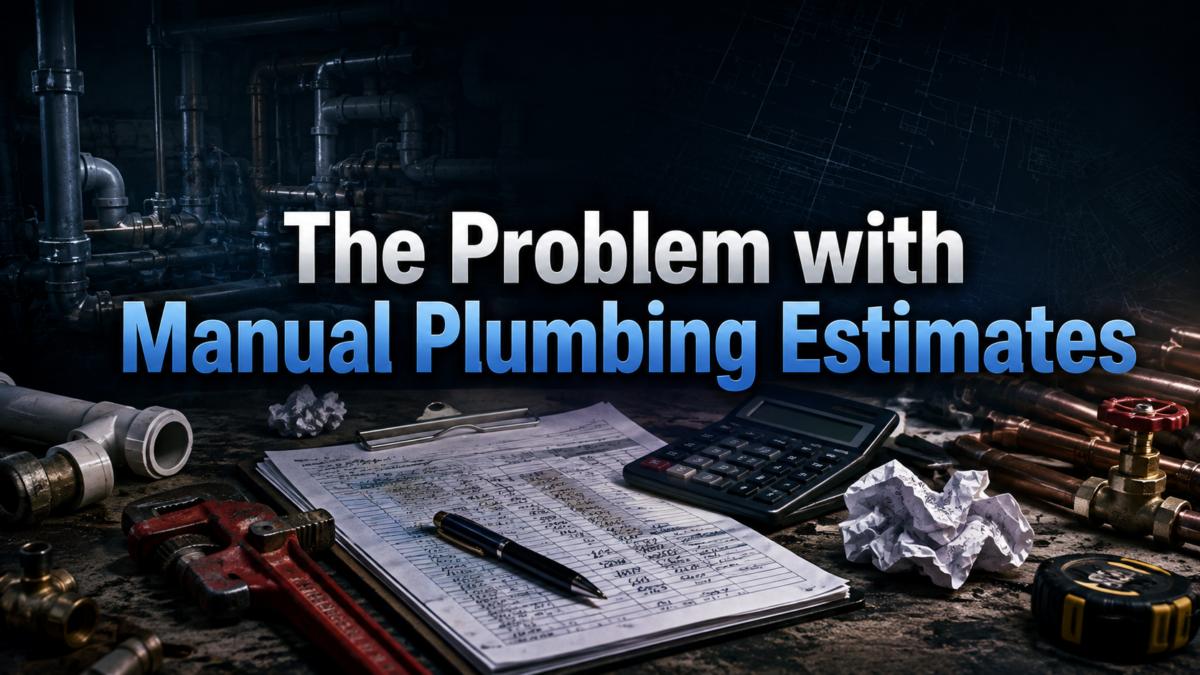
Manual estimating leaves too much room for mistakes and wasted time, which directly affects profitability. Understanding these problems makes it easier to see why software-based solutions have become so popular among plumbing businesses.
Common Errors in Manual Takeoffs
When measurements and material lists are calculated by hand, small mistakes can add up quickly. Missing a fitting, misjudging pipe length, or forgetting a fixture can throw off an entire estimate. These small oversights often lead to underpriced jobs that hurt profit margins later.
Time Wasted on Spreadsheets
Building estimates in spreadsheets means manually updating formulas, copying old templates, and double-checking numbers every single time. This process can take hours for a single bid, time that could otherwise be spent on client calls or actual plumbing work.
Lost Bids Due to Inaccurate Pricing
Clients often compare multiple quotes before choosing a contractor. If pricing looks inconsistent, too high, or unclear, it creates doubt. A poorly presented or inaccurate estimate can cost a business the job even if their actual pricing was fair.
Real-World Cost of Underestimating Jobs
Underestimating a project doesn’t just reduce profit, it can lead to losses. Labor overruns, forgotten materials, or miscalculated markup can turn a seemingly profitable job into a financial setback, especially for smaller plumbing businesses with tight cash flow.
Key Features to Look For
Not all estimating tools are built the same way, so knowing which features matter most helps businesses choose the right fit. The features below are the foundation of any reliable plumbing estimating software.
Digital Takeoff Tools
Digital takeoff tools allow estimators to measure plans and calculate material needs directly from digital blueprints. This removes the need for manual measuring and significantly speeds up the estimating process while improving accuracy.
Material and Labor Cost Databases
A built-in cost database stores updated pricing for pipes, fittings, fixtures, and labor rates. This means estimators don’t have to research prices manually every time, which keeps quotes consistent and saves valuable time.
Markup and Profit Margin Calculators
These calculators automatically apply the correct markup percentage to material and labor costs. This ensures every estimate reflects the business’s desired profit margin without requiring manual math each time.
Proposal and Quote Generation
Once calculations are complete, the software generates a clean, professional proposal ready to send to the client. This creates a polished first impression and speeds up the approval process.
Integration with Accounting Software
Many tools connect directly with accounting platforms like QuickBooks. This allows estimate data to flow smoothly into invoicing and bookkeeping, reducing double data entry and administrative work.
Mobile Accessibility
Mobile access lets estimators create or adjust quotes directly from a job site using a phone or tablet. This flexibility is especially useful for businesses that handle multiple projects across different locations.
Customizable Templates
Templates can be adjusted to match a company’s branding and standard pricing structure. This keeps every proposal looking professional while saving time on formatting for each new estimate.
Reporting and Analytics
Reporting tools give business owners insight into win rates, average job costs, and profit trends. This data helps identify which types of jobs are most profitable and where pricing adjustments may be needed.
Benefits of Using Plumbing Estimating Software
Adopting the right software brings measurable improvements to daily operations and long-term business growth. These benefits explain why so many plumbing companies are shifting away from manual methods.
Increased Accuracy
Automated calculations remove the guesswork from pricing, ensuring materials, labor, and markup are all accounted for correctly. This accuracy protects profit margins on every job.
Time Savings
Estimates that once took hours can now be completed in a fraction of the time. This allows estimators to handle more bids without sacrificing quality or attention to detail.
Winning More Bids
Faster turnaround times combined with professional-looking proposals help businesses respond to clients quickly, which often makes the difference in competitive bidding situations.
Better Cash Flow Management
Accurate estimates reduce the risk of underpricing jobs, which protects cash flow. Businesses can plan expenses and payroll with more confidence when their pricing is reliable.
Professional Client-Facing Proposals
A clean, well-organized proposal builds trust with clients. It shows professionalism and attention to detail, which can influence a client’s decision even before the work begins.
Scalability for Growing Businesses
As a plumbing business takes on more projects, manual estimating becomes harder to manage. Software scales easily, allowing companies to handle a growing workload without adding significant administrative burden.
Types of Plumbing Estimating Software
Different businesses have different needs, and estimating software comes in several formats to match those needs. Understanding these types helps narrow down the best option for a specific business size or workflow.
Cloud-Based vs Desktop Software
Cloud-based software can be accessed from anywhere with an internet connection, making it ideal for teams working across multiple sites. Desktop software, while sometimes more limited in accessibility, can offer strong performance for businesses that primarily work from one location.
All-in-One Business Management Platforms
Some platforms combine estimating with scheduling, invoicing, and customer management. These are best suited for larger plumbing businesses that want one system to handle most of their daily operations.
Dedicated Estimating Tools
These tools focus purely on takeoffs and cost calculations without additional business management features. They work well for companies that already use separate software for scheduling or accounting.
Simple Quoting Apps for Small Contractors
Smaller plumbing businesses or solo contractors often prefer lightweight apps that focus on quick, simple quote creation. These tools are usually easier to learn and more affordable for smaller operations.
Top Plumbing Estimating Software Options
Several established platforms serve the plumbing industry, each with different strengths depending on business size and needs.
| Software | Best For | Key Strength |
| ServiceTitan | Large plumbing businesses | All-in-one management platform |
| Housecall Pro | Small to mid-size teams | Easy scheduling and invoicing |
| Joist | Solo contractors | Simple, fast quote creation |
| PlanSwift | Detailed takeoffs | Accurate digital blueprint measuring |
| STACK | Commercial projects | Cloud-based collaborative takeoffs |
| Clear Estimates | Small businesses | Pre-built pricing templates |
| ConEst | Established contractors | Strong labor and material databases |
ServiceTitan
ServiceTitan is a comprehensive platform built for larger plumbing operations that need scheduling, dispatching, and estimating in one place. It suits businesses managing multiple crews and high job volumes.
Housecall Pro
Housecall Pro offers a simpler interface aimed at small to mid-size plumbing businesses. It combines estimating with basic customer management, making it a practical choice for growing teams.
Joist
Joist is designed for solo contractors or very small teams who need fast, straightforward quotes without complicated setup. It focuses on simplicity over advanced features.
PlanSwift
PlanSwift specializes in digital takeoffs, allowing estimators to measure directly from blueprints. It’s a strong choice for businesses that handle detailed or complex plumbing layouts.
STACK
STACK is a cloud-based takeoff tool that supports team collaboration on larger commercial plumbing projects, making it useful for businesses working with multiple estimators.
Clear Estimates
Clear Estimates provides pre-built pricing templates that simplify the estimating process for smaller businesses that don’t need heavy customization.
ConEst
ConEst offers strong labor and material databases suited for established contractors who need dependable, detailed cost breakdowns for every project.
How to Choose the Right Software for Your Business
Selecting the right tool depends on matching software capabilities with actual business needs rather than choosing based on popularity alone. The following factors help guide that decision.
Business Size Considerations
Larger businesses often need all-in-one platforms, while smaller teams may only require basic quoting tools. Matching software complexity to team size prevents overspending on unnecessary features.
Budget and Pricing Models
Some software charges a monthly subscription, while others require a one-time purchase. Businesses should weigh long-term costs against the features they’ll actually use regularly.
Ease of Use and Learning Curve
Software that’s difficult to learn can slow down a team rather than help it. Choosing a tool with a simple interface reduces training time and encourages faster adoption.
Customer Support and Training
Reliable customer support matters, especially during the initial setup phase. Businesses should check what training resources or support channels are available before committing to a platform.
Integration Needs
If a business already uses accounting or scheduling software, checking compatibility beforehand prevents workflow disruptions and reduces manual data entry later on.
Step-by-Step: How to Create an Estimate Using the Software
Understanding the general estimating workflow helps new users get comfortable with any platform faster.
Setting Up Your Cost Database
Before creating estimates, businesses input their standard material and labor costs into the system. This foundational step ensures every future estimate pulls accurate, up-to-date pricing.
Performing a Digital Takeoff
Using uploaded blueprints, estimators measure pipe lengths and count fixtures directly within the software. This step replaces manual measuring and reduces the chance of missed items.
Adding Labor and Material Costs
Once quantities are calculated, the software automatically applies stored pricing for materials and labor hours, creating a base cost for the project.
Applying Markup
A markup percentage is added to cover overhead and profit. Most software allows this to be adjusted per job type, giving businesses flexibility in their pricing strategy.
Generating and Sending the Proposal
The final step compiles everything into a professional proposal that can be sent directly to the client, often with digital signature options for faster approval.
Common Mistakes to Avoid
Even with good software, certain habits can undermine estimating accuracy if left unchecked.
Not Updating Material Prices Regularly
Material costs fluctuate, and outdated pricing in the system can lead to underpriced jobs. Regular updates keep estimates aligned with current market rates.
Ignoring Labor Burden Costs
Labor burden includes taxes, insurance, and benefits, not just hourly wages. Leaving this out of calculations can quietly eat into profit margins.
Underestimating Overhead
Overhead costs like fuel, equipment, and office expenses need to be factored into markup. Ignoring these leads to estimates that look profitable on paper but aren’t in reality.
Not Following Up on Sent Estimates
Many businesses send a quote and simply wait. Following up shows professionalism and often improves the chances of converting an estimate into a signed job.
Future Trends in Plumbing Estimating Software
The industry continues to evolve, and estimating software is adapting alongside new technology.
AI-Powered Cost Predictions
Artificial intelligence is beginning to help predict costs based on historical job data, allowing for smarter, more accurate pricing suggestions over time.
Integration with IoT and Smart Fixtures
As smart plumbing fixtures become more common, software is starting to account for these specialized components within its cost databases.
Automated Supplier Price Updates
Some platforms are moving toward automatic price syncing with suppliers, reducing the manual work needed to keep cost databases current.
Conclusion
Plumbing estimating software has become an essential tool for contractors who want accurate, professional, and fast estimates. It reduces costly errors, saves valuable time, and helps businesses present themselves professionally to clients.
Choosing the right platform depends on business size, budget, and specific workflow needs, but the overall goal remains the same: making the estimating process simpler and more reliable. Businesses that adopt the right tool early often see stronger profit margins and higher bid success rates over time.
FAQs
Is plumbing estimating software worth it for small businesses?
Yes, even small teams benefit from faster, more accurate estimates that reduce pricing errors and save time on every job.
How much does plumbing estimating software cost?
Pricing varies widely, from affordable monthly plans for small tools to higher-cost subscriptions for full business management platforms.
Can I use general estimating software for plumbing jobs?
General tools can work, but plumbing-specific software offers built-in pricing databases and features tailored to the trade, making it more efficient.
Does it work for both residential and commercial plumbing?
Most platforms support both, though some tools are better suited for larger commercial projects while others focus on residential work.
Related Articles
Software Technolotal: The Complete Guide to Understanding Software Technology
Software Teamcenter: A Complete Guide to Product Lifecycle Management
Software Gfxpixelment: A Complete Guide to Pixel-Level Design Software
FORScan Software: A Complete Beginner-Friendly Guide
Details of GDTJ45 Builder Software: Is It Real or Just Online Hype?


