

Rippling HR Software Market Share 2026 : Complete Market Analysis
July 4, 2026
Financial Recovery Technologies Software Engineer:
July 4, 2026
Introduction to Irrigation Design Software
Irrigation design software is a digital solution that helps professionals design efficient watering systems for farms, gardens, and landscapes. It automates hydraulic calculations, pipe sizing, sprinkler placement, and system layouts, reducing the need for manual work.
The software improves design accuracy, saves time, and minimizes costly errors during installation. It also generates detailed plans and reports for better project management. As water conservation becomes more important, irrigation design software has become an essential tool for modern irrigation planning.
What Is Irrigation Design Software?
Irrigation design software is a specialized program built to assist engineers, landscapers, and farmers in creating accurate irrigation plans. It calculates water flow, pressure, and pipe sizing while allowing users to draw sprinkler or drip layouts on a digital map. This removes guesswork and reduces the chances of costly design mistakes.
Why Irrigation Design Matters
Proper irrigation design ensures that every part of a field or garden receives the right amount of water without waste. Poorly planned systems often lead to dry patches, overwatering, or damaged pipes due to incorrect pressure calculations. Using irrigation design software helps avoid these issues from the very beginning of a project.
Who Uses This Software
Irrigation design software is used by a wide range of professionals including agricultural engineers, landscape architects, irrigation contractors, and even large-scale farm owners. Each group uses the tool differently, but the shared goal remains the same: designing a system that delivers water efficiently and reliably.
Brief History of Irrigation Design Tools
Before digital tools existed, irrigation systems were designed using manual calculations, paper sketches, and physical measurements. This process was time-consuming and prone to human error. Over the years, software developers introduced digital solutions that automated calculations and allowed for faster, more accurate irrigation planning.
Importance of Proper Irrigation Design
Good irrigation design directly affects water usage, plant health, and overall project cost. When irrigation design software is used correctly, it becomes easier to build systems that are both efficient and sustainable.
Water Conservation Benefits
One of the biggest advantages of using irrigation design software is water conservation. The software calculates exact water requirements based on soil type, plant needs, and climate conditions, which prevents unnecessary water wastage across the entire system.
Cost Savings on Materials and Labor
Accurate designs mean fewer material errors and less rework during installation. Contractors can order the exact number of pipes, valves, and sprinklers needed, which reduces material waste and shortens the time spent on physical labor at the job site.
Preventing Under and Over Watering
Irrigation design software uses precise hydraulic data to ensure that every zone receives the correct water pressure and volume. This balance prevents both underwatering, which stresses plants, and overwatering, which can cause root rot and soil erosion.
Improving Crop Yield and Landscape Health
Farms and gardens that use well-designed irrigation systems tend to show healthier growth patterns. When water distribution is even and consistent, plants and crops receive steady nutrition, which often leads to improved yield and stronger landscapes.
Compliance with Water Regulations
Many regions have strict water usage regulations, especially in areas facing drought conditions. Irrigation design software helps professionals stay compliant by generating reports and calculations that match local water conservation standards.
Key Features of Irrigation Design Software
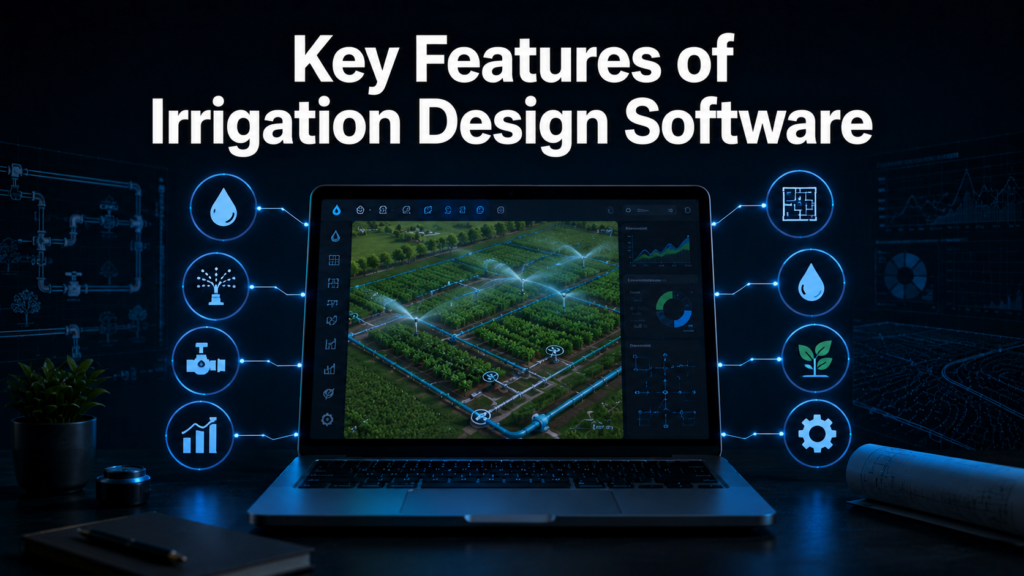
Modern irrigation design software comes packed with features that simplify complex engineering tasks. These features work together to create a complete and functional irrigation plan.
Hydraulic Calculations
The core function of irrigation design software is performing hydraulic calculations such as flow rate, pressure loss, and pipe sizing. These calculations ensure that water reaches every sprinkler or emitter with the correct pressure needed for proper operation.
Sprinkler and Drip Layout Design
Users can place sprinkler heads or drip lines directly on a digital site map. The software automatically checks spacing and coverage to make sure there are no dry spots or overlapping zones that waste water.
3D and 2D Mapping and Visualization
Many programs offer both 2D blueprints and 3D visual models of the irrigation system. This visual representation helps clients and contractors understand exactly how the system will look and function before construction begins.
Material and Cost Estimation
Irrigation design software often includes a built-in estimator that calculates the total cost of pipes, fittings, sprinklers, and other materials. This feature helps contractors prepare accurate quotes for clients.
Weather and Soil Data Integration
Some advanced tools connect with local weather databases and soil sensors to adjust irrigation schedules automatically. This integration allows the system to respond to real-time environmental conditions rather than relying on fixed schedules.
Automation and Smart Controller Compatibility
Many modern irrigation design software programs are compatible with smart controllers, allowing users to automate watering schedules based on the data generated during the design phase.
Reporting and Documentation Tools
Once a design is complete, the software generates detailed reports including pipe layouts, material lists, and hydraulic calculations. These documents are useful for permits, client presentations, and future maintenance work.
Types of Irrigation Systems Supported
Irrigation design software is flexible enough to support multiple types of irrigation systems, each suited for different landscapes and agricultural needs.
Sprinkler Systems
Sprinkler systems are commonly used in lawns, parks, and open fields. The software helps determine the correct spacing and pressure needed to cover large areas evenly.
Drip Irrigation Systems
Drip systems deliver water directly to plant roots through small tubes and emitters. Irrigation design software calculates emitter flow rates and spacing to ensure efficient water delivery with minimal waste.
Center Pivot Systems
Used mainly in large agricultural fields, center pivot systems rotate around a central point to water crops. The software helps design the pivot path and calculate water distribution across the entire field.
Subsurface Irrigation
Subsurface systems deliver water below the soil surface, reducing evaporation loss. Irrigation design software calculates the depth and spacing required for these underground systems to function properly.
Micro-Irrigation
Micro-irrigation is often used in gardens and nurseries where precise, low-volume watering is needed. The software helps design small-scale systems that target individual plants or small groups of plants.
Popular Irrigation Design Software Options
There are several well-known irrigation design software programs available today, each offering different features suited to specific project types.
| Software Name | Best For | Key Strength |
| Rain Bird IQ / RB Design | Landscape and turf projects | Sprinkler layout automation |
| Hunter Hydraulics | Hydraulic calculations | Accurate pressure analysis |
| WinFlow | Pipe network design | Flow simulation |
| iP Pro | Commercial landscaping | Smart controller integration |
| ROTOplan | Agricultural fields | Rotor sprinkler planning |
| Toro Design Tools | Golf courses and estates | Large-area coverage design |
| AutoCAD with Plugins | Custom engineering projects | Full design flexibility |
Rain Bird IQ and RB Design
Rain Bird offers tools that focus on landscape irrigation, allowing users to design sprinkler layouts with automated spacing suggestions and material lists.
Hunter Hydraulics
Hunter Hydraulics is known for its strong hydraulic calculation engine, making it a preferred choice for professionals who need highly accurate pressure and flow data.
WinFlow
WinFlow specializes in pipe network simulation, helping engineers understand how water moves through complex irrigation systems before installation begins.
iP Pro
iP Pro combines irrigation design with smart controller compatibility, making it a good choice for commercial properties that require automated watering schedules.
ROTOplan
ROTOplan is widely used in agricultural settings, particularly for designing rotor-based sprinkler systems across large open fields.
Toro Design Tools
Toro’s software is popular among golf course managers and large estate owners who need precise coverage across expansive landscapes.
AutoCAD with Irrigation Plugins
AutoCAD, when combined with irrigation-specific plugins, offers maximum design flexibility for engineers working on custom or highly technical projects.
How to Choose the Right Irrigation Design Software
Selecting the right irrigation design software depends on the size of the project, budget, and technical requirements of the user.
- Assessing Project Size and Needs
- Smaller residential projects may only need basic layout tools, while large agricultural or commercial projects require advanced hydraulic modeling and reporting capabilities.
- Budget Considerations
- Some irrigation design software options are free or low-cost, while others require a subscription or one-time licensing fee. Users should weigh the software’s features against their available budget before committing.
- Ease of Use and Learning Curve
- Beginners may prefer software with simple drag-and-drop tools, while experienced engineers might choose programs that offer deeper customization, even if they require more time to learn.
- Compatibility with Existing Tools
- It is important to check whether the irrigation design software integrates well with existing CAD or GIS systems already used by a company, as this can save time during the design process.
- Customer Support and Community Resources
- Software with active customer support and online communities can be extremely helpful, especially when troubleshooting technical issues or learning new features.
Step-by-Step Guide to Using Irrigation Design Software
Using irrigation design software generally follows a structured process from data collection to final documentation.
Site Survey and Data Collection
The first step involves gathering site measurements, soil type, water source details, and elevation data, all of which are entered into the software before design work begins.
Setting Up the Project
Once data is collected, users create a new project file in the software and input basic parameters such as area size, water pressure, and available flow rate.
Designing Zones and Layouts
Users then divide the area into irrigation zones and place sprinklers, drip lines, or emitters according to the specific watering needs of each zone.
Running Hydraulic Calculations
After the layout is complete, the software runs hydraulic calculations to confirm that pressure and flow rates are sufficient for every component in the system.
Generating Material Lists and Reports
The software then compiles a full material list along with technical reports that can be used for ordering supplies or submitting permits.
Exporting and Sharing Designs
Finally, the completed design can be exported as a PDF or CAD file, making it easy to share with clients, contractors, or regulatory authorities.
Benefits of Using Irrigation Design Software
Irrigation design software offers several advantages that improve both the design process and the final outcome of irrigation projects.
Accuracy and Precision
Automated calculations reduce human error, ensuring that every part of the irrigation system functions as intended once installed.
Time Efficiency
Tasks that once took days using manual methods can now be completed in a matter of hours, allowing professionals to handle more projects in less time.
Professional Quality Output
The reports and visual designs generated by irrigation design software often look more polished and professional compared to hand-drawn plans.
Easier Client Communication
Visual layouts and 3D models make it easier for clients to understand the proposed system, leading to fewer misunderstandings during the project.
Scalability for Large Projects
Whether designing a small garden or a large agricultural field, irrigation design software can scale to handle projects of almost any size.
Common Challenges and How to Overcome Them
While irrigation design software offers many benefits, users may face certain challenges during the learning and implementation process.
Learning Curve for Beginners
New users often find advanced features overwhelming at first. Taking advantage of tutorials and practice projects can help build confidence over time.
Software Costs and Licensing
Some professional-grade software can be expensive, especially for small businesses. Comparing free trials and mid-tier options can help find a suitable balance between cost and functionality.
Data Accuracy Issues
Incorrect input data, such as wrong soil type or elevation, can lead to flawed designs. Double-checking field measurements before entering them into the software helps avoid this problem.
Integration with Field Equipment
Not all irrigation design software works smoothly with every brand of field equipment. Checking compatibility before purchasing hardware can prevent connectivity issues later.
Future Trends in Irrigation Design Software
As technology continues to evolve, irrigation design software is expected to become even smarter and more connected.
AI and Machine Learning Integration
Future versions of irrigation design software may use artificial intelligence to predict water needs based on historical data, weather patterns, and plant growth stages.
Cloud Based and Mobile Design Tools
Cloud-based platforms are making it possible for professionals to design and edit irrigation systems directly from mobile devices, increasing flexibility for on-site adjustments.
IoT and Smart Irrigation Connectivity
Internet of Things technology is allowing irrigation design software to connect directly with field sensors, enabling real-time monitoring and automatic adjustments to watering schedules.
Sustainability Focused Design Features
As water scarcity becomes a growing concern worldwide, software developers are adding more sustainability-focused features that help reduce overall water consumption.
Tips for Maximizing Software Efficiency
Getting the most out of irrigation design software requires more than just basic usage; it involves ongoing learning and smart practices.
Regular Software Updates
Keeping the software updated ensures access to the latest features, bug fixes, and security improvements that enhance overall performance.
Training and Certification Programs
Many software providers offer certification courses that help users master advanced features and improve their overall design accuracy.
Using Templates and Presets
Templates and presets can speed up the design process significantly, especially for professionals who work on similar types of projects repeatedly.
Collaborating with Teams Digitally
Cloud-based irrigation design software often allows multiple team members to work on the same project simultaneously, improving collaboration and reducing project turnaround time.
Frequently Asked Questions
Is irrigation design software free?
Some basic irrigation design software options are available for free, while more advanced tools with hydraulic modeling and reporting features usually require a paid license.
Can beginners use irrigation design software without training?
Beginners can start with simple projects, but formal training or tutorials are recommended for handling more complex hydraulic calculations and large-scale designs.
Which software is best for small gardens versus large farms?
Smaller gardens generally work well with basic layout tools like Rain Bird IQ, while large farms often benefit from advanced platforms like ROTOplan or WinFlow that handle complex field calculations.
Does irrigation design software work offline?
Many traditional programs work offline once installed, though newer cloud-based platforms typically require an internet connection for full functionality.
Conclusion
Irrigation design software has transformed the way professionals plan and build watering systems, making the process faster, more accurate, and more cost-effective. From small residential gardens to large agricultural fields, this technology continues to play a vital role in promoting efficient water use and healthier landscapes. As new trends like AI integration and smart connectivity emerge, irrigation design software will likely become even more essential for professionals aiming to deliver sustainable and reliable irrigation solutions.
Related Articles
What Is the Easiest 3D Modeling Software for Beginners in 2026?
Bus Management Software: Features, Benefits, Types, Working Process, and Complete Guide
How to Actually Create Software: Step-by-Step Beginner to Advanced Guide
Synaptica Robotics Explained: Complete Informative Guide to Meaning, Technology, and Future
Droven IO Cybersecurity Updates: Latest Threats, Trends, and Security Strategies in 2026


