
Android Multi Tool Software: A Complete Guide
August 10, 2026
Redragon Software 1.0.58: Complete Download, Installation & Usage Guide
August 10, 2026
Introduction
Great Plains Accounting Software is often mentioned when people talk about the roots of modern business accounting tools. It was one of the earliest programs designed to help companies manage their finances without relying on manual bookkeeping methods. Many businesses still ask questions about this software because its legacy continues through Microsoft Dynamics GP, which is used by thousands of organizations worldwide.
This guide is written for business owners who are exploring accounting software options, accountants who want to understand the platform’s background, and IT teams responsible for managing financial systems. By the end of this article, you will have a clear picture of what Great Plains Accounting Software does, how it evolved, and what to expect if your business decides to use it.
History and Background
The story of Great Plains Accounting Software begins in a small town in North Dakota and stretches all the way to a major acquisition by one of the world’s biggest technology companies. Understanding this background helps explain why the software behaves the way it does today and why so many businesses still trust it.
Origins in Fargo, North Dakota
Great Plains Software was founded in 1981 in Fargo, North Dakota, by a team led by Joseph Larson. Doug Burgum joined the company as a shareholder in 1983 and later bought out the other investors to become the owner and president.
From the very beginning, the goal of the company was simple: build accounting software that small and medium-sized businesses could actually understand and use without needing a finance degree.
Early Growth and the DOS Version
During the mid-1980s, the DOS version of Great Plains software started gaining real popularity among small business owners. This version handled basic accounting tasks such as tracking expenses and managing ledgers, which was a huge improvement over paper-based systems.
As more businesses adopted computers for daily operations, Great Plains positioned itself as a reliable and affordable choice.
Going Public with an IPO
In 1997, Great Plains Software launched an initial public offering, allowing the public to buy shares in the company starting at sixteen dollars each. The stock price rose quickly on the first day of trading, which showed strong investor confidence in the company’s future. This step helped the company raise capital to expand its product line and reach more customers across different industries.
Microsoft’s Acquisition in 2001
In 2001, Microsoft recognized the potential of Great Plains Software and acquired the company, marking a major turning point in its history. This acquisition gave Microsoft a strong entry point into the enterprise resource planning market, an area it wanted to compete in against other major software providers. After the deal, Great Plains Accounting Software became part of Microsoft’s growing suite of business applications.
From Great Plains to Microsoft Dynamics GP
Following the acquisition, the product was first renamed Microsoft Great Plains and later became part of the Microsoft Dynamics family, known today as Microsoft Dynamics GP.
This rebranding reflected Microsoft’s strategy of grouping its business software under one recognizable name while keeping the original accounting strengths that made Great Plains popular in the first place.
What Great Plains Software Actually Does
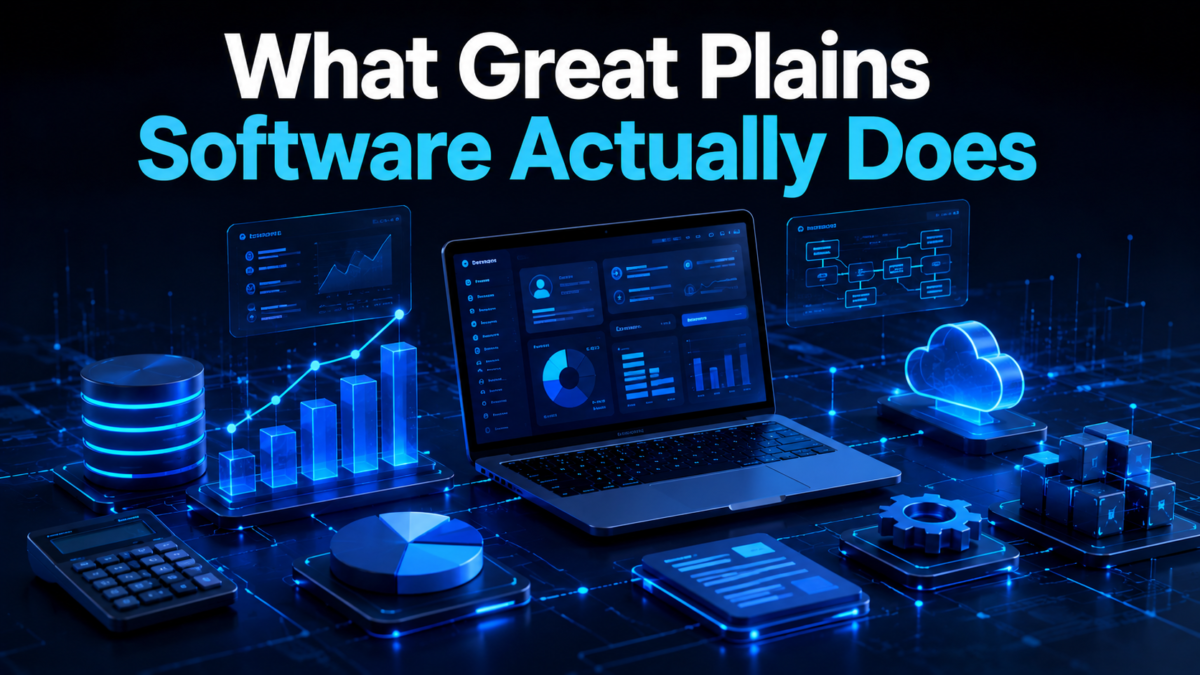
At its core, Great Plains Accounting Software was built to simplify the way businesses handle money. It started as a straightforward bookkeeping tool and gradually expanded into something much bigger, covering nearly every financial process a growing company might need.
From Basic Bookkeeping to Full Accounting
In its earliest form, the software focused on essential accounting functions like recording transactions, tracking accounts, and generating simple financial reports.
Business owners no longer needed to rely entirely on paper ledgers or manual calculations, which reduced errors and saved significant time during monthly closing periods.
Evolution into a Complete ERP System
As business needs grew more complex, Great Plains expanded beyond basic accounting into a full enterprise resource planning system.
This meant it could now handle inventory, manufacturing, and supply chain tasks alongside financial management, giving companies a single platform to manage multiple departments instead of juggling separate tools.
Who the Software Was Built For
Great Plains Accounting Software was primarily designed for small and mid-sized businesses that needed professional-grade financial tools without the complexity or cost of enterprise-level systems built for massive corporations.
This made it especially popular among growing companies that wanted room to scale without switching software every few years.
Key Features and Modules
Great Plains Accounting Software is built around a modular structure, meaning businesses can use only the parts they need rather than being forced into a one-size-fits-all package. Below is a breakdown of the core modules that make up the system.
| Module | What It Does |
| General Ledger | Records and organizes all financial transactions in one central place |
| Accounts Payable | Manages money owed to vendors and suppliers |
| Accounts Receivable | Tracks payments owed by customers |
| Cash Flow Management | Monitors incoming and outgoing cash across the business |
| Inventory Management | Keeps track of stock levels and product movement |
| Fixed Assets | Manages long-term assets such as equipment and property |
| Payroll | Handles employee payments, direct deposit, and time tracking |
| Reporting Tools | Generates financial statements and custom reports |
| Project Management | Tracks budgets, timelines, and resources for individual projects |
| Manufacturing and Supply Chain | Supports production planning and material tracking |
| Human Resources | Manages employee records and related administrative tasks |
General Ledger and Financial Core
The general ledger acts as the backbone of Great Plains Accounting Software, recording every transaction that flows through the business. Because all financial data connects back to this central ledger, business owners get a single, reliable source of truth when reviewing their company’s financial health.
Payroll and Human Resources Tools
One standout feature historically included at no extra cost was the payroll module, which covered essential functions such as payroll processing, employee record management, direct deposit, and tracking of vacation and sick time.
This meant businesses did not need to purchase separate payroll software, which kept operational costs lower.
Inventory and Supply Chain Support
For businesses dealing with physical products, the inventory and supply chain features allow tracking of stock levels, orders, and production schedules.
This became especially valuable as the software evolved into a broader ERP platform, giving manufacturing and retail companies tools to manage their operations alongside their finances.
How It Evolved Into an ERP System
Great Plains did not stay a simple accounting tool for long. Over the years, Microsoft continued adding capabilities that transformed it into a genuine enterprise resource planning solution capable of supporting entire business operations.
Adding Business Intelligence
Modern versions of the software introduced business intelligence and reporting capabilities that give companies real-time insights into their performance.
Instead of waiting for month-end reports, decision-makers could pull up current data whenever needed, which improved the speed and accuracy of business decisions.
Integration with CRM and Other Tools
As the platform matured, it gained the ability to integrate with customer relationship management systems and various third-party applications.
This allowed businesses to connect their sales, service, and financial data without manually transferring information between separate systems, saving time and reducing data entry mistakes.
Industries That Use It
Great Plains Accounting Software has found a home across a wide range of industries because of its flexibility and modular design. Understanding which sectors rely on it can help you judge whether it fits your own business type.
Manufacturing and Retail Businesses
Manufacturing companies use the software to manage production schedules, raw materials, and finished goods inventory alongside their core accounting needs.
Retail and wholesale businesses similarly benefit from its inventory tracking features, which help them manage stock across multiple locations while keeping financial records accurate.
Healthcare, Education, and Construction
Educational institutions and healthcare organizations often choose Great Plains Accounting Software because of its ability to handle complex budgeting and reporting requirements that come with grant funding or regulatory compliance.
Construction companies also rely on it to track project costs and timelines, since the project management module fits naturally with job-based billing.
Benefits of Using Great Plains or Dynamics GP
Businesses that adopt this software often highlight a few consistent advantages that make it worth considering, even decades after its original release.
A User-Friendly Interface
Despite its powerful backend capabilities, the software was designed with an interface that does not overwhelm users who are not accounting experts.
This balance between simplicity and depth is part of why it maintained popularity for so many years across different types of businesses.
Scalability for Growing Companies
Because of its modular structure, businesses can start with just the modules they need and add more as they grow. This scalability means a small company can begin with basic accounting functions and later expand into full ERP capabilities without switching to an entirely new system.
Real-Time Financial Insights
With modern reporting tools built into the platform, business owners and finance teams can access real-time data rather than relying on outdated reports. This helps companies react quickly to cash flow issues, spending trends, or unexpected financial changes.
Technical Details
For those interested in the technical side, Great Plains Accounting Software has some unique characteristics that set it apart from many competitors of its time and even today.
Built Using the Dexterity Programming Language
The software was developed using Dexterity, a programming language created specifically for building this type of business application. This custom approach allowed the original developers to tailor the software’s performance and features specifically around accounting and business management needs.
Multi-User and Microcomputer Design
One of its most notable early achievements was being designed as a multi-user system that could run on microcomputers, which was uncommon for accounting software at the time.
This meant multiple employees could access and update financial data simultaneously, a feature that seems standard now but was groundbreaking decades ago.
Pricing Overview
Pricing for Great Plains Accounting Software, now sold as Microsoft Dynamics GP, generally depends on several factors rather than a single flat rate.
Businesses typically pay based on the number of users, the specific modules selected, and whether the deployment is on-premises or cloud-hosted.
Factors That Affect Cost
Companies should expect pricing to shift depending on how many employees need system access and which modules, such as manufacturing or advanced reporting, are included in their package.
Businesses with more complex needs, like multi-location inventory tracking, generally pay more than those using only basic accounting functions.
Current Status and End-of-Life Update
As of recent announcements, Microsoft has confirmed that new licenses for Dynamics GP will no longer be sold after April 2025, which is an important detail for anyone currently evaluating the software. However, Microsoft’s official roadmap indicates that enhancements and support will continue beyond 2028, giving existing users a reasonable transition window.
What This Means for Current Users
If your business already uses Great Plains Accounting Software, you can continue operating normally for the foreseeable future while planning a longer-term strategy. Companies considering new implementations, however, should factor in this timeline before committing to a fresh purchase.
Alternatives to Consider
Given the end-of-life announcement, many businesses are now researching alternatives that offer similar or improved capabilities with longer-term support guarantees.
Microsoft Dynamics 365 Business Central
Microsoft positions Dynamics 365 Business Central as the natural successor to Dynamics GP, offering cloud-based accounting and ERP functionality with ongoing updates.
Businesses currently using Great Plains often consider this option first since it comes from the same company and supports similar workflows.
Other Modern ERP Platforms
Beyond Microsoft’s own ecosystem, businesses can also explore other established ERP and accounting platforms that compete directly with Dynamics GP in terms of features and pricing.
The right choice ultimately depends on your industry, company size, and specific reporting needs, so comparing a few options before switching is generally a smart move.
Frequently Asked Questions
Is Great Plains Accounting Software still supported?
Yes, Microsoft has confirmed that support and enhancements for Dynamics GP will continue beyond 2028, even though new license sales have stopped.
What is the difference between Great Plains and Dynamics GP?
They are essentially the same product; Great Plains was the original name before Microsoft rebranded it first as Microsoft Great Plains and later as Microsoft Dynamics GP.
Is Great Plains Accounting Software cloud-based?
Newer versions offer cloud hosting and mobile app access, though the software also supports traditional on-premises deployment.
Who should still consider using it today?
Businesses already invested in the Microsoft ecosystem or those needing a proven, modular accounting system may still find value, though new adopters should weigh the end-of-life timeline carefully.
Conclusion
Great Plains Accounting Software has a long and impressive history, evolving from a simple DOS-based accounting tool in the 1980s into a full enterprise resource planning system now known as Microsoft Dynamics GP. While its future as a standalone product is winding down, its influence on modern business software remains significant, and current users still have years of support ahead of them.
For businesses deciding on their next accounting solution, understanding this history and comparing it against newer alternatives like Dynamics 365 Business Central will lead to a more informed and confident decision.
Related Articles
Free Yaesu Remote Software FT-991A: Complete Guide
Free Yaesu Remote Software FT-991A: Complete Guide
Shepherds Software: A Complete Guide for Ministries and Churches
Oura Senior Software Engineer Interview Questions: A Complete Preparation Guide


