
How to Classify Software Application Components: Complete Guide
July 20, 2026
Golf Simulator Software: The Complete Guide
July 20, 2026
Managing rental properties without the right tools can quickly become overwhelming, especially when you are handling multiple units, tenants, and maintenance requests at the same time. The best property management software solves this problem by bringing rent collection, tenant screening, accounting, and communication into one organized system.
This guide walks you through everything you need to know, from must-have features to detailed reviews of the top platforms available today, so you can make a confident and informed decision for your property business.
What is Property Management Software?
Property management software is a digital tool that helps landlords and managers handle daily rental tasks in one place. It replaces spreadsheets, paper files, and scattered communication with a single organized system.
Simple Definition
At its core, this software is built to automate the repetitive work involved in running rental properties. Instead of manually tracking rent payments or lease dates in separate documents, everything is stored and updated automatically within the platform. This reduces the chances of missed payments, expired leases, or lost paperwork.
How It Works
Most modern platforms operate on cloud-based systems, meaning you can access your property data from any device with internet access. Some older or highly specialized systems still offer on-premise installation, but cloud-based tools have become the standard because they allow real-time updates and remote access for both managers and tenants.
Who Uses It
Property management software is used by a wide range of people, including individual landlords with just one or two units, professional property managers overseeing large portfolios, homeowners associations, and commercial real estate firms. Each user type may need different features, which is why the software market offers both simple and highly advanced solutions.
Why You Need Property Management Software
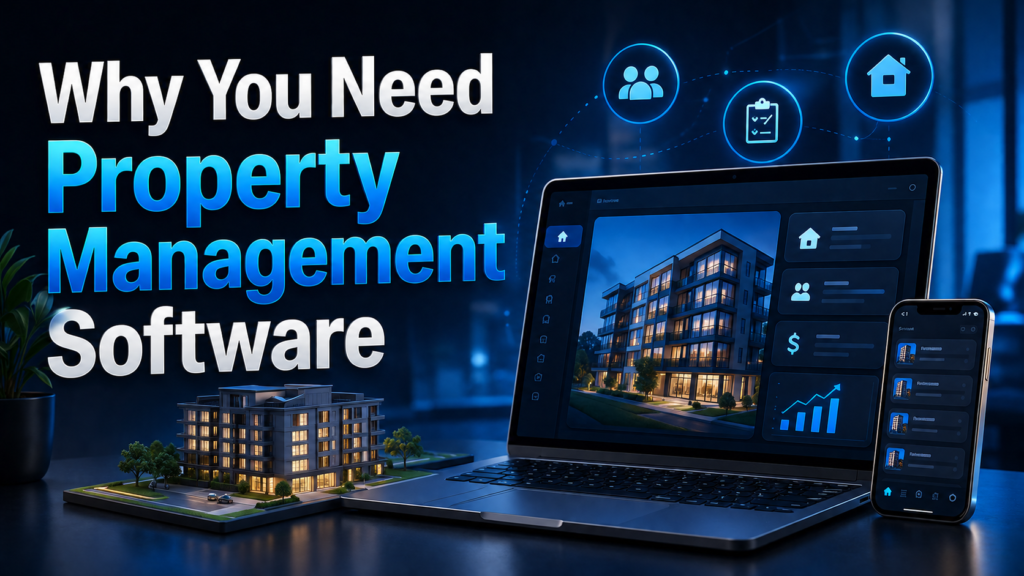
Running rental properties manually creates unnecessary stress and increases the risk of costly mistakes. The right software removes this burden by automating routine tasks and keeping everything organized in one dashboard.
Saves Time on Daily Tasks
Instead of spending hours each week chasing rent payments or responding to maintenance requests individually, automated systems handle reminders, notifications, and scheduling for you. This frees up time that can be redirected toward growing your property portfolio or improving tenant relationships.
Reduces Human Errors
Manual record-keeping is prone to mistakes such as double bookings, missed payments, or incorrect lease terms. Software systems reduce these errors by using automated calculations and standardized templates for every transaction and document.
Improves Tenant Communication
Many platforms include built-in messaging systems, so tenants can report issues or ask questions directly through the app. This creates a documented history of communication, which can be useful in case of disputes.
Keeps Financial Records Organized
Accounting features allow you to track income, expenses, and profits without needing separate bookkeeping software. Reports can usually be generated instantly, making tax season significantly easier to manage.
Key Features to Look For
Before choosing any platform, it helps to understand which features actually matter for your specific property type and portfolio size. Below is a breakdown of the most important functions offered by leading software providers.
| Feature | Purpose |
| Online Rent Collection | Allows tenants to pay rent digitally through cards, bank transfers, or apps |
| Tenant Screening | Checks credit history, background, and rental history before approval |
| Maintenance Tracking | Lets tenants submit repair requests and managers assign tasks |
| Accounting Tools | Tracks income, expenses, and generates financial reports |
| Lease Management | Stores lease agreements and sends renewal reminders |
| Document Storage | Keeps contracts, receipts, and legal papers in one secure place |
| Mobile App Access | Allows management from a phone or tablet |
| Vacancy Listings | Publishes available units to rental listing sites automatically |
These features form the foundation of most platforms, though some tools go further by offering marketing automation, insurance integrations, or advanced analytics dashboards.
Types of Property Management Software
Not every property manager needs the same type of software, since the requirements of a residential landlord differ greatly from those of a commercial property firm or homeowners association.
- Residential Property Software
- This type is designed for apartments, single-family homes, and small multi-unit buildings. It typically focuses on tenant communication, rent collection, and basic maintenance tracking, making it ideal for individual landlords or small management companies.
- Commercial Property Software
- Commercial platforms are built to handle more complex lease structures, such as square-footage-based billing and multi-tenant office spaces. These systems often include advanced financial reporting suited for larger, more complicated portfolios.
- HOA and Community Software
- Homeowners associations require tools that manage community fees, shared amenities, and resident communication rather than individual rent payments. This software often includes voting systems and community announcement boards.
Best Property Management Software (Detailed Reviews)
Choosing the best property management software depends on your portfolio size, budget, and specific needs. Below is a detailed look at the most trusted platforms currently available in the market.
AppFolio
AppFolio is widely recommended for mid-sized to large property portfolios because of its strong accounting tools and scalability. It offers tenant screening, online payments, and maintenance tracking within a clean, user-friendly dashboard. Pricing is generally higher than competitors, making it best suited for growing property management businesses rather than single-property landlords.
Buildium
Buildium is a popular choice among small to mid-sized landlords and HOAs due to its balance of affordability and functionality. It includes lease tracking, tenant communication, and financial reporting tools that are easy to learn even for beginners. Many users appreciate its straightforward pricing structure and reliable customer support.
Yardi Breeze
Yardi Breeze is designed to scale alongside growing residential and commercial portfolios, offering flexibility as your business expands. It provides accounting, marketing, and reporting tools within a single platform. This makes it a strong option for property managers who expect significant growth in the near future.
Propertyware
Propertyware specializes in single-family rental management, offering tools tailored specifically to that niche. It includes customizable workflows and detailed reporting features that larger, more generalized platforms may not offer. This makes it particularly useful for managers focused exclusively on single-family homes.
TenantCloud
TenantCloud is a budget-friendly option that still offers essential features like rent collection, maintenance requests, and tenant screening. It is well suited for landlords managing a small number of properties who want functionality without a large financial commitment. The free tier makes it an accessible starting point for new landlords.
RentRedi
RentRedi focuses on simplicity, offering a mobile-first experience that appeals to landlords who prefer managing properties directly from their phones. It includes essential tools like rent collection and maintenance tracking without overwhelming users with unnecessary complexity. This makes it a good fit for DIY landlords managing a handful of units.
Rentec Direct
Rentec Direct is known for its strong accounting capabilities, making it a solid choice for mid-sized portfolios that require detailed financial tracking. It also includes tenant screening and marketing tools, giving it a well-rounded feature set. Customer support is frequently praised for being responsive and knowledgeable.
DoorLoop
DoorLoop has gained popularity for its modern, intuitive interface combined with an extensive feature set. It offers accounting, communication, and leasing tools within a single, all-in-one platform. This makes it appealing to property managers who want comprehensive functionality without switching between multiple tools.
Innago
Innago stands out because it offers a free plan for landlords, covering basic functions like rent collection and lease management. While it lacks some of the advanced features found in paid platforms, it remains a solid choice for landlords just starting out. Its simplicity makes onboarding fast and easy.
MRI Software
MRI Software is built for enterprise-level operations, making it best suited for large commercial or residential portfolios with complex needs. It offers advanced analytics, customizable workflows, and integrations with other enterprise systems. This makes it less suitable for small landlords but highly valuable for large organizations.
Comparison Table
The table below summarizes the core differences between the platforms discussed above, helping you quickly compare your options.
| Software | Best For | Pricing Level | Free Trial |
| AppFolio | Mid-to-large portfolios | High | Yes |
| Buildium | Small-to-mid landlords/HOAs | Medium | Yes |
| Yardi Breeze | Scaling portfolios | Medium-High | Yes |
| Propertyware | Single-family rentals | Medium | Yes |
| TenantCloud | Small landlords | Low | Yes (Free tier) |
| RentRedi | DIY landlords | Low-Medium | Yes |
| Rentec Direct | Accounting-focused users | Medium | Yes |
| DoorLoop | All-in-one management | Medium-High | Yes |
| Innago | Budget landlords | Free-Low | Yes |
| MRI Software | Enterprise portfolios | High | Contact Sales |
How to Choose the Right Software
Selecting the best property management software requires evaluating your specific situation rather than simply picking the most popular option. Several factors should guide your final decision.
Portfolio Size
The number of units you manage plays a major role in determining which software fits best, since tools designed for large portfolios often include unnecessary complexity for small landlords. Matching software scale to your actual needs prevents overspending on unused features.
Budget and Pricing Model
Some platforms charge per unit, while others offer flat monthly rates or free tiers with limited functionality. Understanding these pricing structures helps avoid unexpected costs as your portfolio grows over time.
Property Type and Scalability
Residential, commercial, and HOA properties each require different tools, so choosing software aligned with your property type ensures better long-term usability. It is also wise to select a platform that can scale alongside your business as it expands.
Pricing Overview
Pricing varies significantly across platforms, ranging from free basic plans to enterprise-level packages that require direct sales consultations. Many providers use a per-unit monthly pricing model, meaning costs increase as your portfolio grows.
It is important to review whether premium features, such as advanced reporting or marketing tools, are included in the base price or charged separately, since hidden fees can significantly affect your overall budget over time.
Pros and Cons of Using Property Management Software
Understanding both the advantages and limitations of these tools helps set realistic expectations before making a purchase decision.
Pros:
- Reduces manual workload and administrative errors
- Improves communication between landlords and tenants
- Centralizes financial and legal documentation
- Speeds up rent collection through digital payments
Cons:
- Monthly or per-unit costs can add up for larger portfolios
- Learning curve for less tech-savvy users
- Some platforms require long-term contracts
- Customer support quality varies between providers
Common Mistakes to Avoid
Many landlords rush into choosing software without considering long-term needs, which can lead to switching platforms later at a significant cost. Relying solely on price without checking feature compatibility often results in missing essential tools.
Skipping free trials before committing to a paid plan is another common mistake, as trials allow you to test usability firsthand. Ignoring customer reviews can also lead to unexpected frustrations with support responsiveness or hidden limitations.
Frequently Asked Questions
Is property management software worth it for small landlords?
Yes, even landlords with a single property benefit from automated rent collection and organized record-keeping.
What is the cheapest option available?
Innago and TenantCloud offer free or low-cost plans suitable for landlords just starting out.
Can I switch software later without losing data?
Most platforms allow data export, though the process may vary depending on the provider and plan type.
Do these tools support multiple properties?
Yes, all major platforms discussed here support multiple units or properties under one account.
Is training required to use this software?
Most platforms are designed to be user-friendly, though larger enterprise tools may require initial onboarding sessions.
Conclusion
Choosing the best property management software ultimately comes down to matching the platform’s strengths with your specific portfolio size, budget, and property type. Small landlords may find tools like TenantCloud or Innago sufficient, while growing businesses might benefit more from AppFolio, Buildium, or DoorLoop.
Larger enterprises with complex needs should consider Yardi Breeze or MRI Software for their advanced capabilities. Taking advantage of free trials before committing ensures you select a platform that genuinely fits your daily operations and long-term goals.
Related Articles
What Is the Easiest 3D Modeling Software for Beginners in 2026?
Bus Management Software: Features, Benefits, Types, Working Process, and Complete Guide
How to Actually Create Software: Step-by-Step Beginner to Advanced Guide
Senior Software Engineer Aerial Platform: A Complete Career Guide
Software Engineer Jobs Remote: A Complete Guide for Aspiring Developers


