

How to Actually Create Software: Step-by-Step Beginner to Advanced Guide
May 22, 2026
What Is the Easiest 3D Modeling Software for Beginners in 2026?
May 22, 2026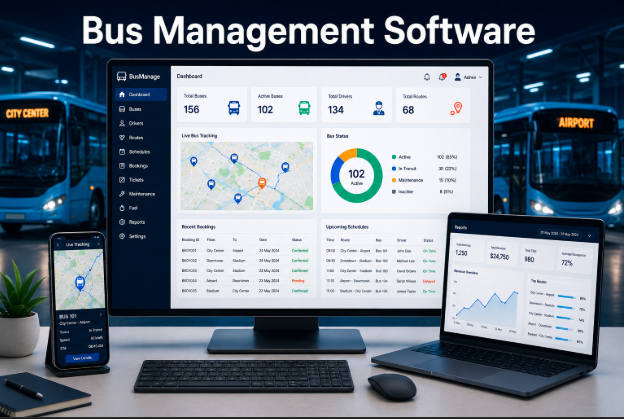
Managing transportation services manually can be difficult because it involves handling routes, schedules, drivers, passengers, and vehicle records at the same time. Small mistakes in planning can lead to delays, communication issues, and higher operating costs.
This is where bus management software becomes useful because it helps automate and organize transportation activities through one centralized system. It improves efficiency, saves time, and provides better control over daily operations for schools, companies, and transport businesses.
In this guide, we will cover what bus management software is, its main features, how it works, its benefits, different types, common challenges, future trends, pros and cons, and whether it is worth using or not.
What is Bus Management Software?
Bus management software is a digital system that helps organizations manage transportation-related operations automatically. It combines different tools and functions into one platform so administrators can monitor buses, drivers, passengers, schedules, and routes from a single dashboard.
The main purpose of bus management software is to simplify transportation tasks and reduce manual work. Instead of managing everything with paperwork and spreadsheets, companies can track information in real time and make faster decisions.
For example, if a school uses bus management software, parents can track the bus location, administrators can monitor attendance, and drivers can follow optimized routes.
Why Bus Management Software is Important?
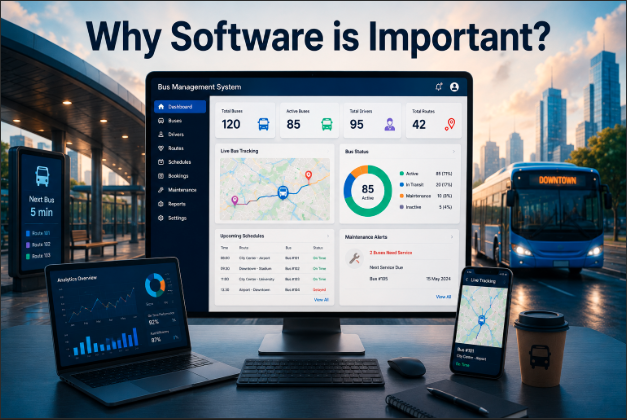
Modern transportation systems involve multiple activities that need proper management and coordination. Without technology, businesses may face delays, communication problems, and operational inefficiencies.
Bus management software helps organizations create a smoother transportation process while reducing errors and improving safety.
Some major reasons why it is important include:
| Importance | Description |
| Time Saving | Automates repetitive tasks |
| Better Monitoring | Tracks buses and drivers |
| Cost Reduction | Reduces fuel and operational expenses |
| Increased Safety | Improves passenger security |
| Improved Communication | Sends updates and alerts instantly |
Main Features of Bus Management Software
Bus management software includes multiple tools that help organizations control transportation activities more efficiently. The following features explain the main functions that make the system useful.
Route Planning and Management
Route planning and management help create organized travel routes for buses and improve transportation efficiency. The software allows administrators to design routes, optimize travel paths, and create schedules that reduce delays and save fuel costs.
GPS Tracking System
A GPS tracking system allows administrators and passengers to monitor the real-time location of buses. It improves visibility, enhances safety, and helps users receive accurate information about arrival and departure times.
Attendance Management
Attendance management helps organizations record and monitor passenger or student attendance digitally. This feature reduces paperwork and provides accurate attendance records without manual errors.
Driver Management
Driver management helps maintain driver records and monitor their performance. Organizations can store driver information, track licenses, and evaluate driving behavior to improve safety standards.
Fleet Management
Fleet management focuses on monitoring buses and maintaining vehicle information. It helps organizations track maintenance schedules, fuel usage, and vehicle conditions for smoother operations.
Ticket Booking and Fare Management
This feature allows passengers to book tickets online and make digital payments. It also automatically calculates fares, making the ticketing process faster and easier.
Passenger Management
Passenger management helps maintain passenger information within a centralized database. It stores records such as contact information and travel history for better organization.
Notifications and Alerts
Notifications and alerts improve communication between passengers and administrators. Users can receive messages regarding delays, schedule changes, and emergency situations instantly.
Reports and Analytics
Reports and analytics provide useful information about transportation operations. Organizations can analyze performance, track expenses, and identify areas that need improvement.
Types of Bus Management Software
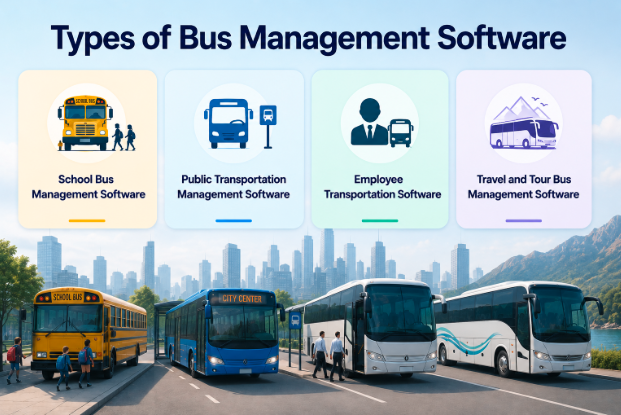
Different organizations use transportation systems for different purposes. Therefore, bus management software is available in multiple forms based on specific needs.
School Bus Management Software
School bus management software is designed to improve student transportation safety and communication. It allows schools to track buses in real time, record student attendance, and send notifications to parents regarding pickup and drop-off updates. This helps schools manage transportation more efficiently while increasing student security.
Public Transportation Management Software
Public transportation management software is used by city transport services and public bus operators. It helps manage routes, monitor bus schedules, track vehicles, and handle ticketing systems through one platform. The software improves operational efficiency and helps passengers receive better transportation services.
Employee Transportation Software
Employee transportation software is commonly used by companies that provide transport services to their staff members. It helps organize pickup schedules, optimize routes, track vehicles, and manage employee attendance records. This allows companies to reduce transportation costs and ensure employees reach workplaces on time.
Travel and Tour Bus Management Software
Travel and tour bus management software is mainly used by travel agencies and tour operators. It helps manage bookings, customer details, travel schedules, route planning, and payment processing systems. The software makes trip organization easier and improves the overall customer experience.
How Bus Management Software Works?
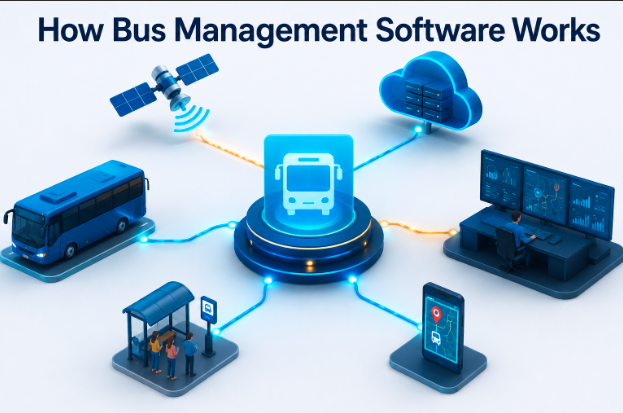
Bus management software operates through a centralized digital system where information is collected, processed, and displayed through dashboards.
The process generally follows these steps:
- Data is collected from buses, GPS devices, and users.
- Information is stored in cloud databases.
- The software processes and organizes the information.
- Users access data through dashboards.
- Reports and alerts are generated automatically.
Benefits of Using Bus Management Software
Organizations that use bus management software often experience improvements in operations and customer satisfaction.
Major benefits include:
| Benefit | Impact |
| Reduced paperwork | Less manual work |
| Better safety | Real-time tracking |
| Lower expenses | Reduced fuel costs |
| Faster operations | Improved efficiency |
| Better communication | Instant updates |
Businesses can save both time and money while improving service quality.
Industries Using Bus Management Software
Many industries depend on transportation systems for daily operations.
Common industries include:
- Schools and colleges
- Public transport services
- Private transportation businesses
- Travel agencies
- Corporate companies
- Tourism services
Common Challenges and Solutions
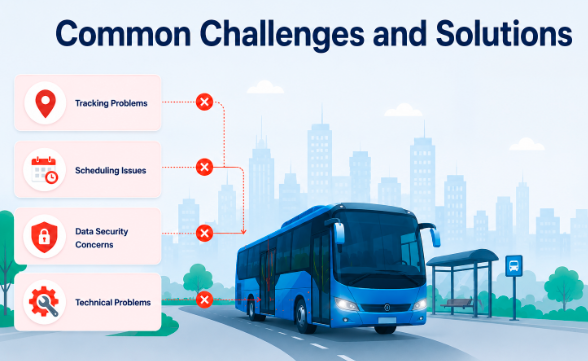
Transportation systems may face several challenges. Understanding these problems helps businesses find effective solutions.
Tracking Problems
GPS devices may sometimes experience connectivity issues. Regular maintenance and system updates can reduce these problems.
Scheduling Issues
Poor planning can create delays and route conflicts. Advanced scheduling tools help avoid such situations.
Data Security Concerns
Sensitive information needs proper protection. Strong encryption and secure systems improve safety.
Technical Problems
Software errors and system failures can affect operations. Technical support and regular maintenance help solve these issues.
Things to Consider Before Choosing Bus Management Software
Before selecting a system, organizations should evaluate several factors.
Important considerations include:
- Required features
- Software cost
- Ease of use
- Customer support quality
- Security level
- Scalability options
Businesses should select software that matches their long-term goals.
Future Trends in Bus Management Software
Technology continues to improve transportation systems with smarter features and automation.
Future trends include:
| Trend | Purpose |
| Artificial Intelligence | Smart decision-making |
| Cloud Technology | Remote access |
| Internet of Things | Connected devices |
| Automation | Reduced human effort |
| Smart Transportation | Improved efficiency |
These developments may create faster and safer transportation systems in the future.
Pros and Cons of Bus Management Software
| Pros | Cons |
| Saves time | Initial cost may be high |
| Improves safety | Requires training |
| Reduces paperwork | Technical issues may occur |
| Real-time monitoring | Internet dependency |
| Better communication | Maintenance costs |
Is Bus Management Software Worth Using?
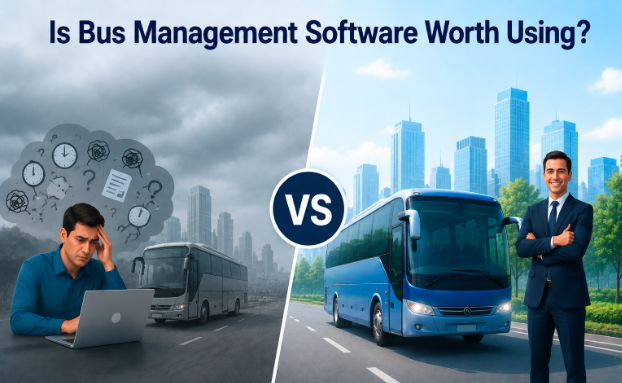
Bus management software is worth using because it simplifies transportation management and improves operational efficiency. Organizations can reduce manual tasks, improve safety, and enhance communication through automated systems.
Although some businesses may face initial setup costs, the long-term benefits often outweigh the investment. Better management, reduced expenses, and improved user satisfaction make it a valuable solution.
Conclusion
Bus management software has become an important part of modern transportation systems. It helps organizations automate operations, improve communication, monitor buses in real time, and reduce operational problems. From schools and transport companies to corporate businesses, many industries rely on these systems for daily activities.
As technology continues to advance, future transportation systems may become even more intelligent and efficient. Businesses that adopt modern bus management software solutions can improve productivity while delivering better transportation experiences.
Frequently Asked Questions (FAQs)
What is bus management software used for?
Bus management software is used for route planning, vehicle tracking, attendance management, scheduling, and transportation operations.
Can schools use bus management software?
Yes, schools commonly use the software for student attendance tracking, bus monitoring, and parent notifications.
Does bus management software include GPS tracking?
Yes, many systems include GPS technology for real-time bus tracking.
Is bus management software expensive?
The cost depends on features, company size, and software type.
Can bus management software improve passenger safety?
Yes, real-time tracking, notifications, and driver monitoring help improve safety.
Related Articles
How to Actually Create Software: Step-by-Step Beginner to Advanced Guide
What Is the Easiest 3D Modeling Software for Beginners in 2026?
AULA F108 Pro Software Complete Guide: Features, Download, Installation & Customization
How to use CAFM software?


